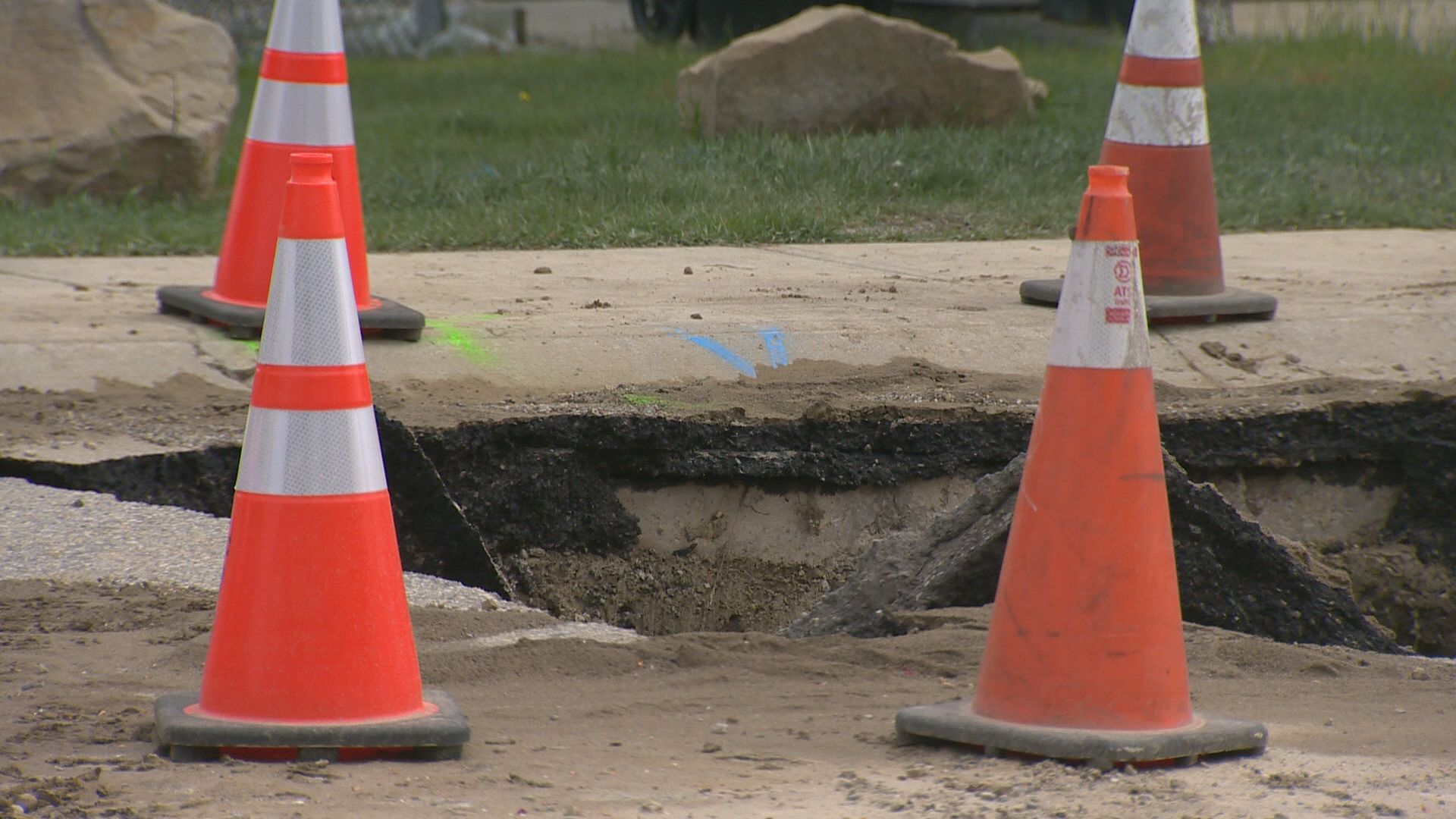
Calgary is panicking because 23% of its treated water leaks into the dirt before reaching a single tap.
The immediate corporate and political reflex is predictable. Bureaucrats demand massive capital injections. Journalists write breathless exposes comparing underground trickles to Olympic-sized swimming pools. Activists lecture homeowners about cutting back on lawn watering while the municipality bleeds billions of liters from its own distribution lines.
It is a beautiful narrative of systemic failure, but it is built on a fundamental economic fallacy.
The lazy consensus screams that a 23% water loss rate is a catastrophic failure demanding immediate, aggressive eradication. The reality? Zero-percent leakage is a financial disaster disguised as environmental stewardship. Trying to completely plug a municipal water system is an exercise in diminishing returns that destroys public wealth.
The Myth of the Leakless Network
Every civil engineer who has ever managed a multi-billion-dollar utility knows the reality: water networks are designed to leak.
When the City of Calgary rolled out its Accelerated Water Loss program, targeting a drop in its Infrastructure Leakage Index (ILI) from 4.4 down to 3.0 by 2030, it succumbed to public relations pressure rather than economic logic. The ILI—pioneered by the International Water Association (IWA)—compares a system's current real losses against its Unavoidable Annual Real Losses (UARL).
A UARL score of 1.0 represents a theoretically perfect system. It is also an economic black hole.
To achieve an ILI anywhere near 1.0, a city must dig up every street, replace perfectly functional plastic and ductile iron pipes with premium materials, and deploy continuous acoustic monitoring across thousands of kilometers of mainline. I have seen municipal utilities blow tens of millions of dollars chasing tiny, subsurface trickles in gravelly soils. The cost to locate and repair these minor anomalies far outweighs the chemical and electrical cost of treating the water that escapes.
Consider the math the alarmists ignore. Treating raw water from the Bow or Elbow rivers requires electricity, coagulants, and chlorine. It is cheap. The marginal cost of treating an extra megaliter of water is remarkably low.
Conversely, the marginal cost of excavating a busy urban intersection to clamp a minor joint leak on a 50-year-old pipe is astronomical. If it costs $500 in chemicals to treat the water lost by a minor leak over a decade, but it costs $50,000 in capital expenditures and traffic disruption to repair the pipe, leaving the leak alone is the fiscally responsible choice.
Why Water Isn't Oil
Commentators frequently stumble into a false equivalency by asking why the oil and gas sector manages pipelines with near-zero tolerance for leaks while water utilities tolerate a 23% loss.
The comparison is completely flawed.
When a hydrocarbon pipeline leaks, the consequences are immediate and severe:
- Environmental Liability: Petroleum contamination triggers millions of dollars in regulatory fines and environmental remediation costs.
- Asset Value: Crude oil and refined products carry high commodity prices per liter. Every drop lost is direct revenue vanished from the balance sheet.
- Safety Risks: Escaping gas or volatile liquids create immediate explosion hazards.
Municipal drinking water is not crude oil. When treated water leaks into Calgary’s gravelly substrate, it does not poison the water table. It returns to the ground. It is filtered naturally by the earth and eventually finds its way back into the watershed.
The only true loss is the energy and chemical input used during the initial treatment process. Treating drinking water like an endangered commodity ignores the underlying economics of the hydrological cycle.
The Downside of Aggressive Capital Campaigns
Chasing a politically motivated leakage target forces utilities to make terrible asset management tradeoffs.
Calgary plans to scale its watermain replacements up to 15,000 meters per year. This aggressive stance sounds responsible in a press release, but it forces a premature replacement cycle. Pipes that still have 15 or 20 years of structural integrity left are ripped out early simply because they leak at the joints.
This hyper-focus on distribution leaks diverts scarce capital away from catastrophic failure prevention. The dramatic 2024 failure of the Bearspaw South Feedermain is a prime example. That singular catastrophe disrupted the entire city, yet the total volume of water lost during the break and subsequent flushing amounted to just 0.5% of the city's annual water loss.
When you spend all your money chasing the 23% background murmur of minor joint leaks, you starve the high-consequence transmission systems of the deep engineering analysis and structural monitoring they require. You trade a manageable, predictable operational expense for catastrophic, unpredictable infrastructure collapses.
Dismantling the Consumer Blame Game
Municipalities love to use system leaks as a justification to impose restrictions on the public. They introduce tiered billing structures, permanent outdoor watering schedules, and smart meters under the guise of shared sacrifice.
This is a classic diversion tactic.
Imagine a retail store losing 23% of its inventory to backroom logistics inefficiencies, and then turning around to tell customers they are only allowed to buy shoes on Tuesdays to help preserve stock. It is absurd.
If a city cannot manage its own distribution efficiency due to cold-weather ground movement and shifting soils, it has no business lecturing a homeowner about watering their lawn. The push for Advanced Metering Infrastructure (AMI) is often sold as a way for consumers to track their personal usage, but the true driver is data collection to justify conservation-oriented rate hikes.
Move Pressure, Not Earth
If a utility legitimately wants to optimize its system without bankrupting its taxpayers, it needs to stop digging up streets and start managing physics.
The volume of water forced through a pipe leak is directly proportional to the system's internal pressure. Most municipal networks operate at higher pressures than necessary, especially during low-demand nighttime hours. High pressure stresses aging joints, accelerates pipe fatigue, and blows out minor fissures.
Instead of deploying excavation crews to replace thousands of meters of pipe, utilities should invest heavily in Advanced Pressure Management (APM). By installing smart modulation valves that automatically lower system pressure during periods of low demand, a city can instantly cut its leakage volume by double-digit percentages without touching a single shovel.
Lowering the pressure reduces the stress on the network, extends the lifespan of the existing infrastructure, and drops the real loss volume overnight. It is an unglamorous, software-and-valve solution that lacks the photo-op appeal of a massive construction crew, but it works.
Accepting a baseline level of water loss isn't a sign of municipal decay. It is evidence of rational economic calculation. The race to zero leaks is a fool’s errand designed to satisfy critics who understand headlines but don't understand infrastructure economics. Stop trying to fix every leaky pipe. Learn to live with the background noise of a functioning city, manage the network pressure, and save the capital for failures that actually matter.