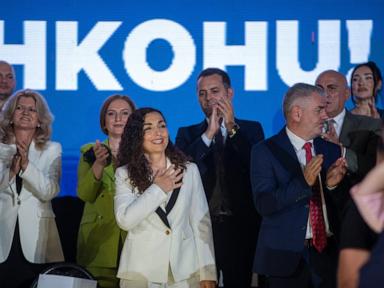
International pundits are weeping over Pristina again. The predictable chorus of Western diplomats, non-governmental organizations, and regional analysts are wringing their hands over Kosovo holding its third parliamentary election in 18 months. They call it a crisis. They call it a political impasse that delays Western integration and economic development. European Council President António Costa travels to Pristina to warn that the European Union cannot do Kosovo’s homework.
They are looking at the entire situation through a broken lens.
The lazy consensus says that multiple elections equal instability. The mainstream narrative treats the failure to elect a successor to former President Vjosa Osmani—which triggered the automatic dissolution of the 120-member Assembly—as proof of a fragile democracy.
The exact opposite is true.
The ongoing electoral churn in Kosovo is not a sign of institutional decay; it is a sign of a fiercely competitive, highly functional democratic system operating exactly as its constitution intended. Kosovo is not suffering from an artificial crisis. It is experiencing the necessary, brutal friction of a young republic refusing to succumb to authoritarian consolidation or backroom elite cartels.
The Quorum Trap and the Myth of Compromise
The immediate catalyst for the June 2026 election was the inability of the parliament to secure an 80-lawmaker quorum to elect a new president. Prime Minister Albin Kurti’s party, Vetevendosje, captured over 50% of the vote in the December elections but fell short of the supermajority needed to dictate executive appointments. The opposition boycotted. The clock ran out. The system reset.
Mainstream commentary lambasts this as the stubbornness of a fractured political class. Analysts demand a "culture of compromise." But let’s define compromise in the context of Balkan politics: historically, compromise has meant the division of state assets among corrupt elites to maintain a superficial facade of stability for Western observers.
When international observers demand compromise, they are asking Kosovo to replicate the stagnant coalition models that paralyzed it for its first decade of independence. The current impasse exists because the old guard refuses to surrender its remaining institutional levers, while the ruling party refuses to buy them off with ministries and state-enterprise directorships.
Imagine a scenario where Vetevendosje simply handed over crucial ministries to the Democratic Party of Kosovo (PDK) or the Democratic League of Kosovo (LDK) just to secure a ceremonial presidency and appease Brussels. The international community would celebrate the "stability," while the domestic anti-corruption mandate that swept Kurti into power would be utterly gutted.
Elections are expensive. They cost millions from a tight state budget. But the financial cost of a snap vote is a fraction of the economic damage caused by a government built on compromised, backroom transactional alliances.
The Sovereignty Paradox
The core error of Western analysis is the assumption that Kosovo’s ultimate goal must be immediate integration into the European Union and NATO at any structural cost. This assumption leads to the constant chiding from Brussels about "doing homework."
The Western approach to the Balkans has always favored stability over democracy. They prefer predictable autocrats who deliver quiet borders over messy democracies that generate headlines. Look at the broader region. The obsession with stability has allowed hybrid regimes to solidify elsewhere in the Western Balkans, where elections are predictable, rubber-stamp affairs and dissent is neatly managed.
Kosovo’s hyper-active electoral cycle is an antidote to that specific disease. The country's voters possess an aggressive willingness to hold politicians accountable, a trait missing across much of the region. If a government cannot function, it goes back to the people.
The downside to this contrarian view is undeniable: governance is slow. Infrastructure projects stall. The lack of an approved budget for long stretches creates friction for local businesses. International funds from the EU are delayed. But this is the price of building genuine domestic sovereignty.
The alternative is a hollowed-out state that exists merely to satisfy the administrative requirements of external monitors. The Western narrative suggests that Pristina is failing a test. In reality, Kosovo is demonstrating that its institutions follow the letter of the law—when the constitutional requirements for a presidency are not met, the legislature dissolves. There are no extra-constitutional extensions. There is no rule by decree. The system resets to the ballot box.
The Flawed Premise of "People Also Ask"
When observers look at the Western Balkans, they consistently ask the wrong questions.
- Does the political instability harm Kosovo's economy? The premise is flawed because it treats the absence of a seated cabinet as total paralysis. Kosovo's civil service functions, tax collection continues, and the private sector operates independently of the political theater in Pristina. True economic harm stems from systemic corruption and predatory monopolies—the precise issues that structural political friction is trying to dismantle.
- Why can't Kosovo politicians agree on a president? They cannot agree because the presidency is the final check on total institutional control. The rivalry between Albin Kurti and Vjosa Osmani isn't just personal drama; it represents two fundamentally different visions of how the state should confront its external challenges and manage its internal reforms. Forcing a consensus candidate simply covers up deep ideological rifts that need to be debated openly.
Stop asking when Kosovo will achieve the quiet stability of a Western bureaucracy. It won't, and it shouldn't right now.
Instead of trying to fix the electoral cycle by forcing unnatural coalitions, the political class should embrace the volatility as a competitive asset. The repetitive elections are filtering out political actors who rely on historical legacies rather than current performance. The old guard can no longer survive on the credentials of the 1999 conflict; they are being forced to compete on policy, inflation management, and governance.
The endless election cycle is a feature of Kosovo's democracy, not a bug. It is a loud, messy, and expensive confirmation that power in Pristina is fought for at the ballot box, not handed out via diplomatic diktat or backroom horse-trading. The international community needs to stop panicking every time a young republic decides to let its voters speak.