British Columbia just announced a $16 million investment to launch its Chronic Property Offending Intervention Initiative provincewide. The plan establishes 12 new regional hubs designed to monitor roughly 420 prolific offenders responsible for the bulk of retail theft, vandalism, and street disorder across 19 communities. Government officials are celebrating this as a major step forward for small businesses.
They are completely wrong.
This initiative is a classic example of throwing expensive bureaucracy at a structural collapse and calling it a victory. By creating multi-disciplinary hubs of prosecutors, probation officers, and mental-health liaisons to manage fewer than 500 people, the province is running away from the actual mechanics driving retail ruin.
I have spent years analyzing the operational costs of retail operations and public infrastructure. I have watched municipal governments blow millions on hyper-localized policing initiatives while commercial centers hollow out. The assumption that a coordinated tracking system will save small businesses ignores the reality of modern property crime, the math behind retail survival, and the fundamental incentives of the legal system.
The Myth of the Controlled 420
The core premise of the government's plan relies on a famous criminological data point: a tiny percentage of offenders commits a massive percentage of the crime. The province claims that by assigning a dedicated probation officer to intensely supervise these specific 420 individuals, the bleeding will stop.
This is a profound misunderstanding of modern street networks.
Property crime in mid-sized commercial hubs is not a closed, stagnant pool of a few known actors. It functions like an open labor market. When intense supervision or an atypical custodial sentence removes a prolific thief from a street corner, it creates an immediate commercial vacancy. The underlying demand—driven by highly organized fencing rings, illicit online marketplaces, and severe chemical dependencies—remains entirely untouched.
Imagine a scenario where a retail strip faces 500 incidents of shoplifting a month. The hub model assumes those 500 incidents belong exclusively to the designated targets. In reality, the targeted individuals are simply the most conspicuous. Removing them does not eliminate the physical vulnerability of the storefront, nor does it dissolve the secondary market buying the stolen goods. The supply chain adapts instantly. New actors step into the vacuum because the risk-to-reward ratio of walking out of a store with a $500 appliance remains heavily tilted in favor of the thief.
The Mathematical Failure of Hub Supervision
The fiscal math of this initiative does not hold up to basic corporate or public audit standards.
The province is spending $8 million per year to supervise 420 people. That is nearly $19,000 per year, per offender, spent purely on oversight administration. This money is not buying secure housing units. It is not funding mandatory, closed-occupancy medical detox beds. It is paying for meetings, cross-departmental data sharing, and synchronized file management between police and Crown counsel.
Look at how these administrative dollars translate to the shop floor:
| Resource Allocation | Target Group | Annual Cost Per Capita | Primary Output |
|---|---|---|---|
| C-POII Admin Hubs | 420 Prolific Property Offenders | ~$19,000 | Enhanced file tracking and bail position coordination |
| Direct Business Relief | Thousands of B.C. Retailers | $0 | Private security costs and increased insurance premiums |
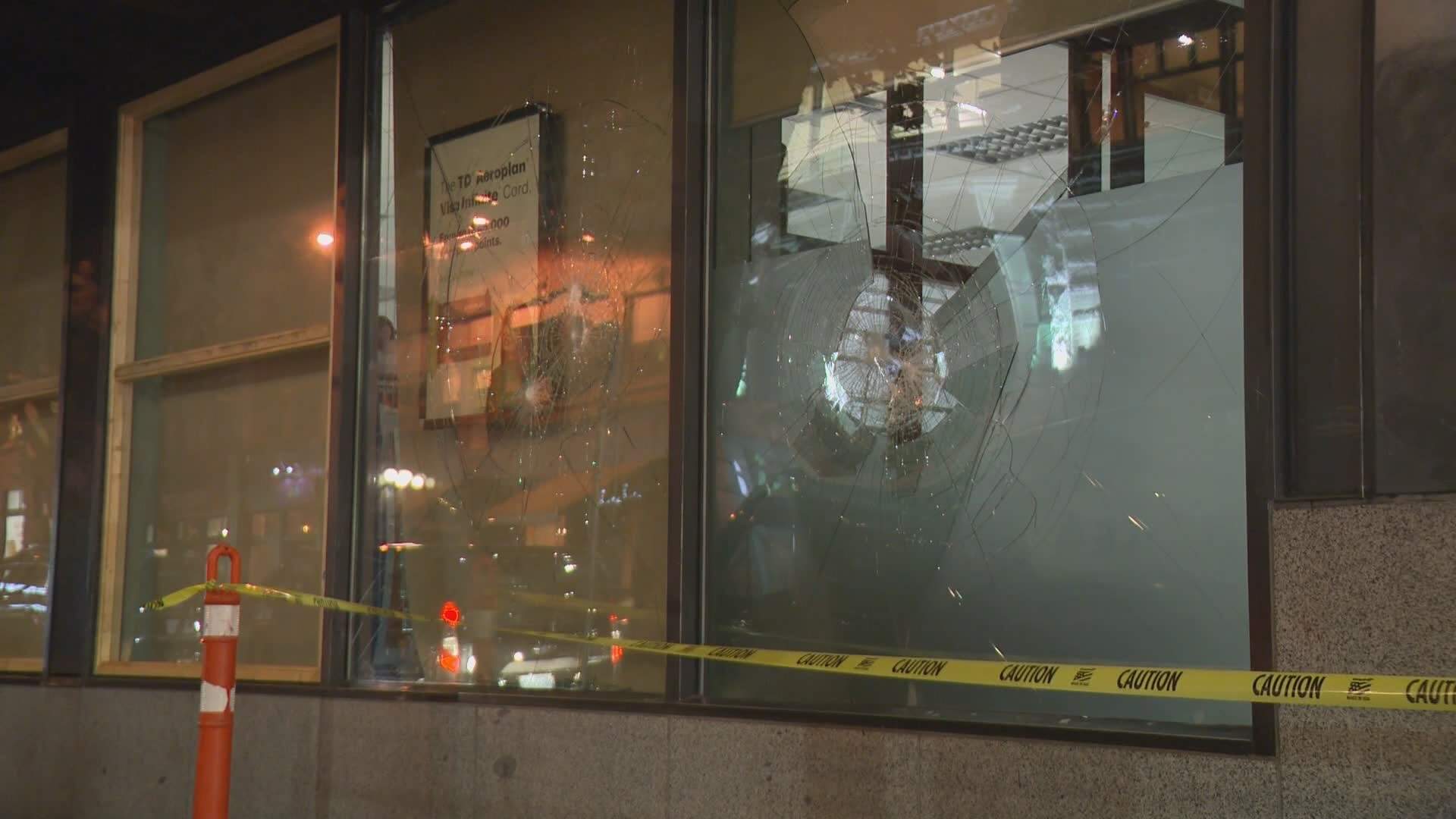
The $16 million budget is consumed entirely by the state apparatus before a single dollar reaches a business owner trying to replace a shattered glass door. For a small business, a coordinated bail position does not fix a cash-flow crisis caused by a 40% spike in commercial insurance premiums.
The provincial government points to a 56% drop in police interactions over 18 months in their violent offender pilot program as proof of concept. But tracking "interactions" is a vanity metric. A drop in police interactions can mean an individual has become more adept at avoiding patrols, or it means police resources are heavily concentrated on paperwork rather than physical presence. It does not mean the total volume of missing retail inventory across the province has dropped by half.
The Real Bottleneck: Federal Bail Realities
The provincial government claims this program will allow prosecutors to craft "appropriate bail and sentencing positions." This bypasses the actual bottleneck: the Criminal Code of Canada.
Under federal bail guidelines established by Bill C-75 and reinforced by subsequent iterations, the "principle of restraint" dictates that release must be prioritized at the earliest reasonable opportunity with the least onerous conditions. Provincial administrative hubs cannot override federal statutory law. A team of twenty provincial specialists can build a flawless file on a chronic shoplifter, but when that individual appears before a judge, the federal legal framework still mandates a high threshold for pre-trial detention for non-violent property offenses.
The result is an incredibly expensive game of catch-and-release. The police arrest, the hub logs the data, the prosecutor presents the file, and the court releases the individual back to the exact same square block. The hub does not close the revolving door; it just installs digital counters on it.
The Invisible Cost of Administrative Focus
By shifting the focus to high-level administrative coordination, the province pulls physical resources away from basic deterrence.
Retail theft thrives on time and space. When a commercial district lacks visible, predictable foot patrols, shoplifting shifts from a high-risk gamble to a routine transaction. The creation of these hubs requires high-level personnel—senior police officers, specialized prosecutors, and seasoned probation staff—to spend their hours sitting in tracking meetings and updating regional databases.
This is an optimization error. Small business owners are not asking for a more comprehensive historical log of the person who robbed them. They are asking for physical presence that prevents the theft from occurring in the first place. When administrative frameworks take precedence over physical visibility, the state yields the street to the offender and attempts to manage the fallout from an office building.
Fix the Perimeter, Not the File
If the goal is to protect the commercial backbone of these communities, the funding must be deployed at the point of impact, not inside government offices.
Instead of building regional bureaucratic infrastructure, capital must be diverted into hard physical mitigation and direct commercial defense. This means providing immediate, non-diluted financial grants to small businesses to install commercial-grade roll-down shutters, impact-resistant glazing, and unified private security networks. It means automating the processing of low-level offenses through technological integration rather than interpersonal meetings.
Physical barriers and immediate, localized deterrence change the environment. A criminal actor does not check a regional hub status before deciding to throw a brick through a window; they check if the window has a steel grate behind it.
Managing chronic property crime requires reducing the material opportunity for the crime to occur. Building twelve new administrative hubs to watch a fixed number of individuals navigate a lenient legal system ensures one thing: two years from now, the province will announce another $16 million injection to manage the exact same problem under a different name. The bureaucracy expands to accommodate the failure of its own design.