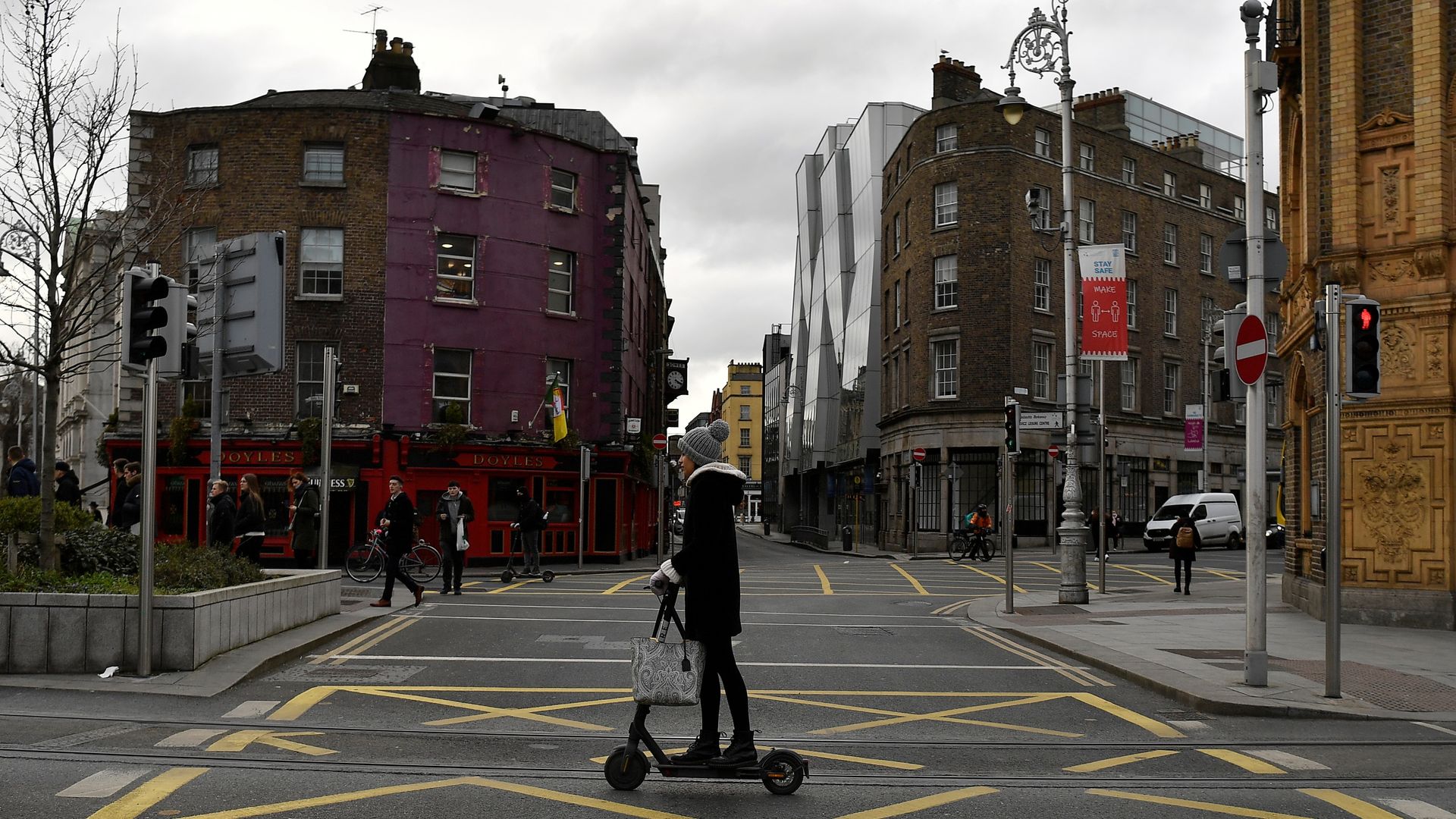
The Infantization of Personal Transportation
Nanny-state panics follow a predictable formula. A new technology hits the streets, people adopt it faster than local authorities can print warning labels, and panicked commentators immediately call for blanket bans under the guise of protecting the youth.
Ireland’s recent move to enforce strict age limits on electric scooters—accompanied by the usual media scolding directed at parents—is a masterclass in missing the point. The prevailing commentary insists that e-scooters are dangerous toys, that teenagers are inherently incapable of operating them, and that legal age restrictions are the silver bullet for urban safety.
This logic is lazy, ineffective, and entirely ignores the structural realities of urban transit.
Banning teenagers from lightweight, zero-emission vehicles doesn't make streets safer. It simply locks young people into car-dependent infrastructure, forces parents into endless school-run shuttle services, and diverts public attention away from the single actual threat to micro-mobility riders: multi-ton steel automobiles sharing the exact same asphalt.
Banning Kids Doesn't Fix Broken Roads
The core assumption behind the latest legislative push is that youth equals catastrophe on two wheels. Critics point to emergency room statistics, cite near-misses on sidewalks, and declare that minor rider errors justify heavy-handed government intervention.
Let’s look at what actually causes severe micro-mobility injuries.
Study after study on urban transport shows that the severity of scooter accidents correlates directly with vehicle speed differentials and spatial isolation—not the rider's birthday. An 18-year-old on a scooter struck by a speeding SUV suffers the exact same physical trauma as a 14-year-old. The risk factor isn't the teenager; it's the lack of protected, physically separated lane infrastructure.
The current political urge to penalize underage riders is a classic deflection tactic. It allows municipal authorities to look proactive while ignoring the expensive, necessary work of building real bike lanes.
When cities treat e-scooters like hazardous toys rather than legitimate micro-mobility tools, they build policies around fear instead of utility.
The Real Statistics Nobody Mentions
- Infrastructure Failure: Over 80% of serious micro-mobility incidents involving motor vehicles occur on roads without dedicated, physically segregated lanes.
- Mass Disproportion: The average e-scooter weighs roughly 15 to 25 kilograms. The average modern SUV weighs over 2,000 kilograms. Blaming the scooter operator for safety risks on mixed-use roads is mathematically absurd.
- Alternative Risk: Denying teenagers access to electric micro-mobility doesn't turn them into pedestrians. It increases their reliance on cars, either as passengers in congested school runs or, within a few short years, as novice drivers operating high-mass vehicles with far higher mortality potential.
Why Age Limits Backfire
Regulators love arbitrary age cutoffs because they cost nothing to write into law. But enforcing age minimums creates a cascade of unintended negative consequences for urban planning and public transit systems.
1. The Mobility Desert for Teenagers
Suburban and outer-urban design in most Western nations is notoriously anti-pedestrian. Teenagers without access to personal motorized transit are functionally trapped unless driven by an adult. E-scooters provided a affordable, low-footprint solution for short point-to-point journeys. Stripping this option away cements car dependency at the exact age when habits are formed.
2. The False Sense of Regulatory Accomplishment
When a government sets an age limit, politicians pat themselves on the back and declare the problem solved. In reality, the fundamental issues—speed limits for cars, sidewalk clutter, poor road design, and lack of enforcement against reckless motorists—remain completely untouched.
3. Misdirected Law Enforcement Resources
Expecting police officers to routinely stop, weigh, and age-verify every individual riding a small electric vehicle is an enforcement fantasy. It results in selective, arbitrary ticketing while doing nothing to alter daily rider behavior on a macro scale.
The Hard Truth About Micro-Mobility Regulation
If urban planners were serious about safety, they would throw out the age panic entirely and focus on two technical levers: speed governance and physical separation.
| Policy Approach | Theoretical Goal | Real-World Result |
|---|---|---|
| Strict Age Bans | Keep young people off scooters | Pushes teens into cars or illegal, unmonitored use |
| Blanket Toy Classification | Treat scooters as novelties | Prevents serious infrastructure investment |
| Geofenced Speed Limits | Cap hardware output automatically | Directly reduces collision severity across all age groups |
| Protected Protected Lanes | Separate light and heavy vehicles | Drops serious injury rates dramatically for all road users |
Hardware-level software constraints—limiting device speeds via firmware based on rider experience or location—achieve far more than legal threats ever will. Modern micro-mobility hardware can be capped remotely. If a municipality wants to enforce lower speeds in pedestrian zones, the tech already exists to enforce it digitally.
Relying on age restrictions is an outdated 20th-century solution to a 21st-century technology problem.
Stop Scolding Parents, Start Demand Better Infrastructure
The media narrative telling parents to "stop buying scooters as toys" relies on emotional guilt rather than sensible policy. Parents buy e-scooters because their kids need to get to school, sports practice, and social activities without relying on a parent driving a two-ton diesel vehicle three times a day.
E-scooters aren't toys. They are light electric vehicles.
Treating them like dangerous novelties guarantees we will keep building cities exclusively for cars, penalizing the youngest members of society for wanting efficient, clean ways to move around their own neighborhoods.
If you want safer streets for young people, stop demanding birth certificates at the point of sale. Demand physical concrete barriers on the road.



:max_bytes(150000):strip_icc():focal(749x0:751x2)/Arnold-Schwarzenegger-Joseph-Baena-032926-a90f8d3315fc44a6aebc6d7bb44bda01.jpg)