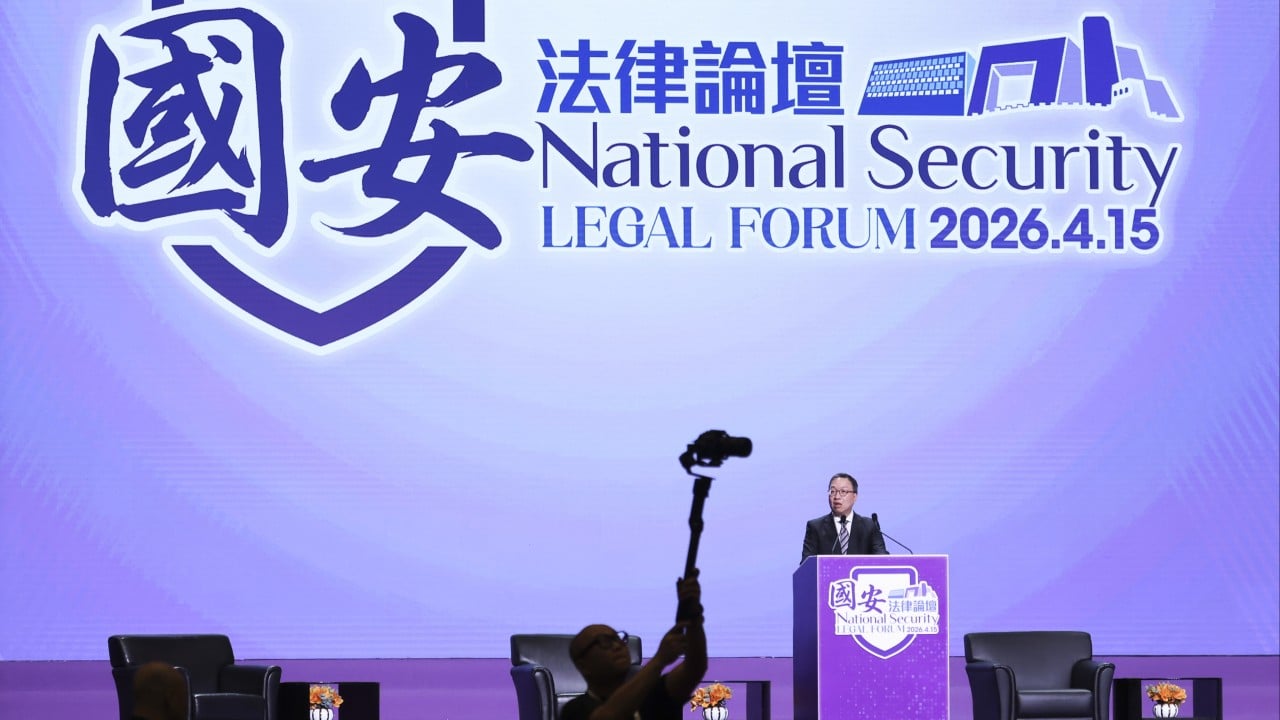
The corporate establishment loves a clean narrative. When the Hong Kong government introduced subsidiary legislation to "refine" its national security framework—allowing the Chief Executive to unilaterally designate any criminal act as a national security offense—the institutional response was a collective sigh of relief. Standard media editorials immediately parroted the official line: this is about "plugging loopholes," creating "greater certainty," and building a predictable corporate ecosystem.
It is a comforting bedtime story for foreign capital. It is also entirely wrong.
What the pro-business consensus calls "certainty" is actually the institutionalization of permanent volatility. Pretending that executive fiat stabilizes a market does not make it true. I have spent two decades analyzing systemic risk in Asian markets, watching boardrooms pour hundreds of millions into jurisdictions based on formal checklists rather than operational reality. The standard compliance playbook says that a defined law is a safe law. But when the definition of a law becomes an infinitely stretchable elastic band held by a single executive officer, the rulebook becomes a liability.
The institutional elite are confusing the elimination of administrative friction with the elimination of risk. They are not the same thing.
The Myth of the "Procedural Refinement"
The core defense of the new subsidiary legislation is that it creates no new criminal offenses or penalties. Proponents argue it merely streamlines the classification mechanism. If a defendant faces a primary charge and an alternative charge, the executive certificate wraps both under the national security umbrella, ensuring the case is handled by designated judges without a jury.
Calling this a procedural refinement is like calling a hostile takeover an unscheduled corporate realignment.
In a traditional common law framework, certainty is achieved through judicial precedent, open adversarial debate, and predictable boundaries. The moment a legal system transitions to a model where a political executive issues unreviewable certificates that fundamentally alter the procedural rights of a defendant, predictability evaporates.
Consider how this plays out in the commercial arena. Under the pretext of safeguarding economic security, an ordinary case of commercial fraud, cross-border data transfer, or digital asset manipulation can be upgraded to a national security matter overnight. The Chief Executive’s certificate acts as an absolute legal trump card. It cannot be challenged via judicial review.
For international businesses, this creates a profound structural paradox. The state claims it is plugging loopholes to prevent geopolitical interference. In reality, it has opened a massive, unpredictable loophole in executive authority.
When Total Control Equalizes to Total Volatility
The lazy consensus among multinational corporations operating in the region relies on a flawed premise: As long as we avoid politics and stick to business, we are safe.
This is an obsolete mental model. The convergence of national security law and corporate governance means that the boundary between private commerce and state security no longer exists.
| Old Framework (Pre-2020) | Transition Framework (2020-2024) | The Current Reality (2026) |
|---|---|---|
| Clear separation between commercial disputes and state security. | Increased compliance scrutiny; vague red lines around political expression. | Absolute executive discretion; any corporate offense can be designated a security risk. |
| Reliance on standard common law jury trials for major fraud. | Designated judges introduced for explicit security indictments. | Alternative commercial charges automatically swept into security protocols via executive certificate. |
| High predictability for capital allocation and corporate structure. | Moderate risk premiums; increased spending on local compliance. | Structural volatility; legal strategy dictated by executive political alignment. |
This structural shift shatters the traditional risk-reward calculus. When a state achieves the power to retroactively alter the legal status of an action without institutional checks, it does not matter how low the corporate tax rate is. The legal architecture ceases to be a stable foundation and becomes an instrument of state policy.
The Compliance Blindspot
Global compliance departments are actively making their organizations more vulnerable by treating these legislative updates as mere bureaucratic adjustments. They look at the assurances from the Security Bureau and the Department of Justice, tick the box marked "regulatory compliance," and move on.
This is a failure of fiduciary duty.
True legal risk is not measured by the smoothness of a government's administrative machinery. It is measured by the distribution of power within that machinery. When Simon Young, a law professor at the University of Hong Kong, pointed out the danger of an unreviewable executive power determining critical facts that bind the court, he was pointing to a fundamental systemic flaw. When executive power becomes absolute, judicial independence becomes nominal.
If a foreign enterprise is locked in a high-stakes commercial dispute with a state-backed enterprise, and the local executive has the unchallengeable power to designate the opposing legal strategy as a threat to economic stability, the foreign enterprise has already lost. The court cannot save them because the court's hands are tied before the trial even begins.
Admitting this reality has a major downside. It means acknowledging that the traditional operational metrics for regional headquarters are broken. It means admitting to shareholders that the legal protections they took for granted are gone. Most corporate leaders simply do not have the stomach for that conversation, so they choose to believe the narrative of "plugging loopholes."
Redefining Systemic Risk
The real question corporate boards should be asking is not "Are we complying with the new rules?" The question is "Can we operate in an environment where the rules can be reclassified at any moment by executive decree?"
If the answer is yes, then the business must price in that volatility. Insurance premiums must adjust. Capital reserves must be altered. Data sovereignty protocols must be completely overhauled, moving sensitive operational data entirely outside the jurisdiction.
Stop looking at the polished press releases coming out of the legal establishment. Stop believing that efficiency is a substitute for the rule of law. The latest legislative updates are not an optimization of a stable system. They are the final consolidation of an executive-led legal paradigm. Act accordingly.