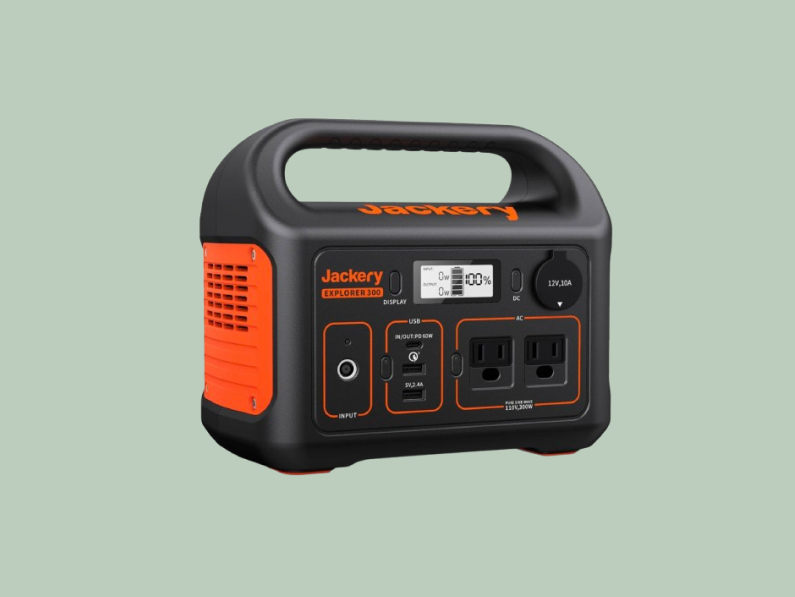
The tech media is currently drowning in affiliate links. As Amazon Prime Day rolls around, every gadget blog and review site rolls out the exact same playbook: "The Best Portable Power Stations on Sale." They parade shiny, plastic lunchboxes from Jackery, Bluetti, and EcoFlow, slapped with 30% discounts, telling you that buying a 1000-watt-hour battery is the responsible thing to do for "emergency preparedness" or "off-grid freedom."
It is a lie of omission.
Buying a portable power station as a primary home backup solution is one of the worst financial and practical decisions you can make. The tech industry has successfully rebranded heavy, overpriced lithium batteries as "solar generators." But a battery is not a generator. It does not create energy; it only hoards it. And the way most people use them—sitting in a dark closet for 360 days a year waiting for the grid to fail—ensures they are burning money on a depreciating asset that will likely fail them when the lights actually go out.
Let's dismantle the lazy consensus of the Prime Day sales pitch and look at the brutal math of portable power.
The Chemistry Lie: Why Your Backup Battery Is Slowly Dying in the Closet
The primary selling point of these power stations is "peace of mind." You plug it into the wall, wait for the green light, and tuck it away next to the canned beans. You think you are prepared. You are actually managing a chemical countdown.
Most premium power stations today use Lithium Iron Phosphate (LiFePO4) chemistry. The marketing copy screams about 3,500 life cycles. What they do not tell you is the difference between cycle life and calendar life. Even if you never draw a single watt from the machine, the lithium cells inside degrade simply by existing.
More importantly, these units suffer from parasitic drain. The internal management systems—the screens, the Bluetooth chips, the inverter circuitry—slowly sip power even when turned "off." If you store a power station at 100% and leave it for six months, it will likely self-discharge down to a critical threshold. If a lithium battery drops below a certain voltage, the internal battery management system (BMS) enters a hard-lock safety mode to prevent thermal runaway.
Your expensive emergency lifesaver becomes a literal brick.
I have seen dozens of homeowners pull out their $1,200 "backup plans" during real winter blackouts only to find the screen dead, the cells bricked, and the warranty expired. To keep these units healthy, you must actively manage them: discharge them to 20%, recharge them to 80%, and repeat every three to four months. If you are not treating your power station like a part-time job, you are buying e-waste.
The Invisible Efficiency Tax: Losing 20% of Your Power to Heat
When a competitor article tells you a power station has a "1000Wh capacity," they imply you get 1000 watt-hours of usable electricity. You do not. You are paying an invisible efficiency tax that the affiliate blogs never calculate.
To run a standard household appliance—like a refrigerator or a coffee maker—the power station must convert its internal Direct Current (DC) battery power into Alternating Current (AC) electricity. This requires an inverter.
Inverters are highly inefficient at low loads. A typical portable power station inverter operates at roughly 80% to 85% efficiency. The remaining 15% to 20% of the energy is lost entirely as ambient heat.
Imagine a real-world scenario. You have a 1000Wh power station. A major storm knocks out your power, and you want to run your 60-watt CPAP machine overnight for 8 hours.
$$\text{Pure Math: } 60\text{W} \times 8\text{ hours} = 480\text{Wh}$$
On paper, you have used less than half the battery. In reality, just turning on the AC outlets activates the massive internal inverter, which draws a baseline "idle power" of 15 to 25 watts just to stay awake.
$$\text{Actual Draw: } (60\text{W} + 20\text{W idle}) \times 8\text{ hours} = 640\text{Wh}$$
Factor in the 85% conversion efficiency:
$$\frac{640\text{Wh}}{0.85} = 752\text{Wh}$$
Your 8-hour sleep just ate 75% of your total capacity. If you try to run a mid-sized refrigerator that draws 150 watts on average, your thousand-dollar Prime Day deal will be screaming its low-battery alarm before the sun comes up.
The Cost-per-Watt Delusion
Let’s talk about real economic utility. A standard mid-tier portable power station costs roughly $1 per watt-hour at retail, or about $0.70 per watt-hour on a "deep" Prime Day discount.
Compare that to a traditional dual-fuel portable inverter generator. A high-end 4500-watt inverter generator runs about $800 to $1,000.
| Attribute | Premium Power Station (e.g., 2000Wh) | Dual-Fuel Inverter Generator (4500W) |
|---|---|---|
| Upfront Cost | ~$1,400 (On Sale) | ~$800 |
| Continuous Output | 2,000 Watts | 3,500 Watts |
| Runtime | 1–2 hours under heavy load | Indefinite (As long as you have fuel) |
| Lifespan | 5–10 years (Chemical degradation) | 20+ years (With basic mechanical care) |
| Refill Time | 2–6 hours via solar/wall | 2 minutes via propane tank |
The tech blogs counter this by saying, "But you can't run a gas generator indoors!"
Correct. You cannot. But instead of spending $1,400 on a giant battery that runs a fridge for half a day, you should spend $800 on a propane inverter generator, keep it outside, and pay an electrician $400 to install a manual transfer switch or an interlock kit on your home's breaker panel.
For less than the price of a flagship EcoFlow or Jackery setup, you can safely power your entire refrigerator, your home's gas furnace blower motor, your internet router, and your lights indefinitely by swapping out standard 20-pound propane tanks. Propane does not go bad in a tank like gasoline does; it stores perfectly for decades.
That is real resilience. The power station is an expensive toy by comparison.
The Flawed "Solar Generator" Premise
The phrase "solar generator" is a masterpiece of deceptive marketing. It evokes images of infinite, free energy streaming into your home during a crisis.
Have you ever actually tried to charge a 2000Wh battery using portable solar panels during an emergency?
Portable solar panels are fragile, highly sensitive to angles, and entirely dependent on perfect meteorological conditions. A slight haze, a passing cloud, or the shadow of a single tree branch can drop a 2000-watt solar array down to 200 watts of actual output.
Furthermore, if the grid goes down because of a massive winter storm or a week-long torrential downpour, you do not have sun. You have clouds, rain, or snow. Relying on a solar panel array to recharge your primary emergency power source during a climate emergency is like relying on a sailboat in a dead calm. It is a structural paradox.
Where the Tech Media Misleads on "People Also Ask"
The common questions driving consumers to buy these units are fundamentally flawed because the public has been conditioned by tech reviewers who only test these products on sunny weekend camping trips.
Can a portable power station power a whole house?
Absolutely not. The average American home consumes roughly 30,000 watt-hours of electricity per day. To run a home normally for just three days of a blackout, you would need 90,000Wh of capacity. Buying that much storage via portable commercial power stations would cost you upwards of $60,000. For a fraction of that cost ($10,000 to $15,000), you could install a permanent, whole-home standby generator connected directly to your natural gas line that kicks on automatically within ten seconds of a power failure.
Are portable power stations worth it for camping?
Yes, but only if you drop the "emergency survivalist" delusion. If your goal is to run a small 12-volt compressor fridge in the back of your overland rig, charge drones, and run LED camp lights, a small 500Wh unit is fantastic. It replaces noisy, dirty dual-stroke motors in pristine nature. But notice the shift in context: you are using it as a luxury convenience tool for recreation, not a critical piece of life-support infrastructure for a suburban home.
The Right Way to Deploy Battery Power
Am I saying lithium batteries have no place in a backup strategy? No. But the consumer tech industry has packaged them completely wrong.
If you genuinely want battery backup for your home, you do not buy a portable unit with handles and built-in flashlights. You build or buy a dedicated, fixed Energy Storage System (ESS) that integrates directly with your home's electrical panel, such as a Tesla Powerwall or an EG4 rack system using standard 48V server-rack batteries.
These fixed systems stay permanently connected to your home's electrical grid. They are constantly managed by intelligent software that floats the cells at optimal voltages, monitors internal cell temperatures precisely, and cycles the energy daily to offset peak utility rates. They pay for themselves by shaving down your monthly electric bill, rather than rotting quietly in a utility closet waiting for an apocalypse that might not happen before the warranty expires.
Stop clicking the Prime Day affiliate links. Stop letting tech blogs convince you that a glorified phone charger can save your family during a grid collapse. If you want real backup power, buy a dual-fuel inverter generator and call a local electrician. If you want a fun gadget to charge your iPad while glamping, buy the Jackery. Just do not confuse a luxury camping accessory with actual survival.