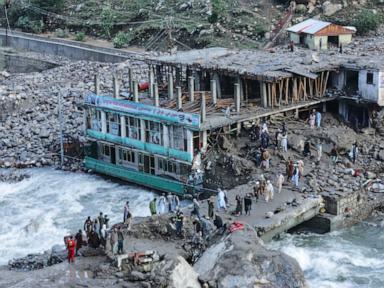
Every time flash floods devastate Afghanistan, international media runs the same tired script. Camera crews film frantic rescue teams tearing through mud, news anchors lament unpredictable climate disasters, and aid agencies issue urgent appeals for short-term humanitarian relief.
It is a comfortable narrative. It absolves everyone of systemic responsibility. And it is completely wrong.
The loss of life in Afghan flash floods is not a natural disaster. It is an engineering and political failure disguised as a meteorological surprise. Rain falls from the sky, but the destruction is manufactured on the ground. Until the international community and local authorities stop treating seasonal weather as an unavoidable tragedy, the death toll will continue to rise year after year.
The Myth of the Unpredictable Water
The conventional news story paints a picture of unprecedented, unexpected downpours washing away defenseless villages. This relies on an outright falsehood: that these floods are a surprise.
Afghanistan’s topography makes rapid runoff inevitable. Spring snowmelt combined with seasonal rain on arid, compacted soil creates predictable hydrologic pathways. We know where the water goes. We know which riverbeds will overflow. We have satellite mapping that highlights high-risk zones down to the exact meter.
Yet, year after year, mainstream coverage focuses entirely on the aftermath—the rubble, the mourning, the heroic diggers—while ignoring the basic reality that these communities were built directly in known flood channels.
When you allow unmanaged residential expansion in dry riverbeds (wadi zones) and strip the surrounding mountainsides of vegetation for firewood, you do not need an extraordinary storm to cause a disaster. You just need normal rainfall. Blaming "flash floods" is like blaming gravity when a poorly constructed bridge collapses. Gravity was always there. The structural negligence is what killed people.
Why Aid Money Keeps Funding the Destruction
I have spent years watching the international disaster relief machine operate in conflict zones, and the business model is fundamentally broken.
When a flood hits, aid agencies rush in with blankets, emergency rations, and temporary tents. Headlines praise the immediate response. Donors feel good. Then, the water recedes, the cameras leave, and the survivors use whatever materials they can find to rebuild their homes in the exact same spot, using the exact same flawed construction methods.
This cycle is not relief. It is subsidized risk.
By focusing almost exclusively on post-disaster recovery while ignoring pre-disaster mitigation, the international community has effectively funded a cycle of repeated vulnerability. Emergency relief buys time, but it builds zero resilience.
Consider the economics:
- Building basic retaining walls, check dams, and early-warning drainage channels costs a fraction of long-term emergency disaster relief.
- Traditional mud-brick architecture, while cheap and thermally efficient, acts like sugar when submerged in flowing water. Reinforcing foundations with local stone and simple lime mortars prevents structural collapse, yet almost zero aid allocation goes toward low-cost structural retrofit training for local builders.
- Reforestation and soil stabilization projects are regularly sidelined because they do not deliver the immediate, photogenic PR wins of handing out flour bags in a muddy camp.
We are treating a chronic structural disease with a band-aid, and then expressing shock when the patient bleeds out during the next rainy season.
The Awkward Truth About Governance and Geography
It is impossible to address Afghan flood mortality without confronting the political reality on the ground. Bureaucratic dysfunction and international isolation have crippled the country's civil defense capabilities.
When central planning fails, local land management disappears. Deforestation goes unchecked because impoverished communities have no alternative heating fuels. Riverbeds are mined for construction sand, altering natural water channels and destabilizing bank slopes. Zoning laws are nonexistent.
International aid organizations often claim they cannot execute long-term infrastructure projects due to diplomatic restrictions or political instability. That excuse is wearing thin. Small-scale, community-led watershed management does not require massive central government support or billions in foreign capital. It requires local engineering education, basic earth-moving equipment, and a shift in priority from emergency reaction to proactive earthworks.
Admitting this truth is uncomfortable. It requires acknowledging that humanitarian aid without structural accountability often serves as a placebo, convincing donors they are solving a problem while the underlying cause festers.
Stop Asking How to Help the Rubble
The public asks: How can we send aid faster after the flood?
That is the wrong question. The right question is: Why were those homes allowed to be washed away by water everyone knew was coming?
Real disaster prevention is boring. It does not look good on television. It involves digging gabion baskets filled with rocks, planting deep-rooted native grasses along hillsides, mapping floodplains, and enforcing hard boundaries on where families can build homes. It involves teaching local masons how to lay water-resistant foundations rather than handing them a tarp after their house falls down.
If we actually care about saving lives in Afghanistan, we need to stop romanticizing the rescue effort and start demanding basic spatial planning. Until we treat water management as a permanent infrastructure necessity rather than a periodic emergency, we are just waiting for the next rainstorm to print the exact same headline.
Stop calling it a surprise flood. Start calling it what it is: deferred maintenance on a grand scale.