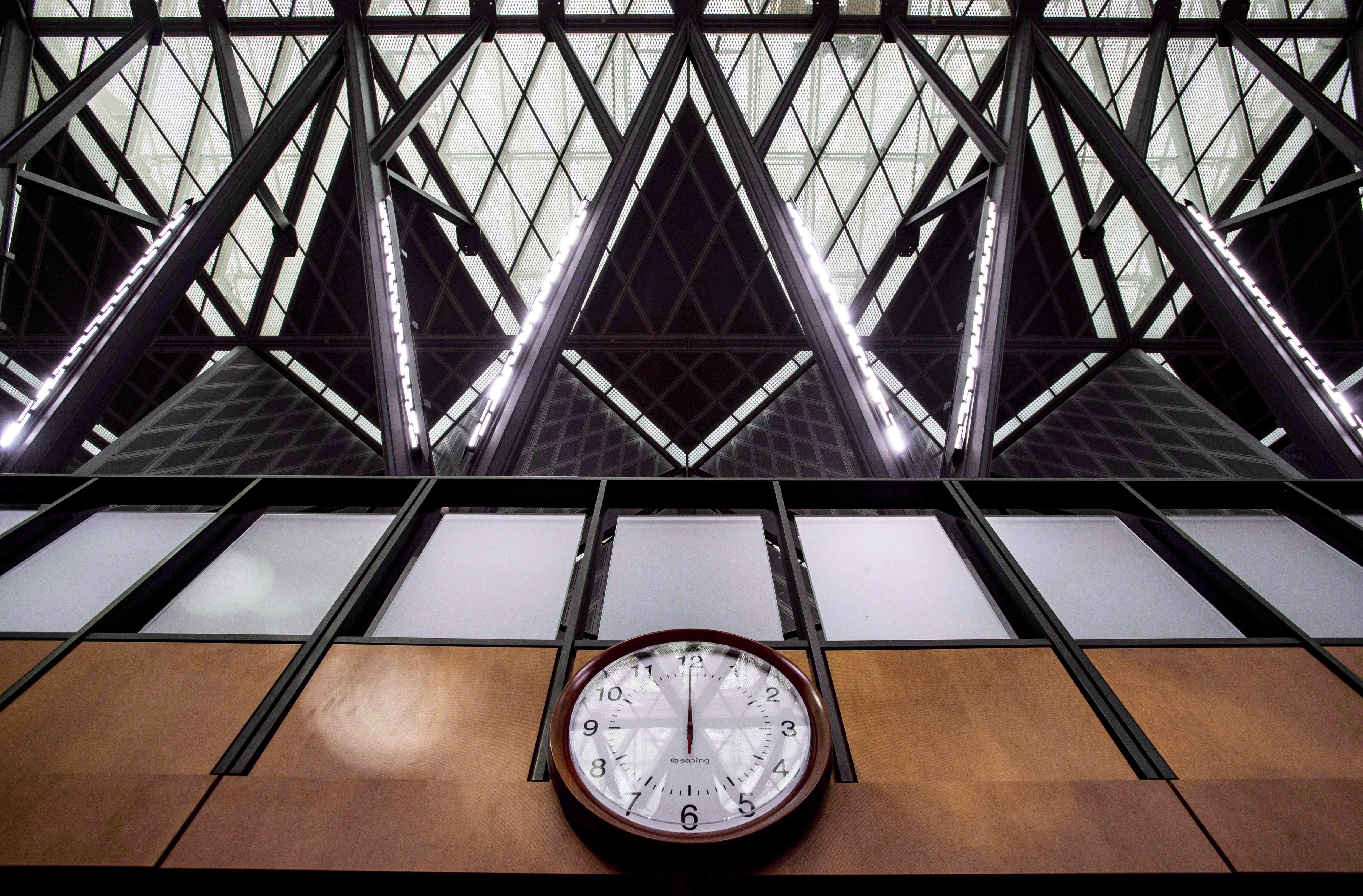
The alarm clock didn't care that it was Sunday. At 2:00 a.m., while the province of Alberta slept under a heavy blanket of prairie winter, an invisible hand reached out and snatched sixty minutes of existence. It was a heist sanctioned by the state. By 7:00 a.m., the coffee was bitter, the toddler was screaming for a breakfast that was technically an hour late, and a collective, bone-deep exhaustion settled over the Foothills.
We have lived this way for a century. We treat time like a piece of elastic we can stretch and snap at will. But as Alberta moves to ground the pendulum once and for all, the rest of the country is staring at their wrists, wondering if the tradition is worth the haze. Meanwhile, you can read other stories here: Structural Atrophy and the Post-Ideological Pivot in Central European Governance.
The debate over Daylight Saving Time (DST) is often framed as a matter of convenience or a relic of agrarian necessity. That is a myth. Farmers, historically, hated the time change; it was the cows that refused to check the clock, after all. The real stakes are carved into our biology. Consider a hypothetical worker named Elias, a long-haul trucker based in Red Deer. When the clocks jump forward, Elias loses more than sleep. He loses his circadian rhythm, the internal metronome that keeps his heart beating steadily and his reflexes sharp. For Elias, that "lost hour" translates to a statistically significant spike in the risk of a heart attack or a momentary lapse in judgment on a slick stretch of the Trans-Canada Highway.
The data backs Elias up. Studies consistently show a 24 percent increase in heart attacks on the Monday following the "spring forward" shift. It is a biological tax we pay for an extra hour of evening light. To see the full picture, we recommend the excellent report by Reuters.
The Geography of Discontent
Alberta is not an island, though its political landscape often feels like one. The move to end the biennial ritual puts the province in a delicate dance with its neighbors. If Alberta stops the clock, what happens to the flight schedules in Vancouver? What happens to the stock traders in Toronto who suddenly find themselves out of sync with the West?
British Columbia and Ontario have already flirted with the idea of permanent DST. They passed the legislation, signed the papers, and then... waited. They are waiting for the Americans. Specifically, they are waiting for Washington, Oregon, and New York to make the first move. It is a continental Mexican standoff where everyone has their finger on the trigger, but nobody wants to be the first to live in a different time zone than their biggest trading partner.
Alberta’s defiance is different. It is a recognition that the "economic alignment" argument is losing its grip against the "public health" reality. We are a tired society. We are caffeinated, blue-light-saturated, and perpetually lagging. By choosing a side—whether it is permanent Standard Time or permanent Daylight Time—the province is betting that a stable rhythm is worth more than a synchronized schedule with a neighbor two provinces away.
The Light That Costs Too Much
There is a romanticism to the long summer evenings. We think of patio drinks in Edmonton at 10:00 p.m. when the sun refuses to set, a golden glow that feels like a reward for surviving January. But that light has a shadow.
When we stay on Daylight Saving Time permanently, we are essentially forcing the sun to rise later in the winter. Imagine a ten-year-old girl in Calgary. Under a permanent DST regime, she would be walking to school in pitch-black darkness until nearly 10:00 a.m. in the depths of December. The safety concerns are real. The psychological toll of starting your day in the void is a heavy price to pay for a slightly brighter commute home.
Sleep experts—the people who spend their lives studying the architecture of our rest—almost universally plead for permanent Standard Time. They argue that our bodies need the morning sun to reset our internal clocks. Without that morning light, our melatonin production stays suppressed, leaving us in a state of "social jetlag." We are physically present at our desks, but our brains are still drifting in the Atlantic.
The Invisible Friction of the Border
The logistics of time are a nightmare of hidden gears. When Saskatchewan opted out of the change decades ago, they became a chronological anomaly. They were the "stubborn" ones. Now, they look like the visionaries.
But for a business owner in Lloydminster, a city that straddles the border between Alberta and Saskatchewan, the end of time changes is a logistical headache that requires a master’s degree in coordination. Half your staff might be living in 2:00 p.m. while your customers are arriving at 3:00 p.m. This is the friction that keeps provincial leaders up at night. It isn’t just about the clocks; it is about the flow of capital, the timing of television broadcasts, and the seamless integration of a country that is already stretched across six time zones.
Yet, the momentum is shifting because the human cost is becoming impossible to ignore. We are seeing a rare moment where the grassroots frustration of millions of tired parents and groggy commuters is outweighing the institutional inertia of the status quo.
A Choice Between Two Mornings
The struggle in Alberta is a microcosm of a global realization: the industrial age is over, but we are still using its clock. We no longer need to maximize daylight for factory shifts or wartime coal conservation. We need to maximize human health.
The choice isn't really about the hour itself. It’s about who owns our time. Is it the government, which dictates when we should feel awake based on a century-old energy-saving theory? Or is it our own biology, the ancient programming that tells us when to rise and when to rest?
As the legislative sessions churn and the committees weigh the trade-offs, the clocks continue to tick. In a few months, most of the country will once again engage in the ritual of the "fall back." We will relish that extra hour of sleep like a found twenty-dollar bill in an old coat pocket. But we will forget that we are just being paid back for a loan we never agreed to take out in the first place.
The provinces watching Alberta are not just looking for a policy shift; they are looking for a leader brave enough to admit that the sun doesn't move just because we move the hands on the wall.
The transition is messy. The synchronization is broken. The stakes are as small as a missed meeting and as large as a failing heart. We are finally asking the question that should have been asked in 1918: why are we chasing the sun when we could just let it find us?
Outside, the prairie wind howls against the windowpane, indifferent to the numbers on the digital display. A father in Lethbridge settles into his chair, checking his watch one last time before bed. He is tired of the negotiation. He is tired of the shift. He just wants the morning to arrive when it is supposed to, steady and predictable, a light that doesn't require a decree to exist.