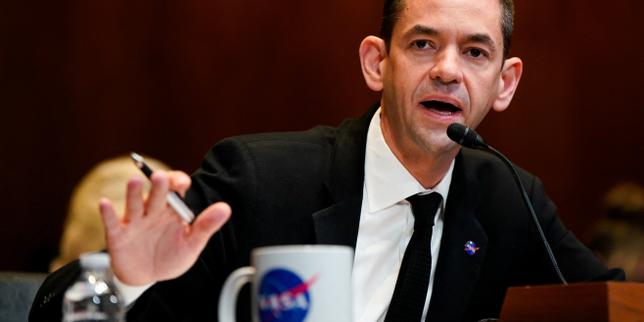
The return to the lunar surface is no longer a matter of scientific "if" but of political "when." Donald Trump’s meeting with the Artemis II crew serves as a high-stakes reminder that the moon is the ultimate geopolitical trophy. While the administration projects confidence about a "good shot" at landing, the machinery behind that optimism is under immense strain. The mission, which intends to send four astronauts around the moon, represents the first time humans will leave low-Earth orbit since 1972. It is a massive technical undertaking. However, the optics of a presidential photo-op often mask the brutal engineering and budgetary hurdles that could still ground the program.
The Hardware Bottleneck
NASA is currently wrestling with the physical limits of its current fleet. The Orion spacecraft, the vessel intended to carry the Artemis II crew, has faced recurring issues with its heat shield. During the uncrewed Artemis I mission, the shield charred in ways that engineers had not predicted. This is not a minor detail. If a heat shield fails during reentry at $11$ kilometers per second, the results are catastrophic.
The Orion capsule relies on an ablative material called Avcoat. While it performed its primary job during the maiden flight, the "skipping" or loss of material in unexpected patterns has forced a deep dive into the manufacturing process. Engineers are currently debating whether to modify the shield for Artemis II or fly with the existing design under strict constraints. A veteran journalist knows that in aerospace, "good enough" is a phrase that leads to disaster. The pressure to meet a political timeline often clashes with the slow, methodical pace of safety certification.
A Fragile Supply Chain
The Artemis program is not just a NASA project; it is a sprawling network of private contractors. Boeing, Lockheed Martin, and SpaceX are the primary pillars, but thousands of smaller suppliers provide the valves, sensors, and specialized alloys required for deep-space travel. This network is fragile. Inflation and labor shortages have hit the aerospace sector particularly hard, leading to delays in the delivery of critical components for the Space Launch System (SLS) rocket.
The SLS itself is a lightning rod for criticism. It is an expendable rocket, meaning every time it launches, billions of dollars of hardware fall into the ocean. Critics argue that this 20th-century approach is unsustainable in an era where SpaceX has proven that vertical landing and reuse are the future. Yet, the SLS remains the only vehicle currently capable of pushing the Orion capsule into a lunar trajectory. This dependency creates a single point of failure for the entire American lunar ambition.
The China Factor
The urgency felt in Washington is driven by more than just nostalgia for the Apollo era. China is moving with frightening speed. Their lunar program, the Chang'e series, has already placed a rover on the far side of the moon and returned samples to Earth. Beijing has a clear roadmap to land taikonauts on the moon by 2030. They are building a permanent research station at the lunar south pole, the same real estate NASA is targeting for its water-ice deposits.
The moon is a graveyard of abandoned plans. For decades, American presidents have announced bold space initiatives only for the next administration to cancel them. Artemis is different because it has survived multiple changes in leadership, but the timeline remains its greatest enemy. If the U.S. does not land by 2026 or 2027, the narrative of American exceptionalism in space begins to crumble.
The Lunar South Pole Gold Rush
The interest in the south pole is not about the view. It is about survival. This region contains "permanently shadowed regions" where temperatures never rise above $-200$°C. In these dark craters, water ice exists in abundance. This ice is the "oil" of the solar system.
By processing this ice, explorers can create liquid oxygen and liquid hydrogen. That is rocket fuel. A refueling station on the moon changes the math for Mars. Instead of dragging every pound of propellant out of Earth’s deep gravity well, missions could "gas up" at the moon. This is the "how" behind the long-term plan. The president’s talk of a "good shot" refers to a landing, but the real prize is the infrastructure that follows.
The Private Sector Gamble
NASA’s decision to outsource the Human Landing System (HLS) to SpaceX was a radical departure from tradition. For the first time, the agency does not own the vehicle that will put boots on the ground. They are essentially buying a ride on Starship.
Starship is a beast of a machine. It is designed to be fully reusable and capable of carrying 100 tons to the lunar surface. But it is also unproven. The vehicle has yet to complete a full mission cycle involving orbital refueling, which is a non-negotiable requirement for reaching the moon. To get one Starship to the moon, SpaceX may need to launch upwards of ten "tanker" Starships to fill its tanks in orbit. This complexity is staggering. If the refueling technology fails, the Artemis III landing mission—the one that actually puts people on the surface—is dead in the water.
Budgetary Gravity
The cost per launch of the SLS rocket is estimated at roughly $2 billion. That does not include the development costs of the Orion capsule or the ground systems at Kennedy Space Center. Total program costs are projected to exceed $90$ billion by the end of the decade. This is a massive line item in a federal budget that is under intense scrutiny.
Historically, the public loses interest in space once the initial "first" is achieved. Apollo 11 was a global event; Apollo 17 was a footnote for many. To keep Artemis alive, the administration must prove that this is more than a flag-planting exercise. They must demonstrate economic or military value. This is why the talk of "lunar resources" and "international partnerships" through the Artemis Accords is so prominent. By tying the program to national security and international diplomacy, NASA makes it harder for future budget-cutters to pull the plug.
The Artemis II Crew and the Human Element
The four individuals who met the president are not just pilots; they are brand ambassadors for a new age of exploration. Reid Wiseman, Victor Glover, Christina Koch, and Jeremy Hansen represent a diverse cross-section of modern aviation and science. Their mission is a ten-day flight that will test the life-support systems of Orion in deep space.
They will be the first humans to see the far side of the moon with their own eyes in over half a century. The psychological impact of this cannot be overstated. In an era of digital disconnection, a high-definition broadcast of the Earth rising over the lunar limb has the power to reset the national mood. However, the crew is well aware that they are flying on a test vehicle. Every switch they flip and every liter of oxygen they breathe is being monitored by thousands of engineers on the ground who are looking for the slightest anomaly.
The Risk of Political Overpromise
When a president says the U.S. has a "good shot," it puts the agency in a corner. NASA leadership must balance the need to please their boss with the reality of technical delays. We have seen this movie before. The Space Shuttle was sold as a cheap, frequent bus to space; it turned out to be an expensive, fragile laboratory. Artemis cannot afford a similar identity crisis.
The technical hurdles are solvable, but they require time and money—two things often in short supply in Washington. If Artemis II slips into 2026, the subsequent landing missions will inevitably slide. This creates a window for competitors to close the gap. The reality of the current space race is that the United States is running a marathon while its opponents are sprinting.
The meeting at the Oval Office was a signal to the world that the American lunar program is a priority. Yet, the real work is happening in the clean rooms of New Orleans and the test stands of South Texas. The success of the mission depends on whether the engineering can live up to the rhetoric. If the heat shields hold, if the refueling works, and if the budget remains intact, the "good shot" becomes a certainty. If any one of those pillars buckles, the moon remains a distant, untouchable light in the sky.
The next two years will determine if we are entering a true space-faring age or just repeating the expensive gestures of the past. The astronauts are ready. The rocket is on the pad. The only question is whether the political will can survive the inevitable setbacks of exploring the most hostile environment known to man.