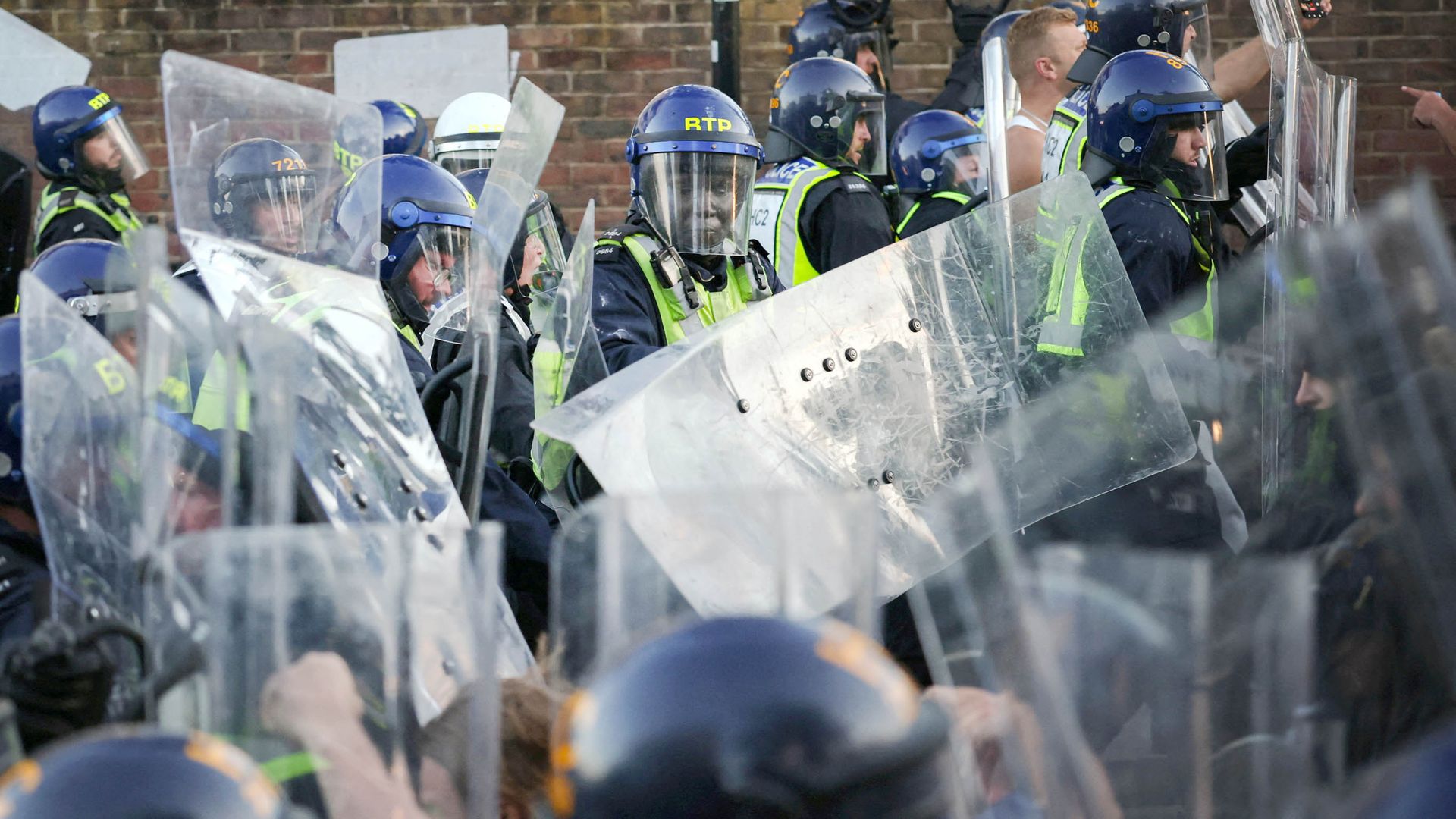
Throwing a traffic cone at a line of riot police won't bring back a murder victim. It won't reform a police force, and it certainly won't comfort a grieving family. Instead, it gets you a multi-year stint in a category B prison.
That's the harsh reality hitting home in Hampshire after Southampton Crown Court handed down heavy prison sentences to the first wave of rioters who hijacked the tragic death of 18-year-old student Henry Nowak.
Leon O’Leary, 41, is starting a sentence of three years and one month. Connor Bishop, 24, got two years and eight months. Both men pleaded guilty to violent disorder. They're just the tip of the spear, with 21 people facing charges after a demonstration outside Southampton Central Police Station dissolved into pure chaos.
Let's be clear about what happened here. The anger pulsing through Southampton wasn't manufactured out of thin air. It came from a place of genuine horror. But the moment people started hurling bricks, wheelie bins, and smoke grenades at officers, they completely lost the moral high ground. They traded a fight for accountability for a mindless night of street violence.
The Bodycam Footage That Sparked a City Firestorm
To understand why a thousand people marched on the police station, you have to look at the deeply unsettling back story.
In December 2025, Henry Nowak, a first-year accounting and finance student, was stabbed five times on Belmont Road after a night out. His killer, 23-year-old Vickrum Singh Digwa, spun a web of lies to the arriving police officers. Digwa claimed he was the victim of a vicious, racially motivated attack. He told officers that Nowak had knocked off his turban and hurled racial slurs.
The Hampshire and Isle of Wight Constabulary officers on the scene believed Digwa.
While Digwa and his brother fed the police a false narrative, the real victim was bleeding out. Body-worn camera footage later released to the public showed a dying Nowak being handcuffed on the pavement. As the teenager repeatedly gasped that he couldn't breathe and had been stabbed, an officer dismissively replied, "I don't think you have, mate."
It was a catastrophic error. The police treated the dying victim as the suspect and the actual murderer as the victim.
Digwa was eventually exposed, convicted of murder, and sentenced to life with a minimum of 21 years. His mother, Kiran Kaur, was also convicted for trying to hide the 21cm dagger used in the attack. But when the trial concluded and that bodycam footage went viral online, public fury boiled over. High-profile political figures weaponized the footage, pointing to it as definitive proof of an alleged two-tier policing system where accusations of racism are treated with more urgency than an actual murder.
When Protest Mutates Into Pure Thuggery
There's a massive difference between demanding institutional reform and looking for an excuse to fight the cops. On Tuesday evening, a quarter of the 1,000-strong crowd at the "Justice for Henry Nowak" rally were drinking heavily. The atmosphere turned toxic fast.
The mob marched from the station toward Portswood, the neighborhood where the murder occurred and where Digwa’s family lived. When police lines blocked the street to prevent vigilante violence, the crowd turned on the officers.
Eleven police officers and a police dog were injured in the ensuing melee.
The court hearings painted a pathetic picture of the men involved. Leon O’Leary didn't just show up to express deep thoughts on police reform; he threw a smoke grenade at officers. When police later raided his home to arrest him, he resisted and officers found a samurai sword in his bedroom.
Connor Bishop was caught on CCTV picking up a yellow traffic cone and hurling it into the police line. His defense lawyer claimed the 24-year-old acted out of peer pressure, and noted that Bishop threw a box of screws and punched a wall during the madness. Bishop was apparently so ashamed, or perhaps just stubborn, that he refused to even come up from the cells for his initial court appearance, forcing his lawyer to enter the guilty plea on his behalf.
Then you have cases like 44-year-old Daniel Frost, a father of two who fashioned a makeshift knuckleduster out of a dog lead and a metal carabiner while taunting officers. He's currently awaiting his own lengthy prison sentence.
What did any of this accomplish? Absolutely nothing.
The Cruel Irony of Mob Justice
The most tragic part of this entire situation is that the rioters completely ignored the explicit wishes of the people who matter most: Henry Nowak's family.
Standing outside the court after Digwa was sentenced, Henry’s father, Mark Nowak, delivered a dignified, heartbreaking statement. He called the police treatment of his son "inhumane and degrading," but he followed it with a vital plea.
"We do not want his death to be used to create further division, hatred or tension. We want his story to help make our streets safer for everyone."
The rioters didn't care about making streets safer. They wanted to smash things. They took a legitimate, national conversation about police competence, emergency response protocols, and the handling of knife crime exemptions, and turned it into a circus of flying bricks and burning wheelie bins.
They also managed to completely derail the narrative. Instead of the front-page news focusing on the systemic failures of the Hampshire police or the upcoming Independent Office for Police Conduct investigation, the headlines shifted to local thugs wounding police dogs and attacking public property. Home Secretary Shabana Mahmood was forced to pivot from addressing the tragedy to condemning a "dangerous undercurrent" of violent opportunism.
What Needs to Happen Next
If you actually want to honor Henry Nowak's memory and ensure no other family goes through this nightmare, rioting is the worst path forward. Real change requires institutional accountability, not street brawls. Here is where the energy needs to go:
- Hold the IOPC to its timeline: The Independent Office for Police Conduct is currently investigating the actions of the Hampshire officers on that December night. Public pressure needs to remain focused on ensuring their report is delivered within the promised three-month window and that any negligent officers face formal misconduct or criminal charges.
- Push for better frontline training: The fundamental error on Belmont Road happened because officers fell for a coordinated lie and assumed a suspect was feigning injury. Police forces need overhauled training protocols on how to assess trauma and stab wounds under dark, chaotic conditions, regardless of what narratives are being yelled at them by bystanders.
- Support the review of knife laws: The weapon used by Digwa was a traditional dagger carried under religious exemptions. The Hampshire Police and Crime Commissioner, Donna Jones, has already written to the Prime Minister calling for a strict review of religious exemptions regarding carrying large blades in public. Supporting this legislative push is a tangible way to prevent future tragedies.
Leon O’Leary and Connor Bishop wanted to play the roles of street revolutionaries, but they ended up as just two more inmates in an overstretched prison system. Their sentences send a definitive message to anyone else tempted to exploit a tragedy for a bit of recreational violence. Change happens through relentless institutional pressure and legal reform. The moment you pick up a brick, you've already lost the argument.



:max_bytes(150000):strip_icc():focal(665x0:667x2)/gettyimages-50733149-2000-8b129a2475974982a915418ce92a73d8.jpg)