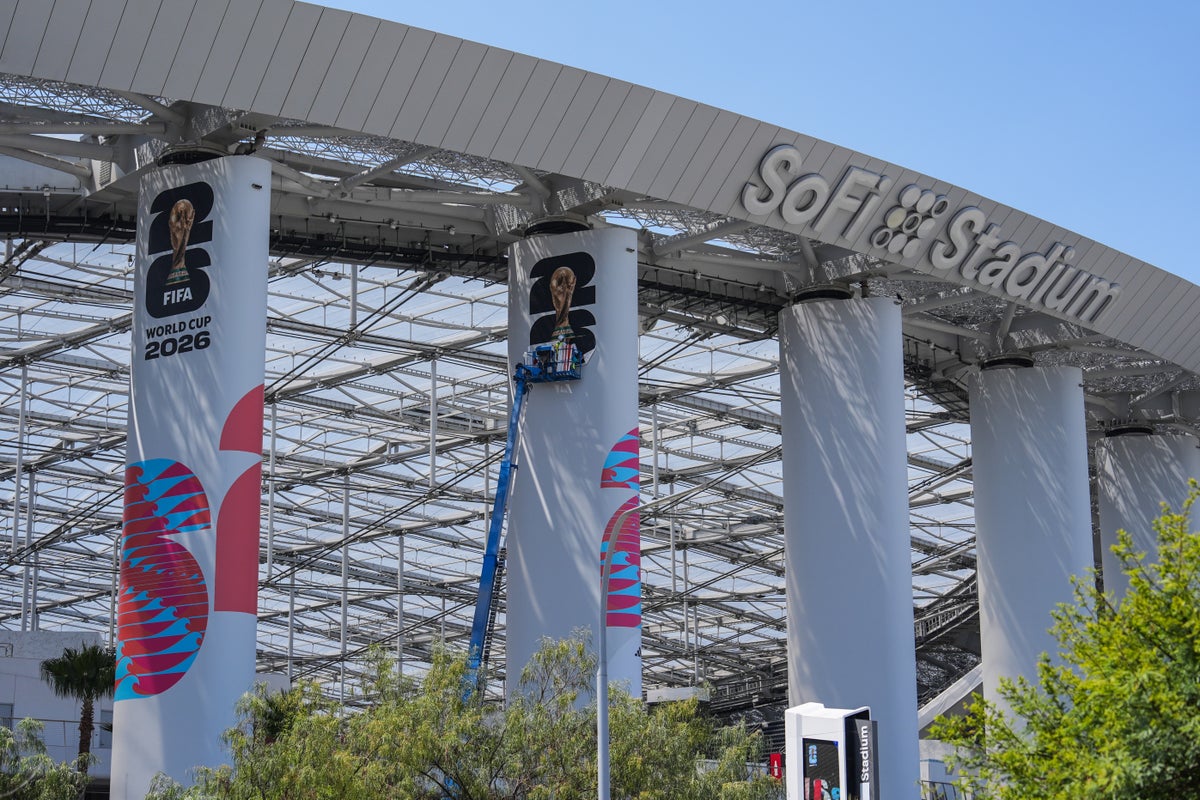
The mainstream media is treating the eleventh-hour labor agreement at SoFi Stadium like a masterclass in modern diplomacy. They see a crisis averted. They see service workers securing historic wage increases just in time for the global spotlight of the World Cup. They see a win-win.
They are completely blind to the economic reality.
What actually happened in Inglewood wasn’t a triumph of collective bargaining. It was a hostage situation where the venue management paid the ransom to clear the tracks for a massive revenue train. By celebrating this "deal," the sports entertainment industry is ignoring a fundamental law of labor economics: artificial, panic-induced wage spikes do not solve systemic labor issues. They compress them until the next explosion.
I have spent two decades analyzing stadium operations, municipal finance, and the supply chains that keep multi-billion-dollar entertainment districts running. I have seen venues blow millions on short-term labor fixes to appease corporate sponsors during major events, only to pass those inefficiencies down to the fans and, eventually, back to the workers themselves.
The SoFi Stadium deal isn't a blueprint for labor peace. It is a ticking clock.
The Myth of the "World Cup Leverage" Win
The prevailing narrative suggests that the Service Employees International Union (SEIU) United Service Workers West played a perfect hand. By threatening to strike right before international soccer fans descend upon Los Angeles, they forced administration to yield.
This is a surface-level misreading of how venue economics work.
Stadium operators are hyper-focused on event-day continuity. When a facility hosts high-margin global events, the cost of disruption far outweighs the cost of overpaying for labor in a three-to-five-year contract window. Management didn't concede because the union's arguments were mathematically undeniable; they conceded because the risk of brand damage during a broadcast viewed by billions was unacceptable.
But what happens when the global circus leaves town?
A stadium's economic life is defined by its baseline operations—the low-margin, high-turnover reality of regular-season games, corporate conventions, and mid-tier concerts. By locking in premium operational costs during a peak demand cycle, the venue is forced to alter its long-term financial structure.
[Global Event Panic] ➔ [Artificial Wage Hike] ➔ [Post-Event Margin Compression] ➔ [Automated Shift Reductions]
When labor costs are artificially inflated past the equilibrium of local market realities, businesses adjust through non-wage channels. You will not see SoFi Stadium willingly eat these costs to protect their bottom line. Instead, they will deploy strategies that quietly erode the very victory the union is celebrating.
The Invisible Tax on the Fan Experience
Let’s dismantle the premise that this deal exists in a vacuum where only billionaires and concession workers are affected. The capital required to fund these new labor contracts has to materialize from somewhere.
If you think a $30 beer or a $75 parking spot at a major Los Angeles venue is expensive now, you haven't seen anything yet.
Stadium management structures function as pass-through entities for operational costs. When the base wage for a stadium custodian or concession cashier jumps significantly overnight, that cost is immediately reflected in the ticket dynamic pricing algorithms, concession surcharges, and convenience fees.
The mainstream press laments the rising cost of attending live sports, yet they cheer for the exact mechanism that drives it up. You cannot demand premium, union-backed labor rates for thousands of part-time event workers and expect the cost of a family night out to remain static. The fans fund the labor peace.
The Unintended Consequence: Radical Automation acceleration
Here is the brutal truth that union leaders refuse to admit to their rank-and-file members: every wage increase accelerates your replacement.
Imagine a scenario where a stadium operates 500 traditional point-of-sale concession stands. At $18 an hour, human capital is highly competitive against the capital expenditure required to install fully autonomous, grab-and-go AI checkout systems. Raise that baseline wage by 30% or 40%, and the return-on-investment calculation for automation completely shifts.
By forcing a massive wage hike ahead of the World Cup, the union has inadvertently justified the massive capital expenditure required to eliminate their own jobs.
- Phase 1: Install facial recognition and biometric entry gates to slash ticketing staff by 60%.
- Phase 2: Transition to 100% cashless, self-service concession pods where one human monitors four lanes.
- Phase 3: Deploy autonomous floor-scrubbing robotics for post-event cleaning, reducing the overnight environmental services crew to a skeleton staff.
The workers who think they won a long-term career victory are about to find out that their new, higher hourly rate applies to significantly fewer scheduled shifts. The venue will simply run leaner, meaner, and with far less human friction.
Dismantling the "Living Wage" Stadium Fallacy
A frequent question raised in public discourse is simple: Why shouldn't workers at a $5 billion stadium earn a premium living wage?
The question itself is flawed because it misunderstands the nature of stadium employment. Stadium jobs are, by definition, episodic and seasonal. They are not designed to be primary, single-income career paths for head-of-household earners.
| Employment Metric | Standard Corporate Job | Stadium Event Staff |
|---|---|---|
| Hours Per Week | 40 hours (Predictable) | 8–15 hours (Event-dependent) |
| Utilization Rate | Consistent year-round | Extreme peaks (NFL season) / Deep valleys |
| Skill Scalability | High upward mobility | Low operational variance |
Attempting to force an episodic, part-time role to match the compensation structure of a full-time career path creates structural instability. When unions demand that a venue provide full-time economic security based on a schedule tied to 8 home football games and a handful of concerts, they are fighting against the laws of gravity.
The real solution isn't demanding higher hourly rates for dead-end roles. It is creating clear pipelines where temporary stadium workers can transition into the permanent, year-round corporate operations of the sports entertainment conglomerates. But that requires actual structural work—not just threatening a strike when the cameras are rolling.
The Downside of the Contrarian Reality
To be completely fair, the status quo management model wasn't sustainable either. Relying on an underpaid, high-turnover workforce creates its own operational nightmares: broken supply lines on game day, abysmal customer service metrics, and constant onboarding costs.
Paying people more can reduce turnover. That is a verifiable business metric. But it only works when the wage increase is tied to measurable productivity gains or structural shifts in how the work is performed.
When a wage increase is extracted through geopolitical leverage—like threatening to embarrass a city weeks before a global tournament—it creates resentment, not partnership. Management doesn't look at the workforce as a valued asset; they look at them as a liability that needs to be engineered out of the budget before the next contract negotiation.
Stop Celebrating a Temporary Ceasefire
The sports industry needs to stop treating this agreement like a victory for the working class. It is a corporate optimization strategy wrapped in a public relations bow. Management bought themselves an uninterrupted World Cup cycle. The union bought themselves a short-term headline.
The bill for this agreement will arrive much sooner than anyone thinks. It will be paid by the fans who find themselves priced out of the upper deck. It will be paid by the workers who see their 15 hours a week cut down to six because an automated kiosk can do their job without demanding a pension.
The SoFi deal didn’t fix the broken economics of stadium labor. It just ensured that when the system finally breaks, the crash will be spectacular.
Stop clapping for the ceasefire. The real war on stadium labor is just getting started.