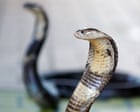
A family holiday in Egypt is supposed to be about ancient pyramids and Red Sea diving, not a frantic rush to an intensive care unit. Yet, a German tourist recently lost his life after a cobra bit him during a live performance. This wasn't some freak accident in the deep desert. It happened in front of a crowd. It happened during a show meant for entertainment.
We need to talk about why these "attractions" are still running and why you should stay far away from them.
The tragedy involved a 60-year-old man who was watching a snake charmer's set. Reports indicate a cobra struck him during the performance. Despite being rushed to a hospital in Marsa Alam, the venom did its work. He died shortly after. This isn't just a sad story; it’s a massive red flag about the lack of safety regulations in tourist hubs. If you think these performers have some magical control over the animals, you're wrong. They don't.
The Myth of the Controlled Cobra
People often assume that because a show is advertised by a resort or a local tour operator, it’s safe. You think there’s an invisible safety net. You think the snake’s fangs have been pulled or the venom glands removed. Sometimes they are, which is its own kind of cruelty, but often they aren't. Cobras are lightning fast. A single mistake by the handler, or a snake that gets spooked by a loud noise or a sudden movement from the audience, leads to a disaster.
In many of these shows, the handlers "kiss" the snake or put it around their necks. It looks cool for a photo. It’s actually a death wish. Egypt is home to several highly venomous species, including the Egyptian Cobra (Naja haje). Their venom contains neurotoxins that attack the nervous system. It stops your breathing. It shuts down your heart.
When a snake bites, you don't have hours. You have minutes.
Why Emergency Care in Remote Areas Fails Tourists
If you're in a major city like Cairo, you might get lucky with quick access to antivenom. But many of these snake shows happen in coastal resort areas like Marsa Alam or Hurghada. These spots are beautiful, but they're often hours away from specialized medical facilities.
Medical kits at the scene of a show are usually non-existent. Handlers aren't trained medics. Even if they get you to a local clinic, that clinic might not stock the specific antivenom needed for the species that bit you. Antivenom is expensive, has a short shelf life, and requires refrigeration. Many small-scale medical centers in developing tourist regions simply don't have it on hand.
I’ve seen travelers assume that their travel insurance will solve everything. Insurance pays the bill, but it doesn't teleport a doctor to your side in the middle of a neurotoxic crisis. By the time a medevac plane is cleared to land, it’s usually too late.
The Dark Side of Animal Tourism
We have to look at why these shows exist. They exist because tourists pay for them. It’s a cycle of exploitation that puts both the animals and the people at risk. These snakes are often kept in terrible conditions, stressed out, and forced to perform in front of crowds. A stressed animal is an unpredictable animal.
Local authorities often turn a blind eye because these shows bring in cash. There’s no rigorous licensing. There’s no safety inspector checking the handler’s equipment. It’s basically the Wild West, but with venomous reptiles.
When you sit in that front row, you're participating in a high-stakes gamble. You're betting your life that a wild animal will behave for twenty minutes. Is that worth a photo for your social media feed? Honestly, no.
Common Mistakes Tourists Make with Wildlife
- Assuming the animal is "tame": There is no such thing as a tame cobra. They are wild predators driven by instinct.
- Trusting the handler's confidence: Just because someone looks like they know what they’re doing doesn't mean they can stop a strike that happens in 0.25 seconds.
- Thinking distance equals safety: In small performance circles, you're often within striking distance without even realizing it.
- Ignoring the lack of medical support: Before you watch any "dangerous" show, look around. Is there an ambulance? Is there a first aid station? Usually, the answer is a hard no.
How to Protect Yourself and Your Family in Egypt
Egypt is an incredible country with so much to offer. You don't need to see a snake show to have a good time. If you want to see wildlife, do it the right way. Go on a guided bird-watching tour in the Aswan area or take a boat out to see the dolphins in the Red Sea. These activities support conservation and keep you out of the line of fire.
If you find yourself at a dinner or a resort event where a snake charmer starts their act, just leave. Don't feel bad about being "rude." Your safety matters more than the performer’s feelings. Walk away and take your family with you.
Check your travel insurance policy before you leave. Most policies have "adventure" or "high-risk" exclusions. While watching a show might seem like a passive activity, insurers sometimes argue that knowingly putting yourself in proximity to dangerous animals constitutes a "voluntary risk." Read the fine print.
Don't wait for the Egyptian government to ban these shows. They might, or they might not. The only way to stop these tragedies is to stop the demand. If people stop showing up, the shows will stop happening.
Stay away from the performance circles. Stick to the historical sites and the sea. If an activity involves a venomous animal and no glass barrier, it's a hard pass. You’re there to make memories, not to become a cautionary tale in a news report.
Book your tours through reputable, international agencies that have strict animal welfare and safety policies. Avoid "street" tours or unofficial resort shows that lack oversight. If a tour looks sketchy, it probably is. Trust your gut. It’s usually right.