The Gimmick Trap
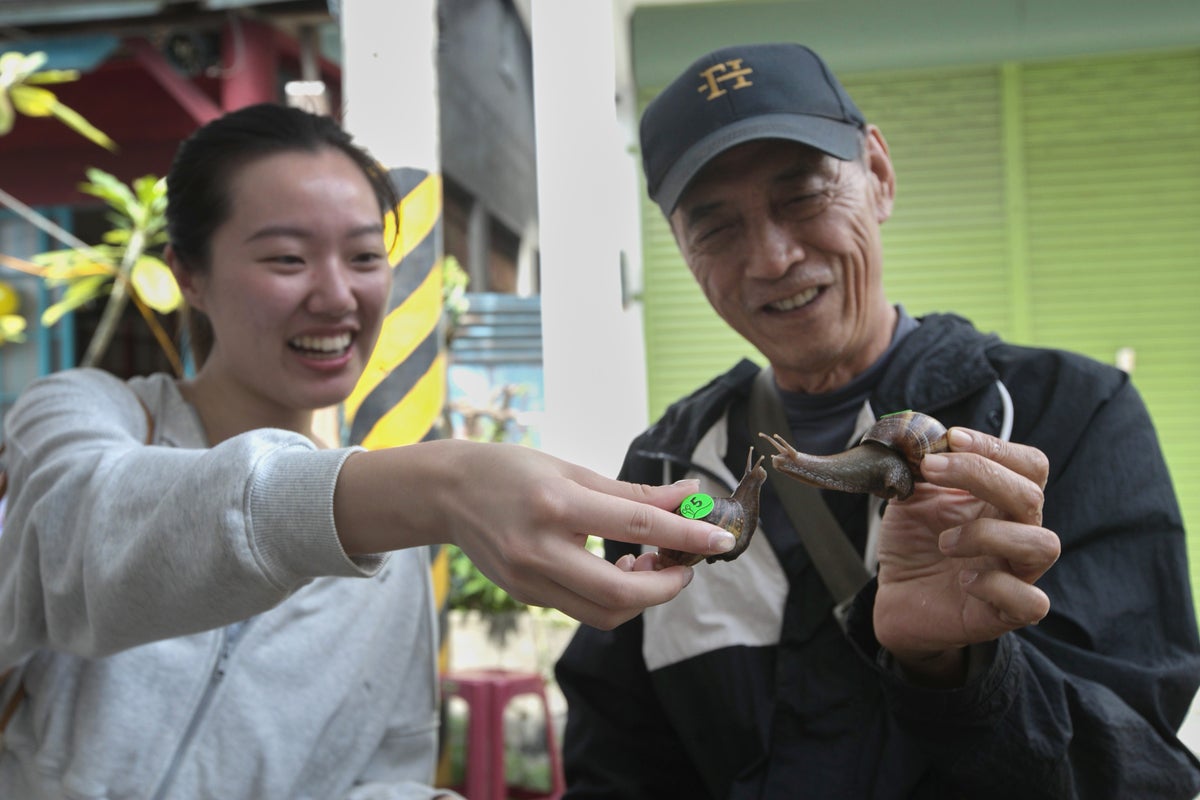
Hualien is bleeding. After the April 2024 tremors turned the region’s tourism infrastructure into a cautionary tale of geological instability, the local response has been nothing short of desperate. The headlines want you to find it charming. They want you to lean into the "whimsy" of gastropod racing as a beacon of community resilience.
They are lying to you.
Snail racing isn’t a revival strategy. It’s a white flag. When a destination replaces its core identity—majestic marble canyons and rugged Pacific coastlines—with high-speed mollusks, it isn't "pivoting." It is admitting that it has no idea how to communicate value in a crisis. This is the "novelty tax," and the locals are the ones who will end up paying it long after the cameras leave.
The Myth of the Viral Fix
The "lazy consensus" among travel marketers is that if you build something weird enough for TikTok, the crowds will return. This logic is fundamentally flawed. Viral stunts create "drive-through" tourists—people who stop for the photo, spend zero dollars on local craftsmanship, and never return.
I’ve watched heritage sites from Venice to Kyoto trade their soul for short-term engagement metrics. It always ends the same way: a hollowed-out economy that survives on cheap souvenirs and 15-second clips. By leaning into snail racing, Hualien is signaling that it is no longer a world-class geological wonder, but a roadside attraction.
- Fact Check: Disaster recovery in tourism requires rebuilding confidence, not providing distraction.
- The Reality: A tourist worried about seismic activity isn't reassured by a snail. They are reassured by upgraded building codes, transparent safety data, and discounted access to high-tier experiences that justify the perceived risk of travel.
The Economics of Desperation
Let’s talk about the actual math. Snail racing has a barrier to entry so low it’s subterranean. That sounds like a win for a cash-strapped town, right? Wrong.
High-value tourism—the kind that actually sustains a recovery—depends on exclusivity and depth. When you commodify a disaster-stricken zone with low-rent entertainment, you drive away the high-spending demographic. You attract the "bored and curious," a group notorious for their lack of brand loyalty and minimal spending power.
Imagine a scenario where Hualien invested that same energy into "Geological Tourism" or "Extreme Resilience Workshops."
- Geological Tourism: Use the shifts in the earth to educate and awe.
- Resilience Workshops: Partner with tech firms to show how smart infrastructure survives the Big One.
These are high-intent, high-spend categories. Snail racing is a race to the bottom of the value chain.
Dismantling the "Community Spirit" Narrative
The competitor pieces will tell you this is about "bringing the community together."
I’ve spent fifteen years in crisis management. "Community spirit" is the phrase people use when the budget is zero and the plan is non-existent. You don't feed families with spirit. You feed them with a sustainable pipeline of international capital.
If the goal is truly to help the people of Hualien, we need to stop patronizing them with "cute" stories. We need to demand that the central government and local tourism boards stop treating a disaster zone like a county fair.
What People Also Ask (And Why They’re Wrong)
- "Is snail racing ethical for the animals?" Who cares? That’s the wrong question. The real question is: "Is snail racing ethical for the local economy?" It’s a distraction from the fact that the Taroko Gorge is partially inaccessible and the rail lines are under constant threat.
- "Will this help Hualien recover?" No. It will provide a 48-hour spike in mentions. Then, the silence will be even louder because the "novelty" has been exhausted.
The Hard Truth About Risk Perception
Travelers aren't staying away because they are bored. They are staying away because they are afraid.
Humans are wired to avoid areas of recent trauma unless the reward outweighs the risk. A snail race does not outweigh the risk of an $M_L 7.2$ event. It makes the destination look flippant about the very real dangers that keep people in Taipei or Taichung.
True recovery looks like this:
- Hard Data: Real-time seismic monitoring accessible via a traveler-facing app.
- Insurance Guarantees: Bold moves like "earthquake-interruption" vouchers funded by the tourism board.
- Infrastructure Transparency: Highlighting the sections of the Suhua Highway that have been reinforced with state-of-the-art engineering.
Stop Trying to "Fix" Tourism with Whimsy
The status quo says: "Make them laugh so they forget the tragedy."
The insider says: "Respect their intelligence so they trust your safety."
Hualien shouldn't be competing with a petting zoo. It should be leaning into its status as a place of raw, transformative power. If the earth moves, show us how you move with it. Don't show us a snail and tell us it’s progress.
The industry loves these feel-good stories because they are easy to write and require no accountability. But if you actually care about the survival of Taiwanese tourism, you should be offended by the snail.
You should be demanding a strategy that actually stands on solid ground.
Stop clapping for the gimmick. Start demanding a blueprint.
The snails will be gone by next season. The debt from a failed recovery will last a generation.