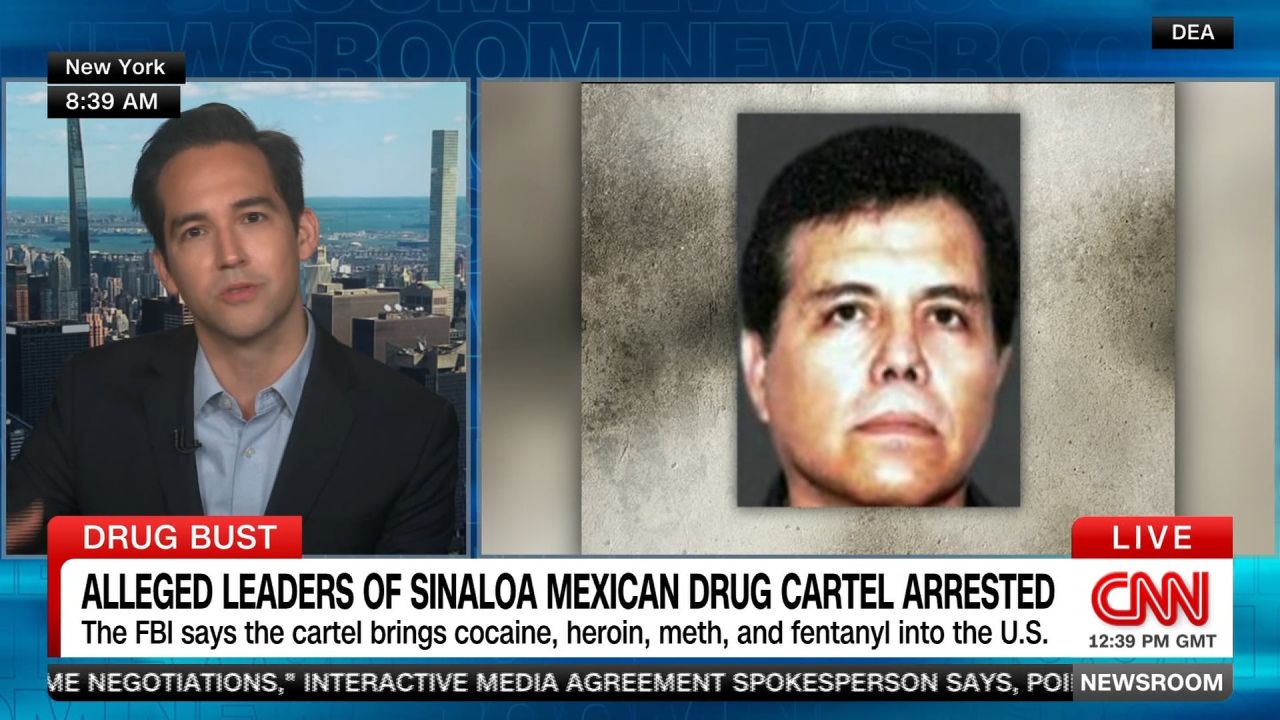
The headlines are predictable. They scream about "accountability" and "a turning point in the drug war." A Mexican governor steps down under the heavy shadow of U.S. indictments, and the Washington policy crowd pops champagne corks. They think they’ve cut off the head of the snake. They haven't. They’ve just cleared a seat for a more efficient replacement.
If you believe a gubernatorial resignation in Sinaloa changes the price of a brick of cocaine in Chicago or the purity of fentanyl in Philadelphia, you are fundamentally misreading the mechanics of modern narco-economics. This isn't a victory. It’s a reorganization.
The Governor is a Middle Manager
Western observers love the "Kingpin" narrative. It’s cinematic. It’s easy to sell to voters. It’s also decades out of date. To understand why this resignation is a sideshow, you have to stop viewing the Sinaloa Cartel as a traditional gang and start viewing it as a decentralized, multinational logistics firm.
In this structure, a state governor is not the CEO. He isn't even the regional director. He is, at best, a facilitator of infrastructure. He ensures the roads stay open, the local police look the other way during "heavy transport," and the legal paperwork for shell companies remains pristine. When a governor resigns due to U.S. pressure, the cartel doesn't panic. They update their contact list.
The "Lazy Consensus" suggests that removing high-level political cover creates a power vacuum that weakens the criminal enterprise. The reality? It forces the enterprise to modernize. I’ve watched this play out from Michoacán to Tamaulipas. Political volatility doesn't kill the trade; it just raises the cost of doing business, which is then passed on to the consumer or absorbed by the massive margins of synthetic drug production.
The Fallacy of the Border-First Strategy
The media fixates on the political drama in Culiacán because it’s easier than discussing the brutal efficiency of the supply chain. We are obsessed with the "Who" while completely ignoring the "How."
Consider the economics of fentanyl. Unlike plant-based drugs, synthetics require zero land. You don't need to control a valley; you need a laboratory the size of a garage and a steady supply of precursors from Asia.
- Cost of Production: Negligible.
- Logistics: High-density, low-volume.
- Political Dependency: Minimal.
When the drug was heroin, the cartel needed the governor to protect the poppy fields. With fentanyl, the cartel needs a port and a post office. The resignation of a governor is a political tremor that barely registers in the underground labs where the real money is made.
The US Justice Department’s Vanity Metric
Why does the U.S. pursue these indictments if they know the impact on the street is zero? Because the Department of Justice operates on "Vanity Metrics." An indicted governor looks great in an annual report. It justifies billion-dollar budgets for the DEA and the State Department.
But let’s look at the data. Since the high-profile arrest and conviction of Joaquín "El Chapo" Guzmán, has the flow of drugs into the United States decreased? No. It has hit record highs. The Sinaloa Cartel didn’t collapse; it branched out. It became more horizontal. It became harder to target because there is no longer a single point of failure.
By forcing a resignation, the U.S. is essentially performing "security theater." It’s the diplomatic equivalent of taking your shoes off at the airport. It feels like something is being done, but the system remains as vulnerable as ever.
Why the "Vacuum" is a Professional Lie
Policy "experts" will tell you that the resignation creates a "security vacuum" that leads to violence. This is a half-truth designed to keep the interventionist cycle spinning.
The violence isn't caused by a vacuum of power; it's caused by a competition for the newly available contract. When a governor leaves, the cartel’s political "liaison" position is open for bidding. The ensuing skirmishes aren't a sign of cartel weakness. They are a bloody HR process.
Imagine a scenario where a major tech company loses its primary government lobbyist. The company doesn't stop selling software. It simply spends a few months—and a lot of money—vetting and securing a new one. In Sinaloa, that vetting process involves gunfire.
The Real Power is in the Port, Not the Palace
If you want to disrupt the Sinaloa Cartel, you don't look at the statehouse in Culiacán. You look at the Port of Mazatlán. You look at the logistics hubs in Tijuana and Juárez.
The cartel’s true strength lies in its ability to manipulate global trade. They have mastered the "Dark Logistics" of hiding illicit goods within the millions of tons of legal commerce that cross the border every day. A governor can’t stop that, and his replacement won’t either. The trade is too integrated into the legitimate economy.
When a politician falls, the shipping containers keep moving. The money laundering through real estate and agriculture continues. The shadow economy in Mexico is estimated to be around 20% to 30% of the GDP. You don't "resign" your way out of a structural reality that deep.
Stop Asking if He’s Guilty; Ask Why It Doesn't Matter
The question isn't whether the governor was in bed with the cartel. In Sinaloa, the answer is a statistical certainty. The real question we should be asking is: Why are we still using a 1980s playbook for a 2020s problem?
The 1980s was the era of the "Cartel of the Sun," where a few generals and politicians held all the keys. Today, the power is dispersed among financial fixers, chemical engineers, and middle-tier "plaza bosses" who operate with near-autonomy.
Targeting a governor is an exercise in nostalgia. It’s an attempt to return to a time when there was a clear hierarchy that could be dismantled. That world is gone. We are fighting a cloud with a sledgehammer.
The Cost of the "Success" Narrative
The danger of celebrating this resignation is that it provides a false sense of progress. It allows the Mexican federal government to claim they are "cleaning house" while the underlying structures of the drug trade remain untouched. It allows the U.S. to claim "cooperation" while the overdose deaths continue to climb.
This resignation is a strategic retreat by the political class to save the institution, not a defeat of the criminal one. The cartel likely sanctioned the move. If a governor becomes a "heat magnet" that brings too much U.S. attention, he becomes a liability to the trade. Getting him to resign is a way to lower the temperature. It’s risk management, nothing more.
The Actionable Truth
If you are waiting for a political savior or a "clean" administration to fix the border, you will be waiting forever. The market for illicit substances is a physical force, like gravity. It doesn't care about the name on the door of the governor’s office.
True disruption would require an overhaul of global financial transparency and a radical shift in how we handle substance abuse domestically. Everything else is just moving pieces on a chessboard while the house burns down.
Stop cheering for the resignation. Start looking at the ledger. The money is still moving. The product is still crossing. The machine is working perfectly.
The governor is gone. Long live the machine.