The air at the logistics terminal outside Shenzhen used to taste like sulphur and heavy metal. If you stood near the idling lanes at dawn, the vibration of hundreds of twelve-litre diesel engines shuddered through the soles of your boots, a low, mechanical growl that signaled the awakening of global supply chains. Truck drivers lived in that haze. They slept to the rhythm of the thrum, woke up with soot lining their nostrils, and accepted the bone-deep fatigue of shifting gears through mountain passes as the immutable cost of moving freight.
Then, the noise stopped. If you found value in this post, you might want to read: this related article.
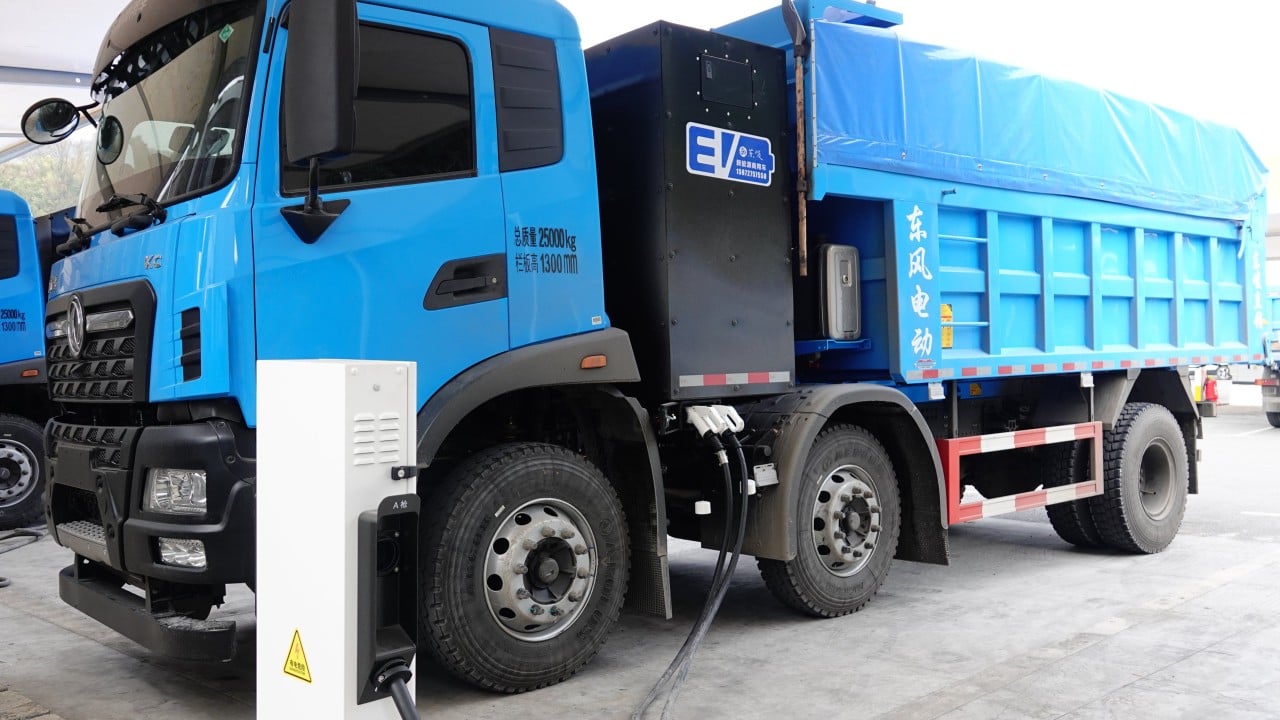
Not because the trade died, but because the machinery changed. Today, those same yards are eerily quiet. A massive, forty-ton rig pulls up to a concrete bay, its movement accompanied only by the high-pitched whine of an electric motor and the crunch of gravel under massive rubber tires. Within five minutes, a robotic crane swaps out a battery pack the size of a shipping container. The truck rolls away, entirely silent, carrying consumer electronics destined for European ports.
This is not a experimental pilot program or a distant corporate promise for the year 2050. It is a massive, heavily subsidized industrial shift that is quietly leaking across China’s borders and altering how goods move across the planet. For another angle on this event, see the latest update from Mashable.
The Five Minute Transfusion
To understand why this matters, consider a hypothetical fleet manager named Marcus who runs logistics across Southeast Asia. For decades, Marcus bought American or European diesel trucks. They were reliable, predictable, and their inefficiencies were baked into the cost of doing business. When he first heard about electric heavy-duty trucks, he laughed. Anyone who understands basic physics knows the dilemma: to move a massive payload over hundreds of miles, an electric truck needs a battery so heavy that it eats into the legal cargo weight limit. Worse, waiting six hours for a truck to charge destroys the tight margins of logistics. Time is money, literally.
China solved this problem not by building bigger batteries, but by changing the infrastructure.
Instead of plugging a truck into a wall, operators use battery swapping stations. The vehicle pulls into a booth. A automated system slides the depleted battery out and pops a fully charged one in. The driver never even leaves the cab. The entire process takes less time than filling a five-hundred-liter diesel tank.
By separating the cost of the truck from the cost of the battery, the initial investment plummeted. Fleet operators could buy the vehicle chassis and lease the battery, suddenly making the economics of electric freight look terrifyingly competitive against diesel.
The Subsidized Engine
None of this happened by accident or through the magical benevolence of the free market. The transition was forged by aggressive state intent. Beijing recognized early that while passenger electric vehicles capture the public imagination, heavy-duty trucks are the real carbon monsters. Trucks make up a tiny fraction of the vehicles on the road, yet they contribute a massive, disproportionate share of transport emissions.
The government threw its weight behind the sector. Subsidies poured into battery manufacturers. Tax exemptions made purchasing an electric rig highly attractive for domestic logistics companies. Municipalities restricted diesel access to urban centers, effectively forcing companies to adapt or die.
The result was a massive domestic testing ground. Manufacturers like Sany, BYD, and Geely refined their technology across millions of miles of Chinese highways. They figured out how batteries behave under extreme cold in northern provinces and how they handle the suffocating humidity of the south. They built a massive supply chain that drove the cost of lithium-iron-phosphate cells down to levels Western competitors could not match.
Now, that domestic market is saturated. The industrial machine needs new oceans to fill.
Crossing the Oceans
The shift is moving beyond domestic borders. Chinese electric trucks are beginning to appear in the ports of Europe, the mining tracks of South America, and the highways of Southeast Asia.
For countries trying to meet strict net-zero targets, these vehicles represent a lifeline. A European port authority facing penalties for air pollution cannot afford to wait a decade for domestic manufacturers to scale up production. They need zero-emission heavy haulers now. When a Chinese supplier offers a proven electric truck at a price that rivals a traditional diesel vehicle, the ideological arguments about supply chain independence begin to fracture under the weight of financial reality.
But this expansion faces massive friction. Traditional automotive capitals are watching this influx with deep anxiety. Tariffs and trade barriers are rising as Europe and the United States attempt to protect their legacy manufacturing bases. They argue that the heavy subsidies give Chinese firms an unfair advantage, distorting global trade.
Yet, the climate clock is ticking. Every day a diesel truck stays on the road is another day of locked-in emissions. Logistics companies are caught in a vise between geopolitical tension and the urgent need to decarbonize their operations to satisfy eco-conscious consumers.
The Human Ledger
Away from the boardroom battles and geopolitical maneuvering, the reality of this transition lands on the individuals who keep the world moving.
Imagine a driver who has spent twenty years inhaling diesel exhaust, dealing with the permanent vibration-induced back pain common among long-haul truckers. Switching to an electric rig is a revelation. The cabins are vibration-free. The acceleration is smooth and instantaneous, eliminating the constant gear-crunching stress of mountain driving. The air in the rest stops is clean.
But there is anxiety too. The mechanics who spent their lives mastering the intricacies of fuel injectors and turbochargers look at an electric powertrain with a sense of profound alienation. There are no pistons here. No oil to change. Just high-voltage cables, inverter modules, and lines of code. An entire generation of skilled labor faces obsolescence unless they can rapidly retrain to service rolling computers.
The invisible stakes of this transition are not just about carbon credits or corporate balance sheets. They are about who controls the foundational infrastructure of global movement. If the world relies on one dominant player for the vehicles that distribute its food, medicine, and consumer goods, the geopolitical leverage shifts permanently.
The quiet revolution on the highway is accelerating. The diesel growl that defined the twentieth century is fading, replaced by the silent, unstoppable momentum of a new industrial order. The only question left is whether the rest of the world will build its own path forward, or simply buy the one already paved.