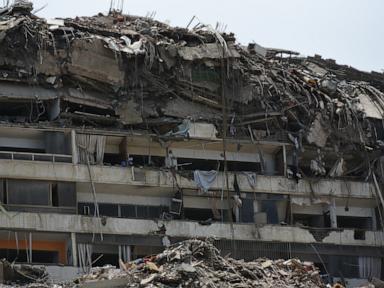
Seismic magnitude does not scale linearly with human mortality. The back-to-back doublet earthquakes that struck western Venezuela on June 24, 2026—measuring magnitudes 7.2 and 7.5 less than a minute apart—demonstrate that structural vulnerability and spatial concentration dominate the mortality equation far more than pure energy release. While the 1960 Valdivia earthquake in Chile registered the highest instrumented magnitude in human history at 9.5, its death toll of approximately 1,655 was dwarfed by structurally unmitigated, lower-magnitude events across Latin America over the past century.
To evaluate systemic risk, macro-analysts calculate seismic lethality using a multi-variable cost function where: Also making news lately: Why Irans Latest Warning to Washington Signals a Dangerous New Phase in the Middle East.
$$\text{Mortality} = f(\text{Kinetic Energy Ratio}, \text{Subsurface Amplification}, \text{Structural Shear Resistance}, \text{Demographic Density})$$
Understanding this systemic vulnerability requires deconstructing historical data into precise geographic and engineering mechanics. Further information into this topic are explored by Associated Press.
The Triad of Historical Casualty Drivers
Evaluating the deadliest seismic events in Latin America over the last one hundred years reveals three distinct operational failure modes: structural resonance, cascading secondary hazards, and institutions operating without anti-seismic building codes.
Structural Resonance and Construction Materials: Chile (1939) and Mexico (1985)
On January 24, 1939, an 8.3 magnitude earthquake struck Chillán, Chile, killing approximately 28,000 people. Seismologist Cinna Lomnitz documented that the primary driver of this mortality rate was the pervasive use of unreinforced adobe. Adobe possesses high compressive strength under static loads but zero tensile elasticity under lateral shear stress. When subjected to horizontal ground acceleration, the walls experienced catastrophic shear failure, dropping heavy earthen roofs directly onto occupants. This disaster forced the absolute overhaul of Chilean construction practices, establishing the country’s first mandatory anti-seismic building codes.
The 8.1 magnitude earthquake that struck Central Mexico on September 19, 1985, killing at least 12,000 people, exposed a different failure mechanism: structural resonance caused by subsurface geology. Mexico City is built on the ancient, soft lacustrine clay bed of Lake Texcoco. When seismic waves traveled from the offshore subduction zone into these soft sediment layers, the waves slowed down and increased dramatically in amplitude—a process known as seismic site amplification.
The lake bed amplified ground motion by a factor of up to 500%. This generated a continuous vibration period of roughly two seconds, matching the natural resonant frequency of buildings between 6 and 15 stories tall. These mid-rise structures flexed violently out of phase with their foundations, causing mid-level column buckling and progressive "pancake" floor collapses.
Cascading Secondary Hazards: Peru (1970)
The deadliest single seismic event in modern Latin American history occurred on May 31, 1970, in Northern Peru. A 7.9 magnitude undersea earthquake occurred off the coast, but 95% of the 66,000 fatalities did not result from direct structural collapses in the coastal epicentral zone. Instead, the primary mechanism of lethality was a massive, seismically induced alpine mass wasting event.
The kinetic energy of the quake destabilized the sheer northern wall of Huascarán, Peru's highest mountain peak. A chunk of glacial ice and rock measuring roughly 1,000 meters wide detached at an altitude of over 6,000 meters. As the mass descended, friction melted the ice, transforming the slide into a high-velocity debris avalanche containing 80 million cubic meters of rock, mud, and water. Moving at velocities exceeding 300 kilometers per hour, the slurry overtopped a protective ridge and buried the towns of Yungay and Ranrahirca under four meters of debris, instantly suffocating 19,000 individuals.
Institutional Isolation and Demographic Saturation: El Salvador (2001) and Haiti (2010)
The structural threat shifts from macro-topography to demographic density in highly urbanized, developing centers. In January and February 2001, El Salvador was struck by a seismic sequence—a 7.7 magnitude offshore event followed a month later by a 6.6 magnitude shallow inland quake. Combined, they claimed over 1,200 lives. The secondary inland event struck a highly saturated, deforested terrain, triggering massive landslides that engulfed entire informal settlements built on unstable hillsides in Santa Tecla.
The extreme manifestation of this demographic vulnerability occurred outside South America on the Caribbean plate margin: the 2010 Haiti earthquake. Registering a moderate 7.0 magnitude, it killed over 316,000 people. The extreme mortality rate was a direct consequence of zero building code enforcement, rapid rural-to-urban migration, and the near-universal deployment of non-ductile concrete frames with unreinforced cinderblock infill walls. Under lateral seismic loads, these brittle structures experienced soft-story collapse, trapping occupants under non-porous concrete slabs.
Comparative Structural Risk Matrix
The following operational metrics define the divergence between energy magnitude and human mortality across key historical events:
- Valdivia, Chile (1960)
- Magnitude: 9.5
- Fatalities: ~1,655
- Primary Failure Mechanism: Tsunami propagation; low local population density at the epicenter restricted direct structural casualties.
- Ancash, Peru (1970)
- Magnitude: 7.9
- Fatalities: ~66,000
- Primary Failure Mechanism: Alpine debris avalanche; complete burial of urban centers down-valley from glacial failures.
- Michoacán / Mexico City (1985)
- Magnitude: 8.1
- Fatalities: ~12,000
- Primary Failure Mechanism: Lacustrine sediment amplification and structural resonance of mid-rise building envelopes.
- Port-au-Prince, Haiti (2010)
- Magnitude: 7.0
- Fatalities: ~316,000
- Primary Failure Mechanism: Soft-story collapse of unreinforced, low-ductility concrete structures in dense urban zones.
The Engineering Solution: Energy Dissipation and Rigid Ductility
Minimizing mortality requires shifting municipal planning paradigms from reactive disaster response to active structural hardening. Modern engineering dictates that structures must be built to ride out ground acceleration through two complementary methodologies.
The first methodology is base isolation. By placing flexible elastomeric bearings or friction pendulum sliders between a building’s foundation and its superstructure, engineers decouple the building from ground motion. When the ground shakes laterally, the base isolators deform or slide, absorbing up to 80% of the horizontal inertial force before it can deform the columns above.
The second methodology is engineered structural ductility. In regions where base isolation is cost-prohibitive for mass housing, concrete frames must be detailed with dense steel reinforcement loops, known as seismic ties or stirrups, placed closely together near column joints. This tight steel wrapping confines the internal concrete core, preventing it from spalling or crushing when bent back and forth. The building bends plastically, absorbing energy through controlled damage without experiencing brittle structural failure or sudden collapse.
Municipalities along active plate boundaries must prioritize retrofitting existing high-density residential corridors using these structural engineering protocols. The primary bottleneck is not technical capability, but capital allocation and institutional enforcement of modern building standards.