The hospital in Guiyang does not sound like a place for miracles. It sounds like the squeak of rubber soles on linoleum, the low hum of industrial air filtration, and the sharp, rhythmic beep of monitors that measure the distance between life and something else. For a six-year-old boy whose name has been shielded from the public eye, it was simply the place where the lump in his throat finally had to be explained.
It started as a minor discomfort. A swelling.
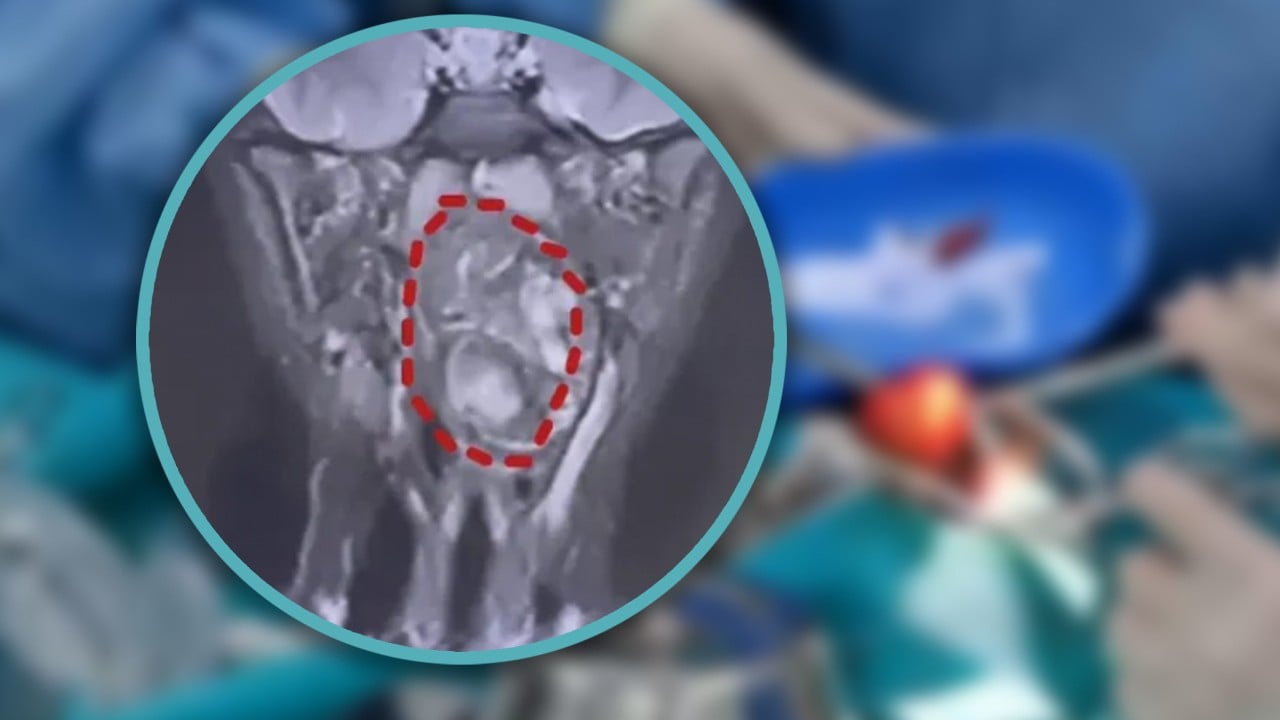
In the beginning, his parents likely brushed it off as the kind of thing that happens to children—a swollen lymph node, a stubborn cold, or perhaps a minor infection from a scraped knee. But the lump didn't retreat. It grew. It sat beneath the skin of his neck like a buried secret, stubborn and silent. By the time they reached the specialists, the mass was the size of a large hen's egg.
Doctors looked at the scans. They saw a dense, localized growth. The initial working theory was a common one in pediatric oncology: a teratoma.
The Biology of the Impossible
To understand what was happening inside that little boy’s neck, we have to look back to the very first weeks of his existence. Deep in the womb, during the frantic, microscopic choreography of cellular division, something went wrong.
Usually, when a woman conceives twins, the two embryos develop side-by-side, sharing a space but maintaining their own biological borders. But nature is prone to glitches. In a phenomenon known as fetus in fetu, one embryo essentially "swallows" the other. The stronger twin absorbs the weaker one, encasing it within its own developing body.
This isn't a ghost story, though it feels like one. It is a rare developmental abnormality occurring in roughly one out of every 500,000 live births. For years, the boy had carried a part of his sibling inside him. It was a hitchhiker that never grew a brain or a heart of its own, but it possessed the blueprint for life.
When surgeons finally opened the mass, they didn't find the chaotic, disorganized tissue of a standard tumor. Instead, they found something that stopped them in their tracks.
Inside the boy’s neck were two tiny, distinct feet. They had miniature toes. They had visible nails.
A Mirror in the Flesh
The medical team was stunned. While fetus in fetu cases are documented, they almost always occur in the abdomen, tucked away behind the intestines or near the kidneys. Finding a "parasitic twin" in the neck—near the carotid artery, the windpipe, and the delicate nerves that control the face—is a surgical nightmare.
Consider the sheer physical presence of it. For six years, this child had been breathing, eating, and playing while a set of silent, undeveloped limbs rested against his throat.
Metaphorically, we all carry burdens from our past, but this was literal. This was biological. It was a life that never was, tethered to a life that is.
The surgery lasted hours. In the quiet of the operating room, the doctors had to navigate a minefield of anatomy. One wrong move could lead to permanent paralysis or catastrophic bleeding. They weren't just removing a growth; they were disentangling two lives that had been fused since the dawn of their creation.
The "twin" was small, measuring about three centimeters. It had no independent existence. It was a collection of bone, skin, and nails—a tragic, unfinished sketch of a human being.
Beyond the Medical Freak Show
The internet often treats stories like this as "clickbait," a bit of body horror to be consumed between scrolling for recipes or political news. But if we strip away the shock value, we find a family in the middle of a profound psychological reckoning.
How do you explain to a six-year-old that the bump on his neck was a brother or a sister?
How does a parent process the grief of a child they never knew they had, discovered inside the body of the child they love?
This is where the cold facts of the case file fail us. The medical journals will record the dimensions of the mass, the blood loss during surgery, and the recovery time. They will use terms like retroperitoneal or cervical malformation. But they won't record the silence in the car ride home. They won't mention the way the mother might now look at her son and wonder about the "what ifs" of that early pregnancy.
The boy is expected to make a full recovery. The physical scar on his neck will eventually fade into a thin, white line, a mark easily hidden by a collar. The "twin" is gone, moved from the realm of biology to the realm of pathology.
Yet, there is a haunting quality to the survival. We like to think of our bodies as singular, sovereign territories. We are taught that we are "one." This story suggests something more complex. It reminds us that our beginning was a crowded, competitive, and sometimes violent struggle for existence.
The boy will grow up. He will go to school, he will fall in love, and he will perhaps one day have children of his own. The world will see a healthy young man. Only he will know that for a brief, strange window of time, he wasn't walking through this life alone.
He was carrying the weight of a shadow that never got the chance to see the light.
The feet are gone now. The toes, the nails, the tiny bones—all removed by the steady hands of men in masks. The pressure on his windpipe has vanished. He can breathe deeply, the air moving freely through a throat that no longer harbors a secret.
The miracle isn't just that he survived the surgery. The miracle is the strange, messy, and occasionally terrifying resilience of life itself, which finds a way to persist even when it is folded, hidden, and forgotten in the dark.