The Florida sun is a physical weight. It presses down on the pavement of the zoo, thick and humid, a world away from the cool, eucalyptus-scented forests of southeastern Australia. Yet, here in the heart of the state’s newest Outback habitat, a small miracle is unfolding—one that is almost entirely invisible to the casual observer.
I am standing by the fence line. My shirt is damp. The air hums with the sound of cicadas, a familiar song in this latitude. Most visitors rush past the exhibit, eyes scanning the canopy, looking for the classic, sleepy silhouette of a koala. They want the photograph. They want the icon. But if you stop—if you truly stop and let the chaos of the day bleed away—you see it.
There is a movement in the pouch.
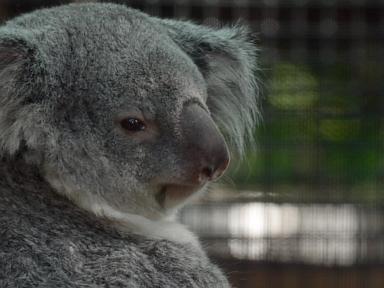
It is a subtle, rhythmic shift. A tiny ripple against the dense, grey fur of the mother koala. To the scientists and zookeepers who have spent months tracking the progress of this newcomer, that ripple is everything. It is the culmination of biology, patience, and a quiet, persistent hope for a species that faces profound pressure in its native range.
Most of us view koalas as living plush toys. We see the round ears, the bulbous nose, the sedentary lifestyle, and we project a sense of laziness onto them. That is our mistake. In the wild, their existence is a masterclass in metabolic efficiency. They spend nearly twenty hours a day sleeping, not because they are idle, but because they have evolved to extract nutrition from eucalyptus leaves—a source of food so toxic and nutritionally poor that almost nothing else can survive on it.
To bring a joey into this world is a high-stakes gamble.
Think of it this way: the mother is running a marathon on a starvation diet. When the baby is born, it is roughly the size of a jellybean. It is blind, hairless, and remarkably underdeveloped. It must climb, by instinct alone, from the birth canal into the pouch, where it will latch onto a teat and remain for months, slowly transforming from a vulnerable spark of life into something that can actually navigate the branches of a gum tree.
This specific habitat in Florida acts as an ark. It is not just a place to display an animal; it is a laboratory of survival. When keepers here talk about the pouch, they are talking about the most fragile stage of development on the planet. They monitor the weight of the mother, the subtle changes in her temperament, and the temperature of the habitat. They are trying to mimic an environment thousands of miles away, compensating for the different light cycles and the subtle nutritional variances in locally grown leaves.
But why does this matter? Why pour so many resources into a handful of animals in a Florida zoo when the real fight is happening in the bush?
I look at the small group of children gathered at the glass. They aren't looking at a spreadsheet about habitat fragmentation. They aren't worrying about the catastrophic wildfire seasons that have decimated populations in New South Wales. They are looking at the pouch. They are witnessing the literal connection between one generation and the next.
That emotional bridge is the most important conservation tool we possess.
When you see that tiny hand—no larger than a pinhead—peeking out from the fur, you stop thinking about "species management." You start thinking about the individual. You start feeling the stakes. You realize that if this mother is stressed, the joey suffers. If the habitat is not perfect, the survival rate plummets. It is a lesson in empathy.
Watching the mother shift, I am struck by the sheer quiet of the process. There is no fanfare. No trumpets. Just the steady, rhythmic breathing of a creature performing an ancient, biological duty. It is a reminder that nature often does its most important work in the dark, hidden away from the prying eyes of the world.
There is a moment, just before the heat of the afternoon hits its peak, where the mother adjusts her position. For a split second, the pouch opens just enough to reveal a sliver of dark, velvet fur and a tiny, glistening eye. It is watching me back. In that exchange, the gap between human and marsupial shrinks. We are both just trying to ensure that our offspring survive the day.
This habitat is not a performance. It is a living, breathing testament to the fact that we have not yet walked away from the wild. We are trying, however clumsily, to hold onto it. Every day that the joey remains safe inside that pouch is a victory. Every day it grows stronger, preparing for the moment it will finally climb out, test the air with its nose, and grasp its first real branch, is a win for the future of the species.
We come to these places to see the world. But if we are honest, we come because we are desperate for a reminder that life—tenacious, hidden, and incredibly fragile—is still winning.
The mother leans back against the branch, closing her eyes once more. The movement in the pouch settles. The crowd moves on, searching for a more active animal, something that will jump or climb or make a sound. They miss the real story. They miss the quiet, insistent thrum of a heart beating against a heart.
I stay. I watch. And for a moment, the heat of the Florida sun doesn't feel like a burden at all. It feels like warmth. It feels like a promise. Life is tucked away, safe and hidden, waiting for its turn to climb.