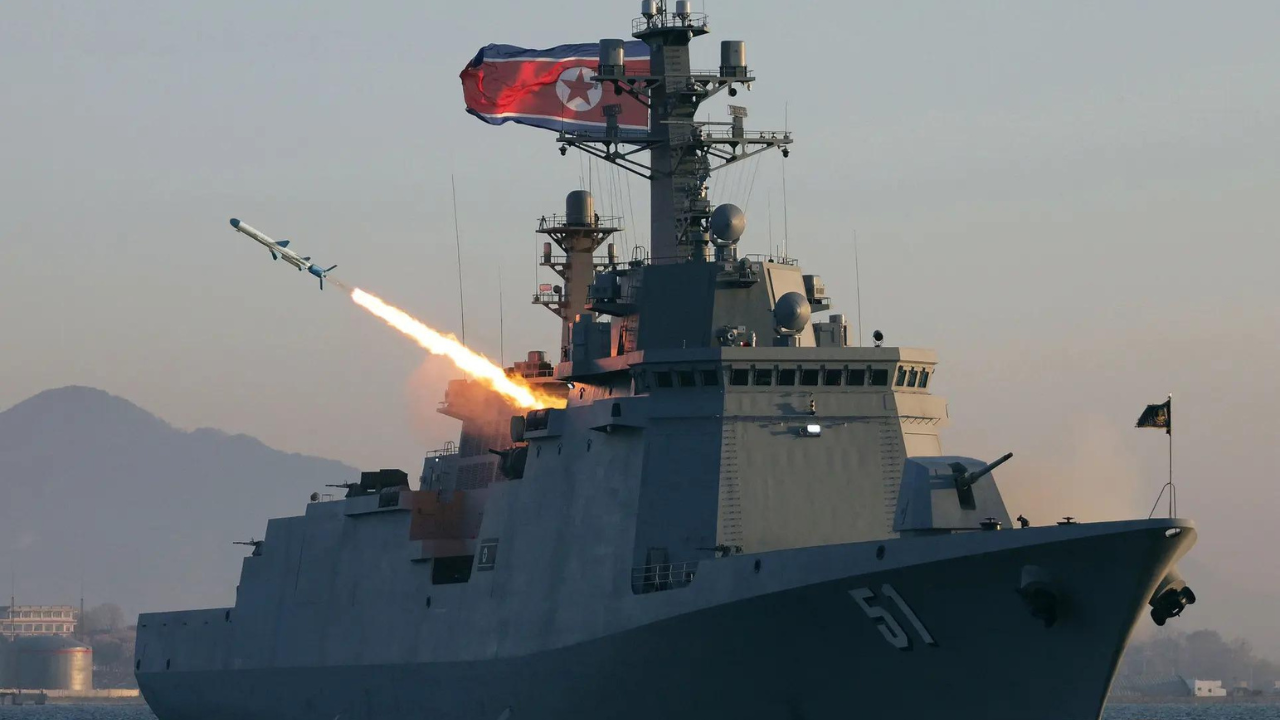
The water of the East Sea does not care about geopolitics. To a fisherman in Sokcho, the waves are a rhythmic pulse, a source of silver-scaled life, and a workplace that demands a specific kind of silence. But lately, that silence has been replaced by a sound that doesn't belong to the wind or the tide. It is a low, guttural roar that tears through the atmosphere, followed by a splash that carries the weight of a thousand diplomatic failures.
When North Korea fires a missile into the sea, the world sees a headline. They see a grainy image of a mobile launcher or a streak of white smoke against a pale blue sky. They read the dry, clinical reports from Seoul and Tokyo about "projectiles" and "calculated provocations." But if you stand on the coastline of Gangwon Province, the reality isn't a data point. It is a vibration in your chest.
The Ghost in the Water
Consider a hypothetical watch officer named Ji-hoon. He sits in a darkened room in Seoul, surrounded by the hum of cooling fans and the glow of high-resolution monitors. His job is to watch a green line. Most days, the line is a flat, predictable horizon. Then, without warning, it spikes.
A launch is not a singular event; it is a frantic race against physics. From the moment the ignition flare is detected by infrared satellites, Ji-hoon has seconds to determine the trajectory. Is it a short-range ballistic test? Is it a cruise missile hugging the waves to evade the very radar he is staring at? Or is it something new—a weapon designed to change the math of survival?
The recent tests at sea aren't just about technical milestones. They are a language. Pyongyang is speaking in cold, steel verbs. By launching into the water, they avoid the immediate catastrophe of a land hit while proving they can reach out and touch anyone they choose. The sea becomes a laboratory where the stakes are life and death, conducted in a space that feels empty but is actually crowded with the anxieties of millions.
The Calculus of Fear
Why now? The answer lies in the intersection of aging hardware and new, terrifyingly precise software. The "dry" news reports mention that South Korea is on alert. That is an understatement. To be on alert in the shadow of the 38th Parallel is to live in a state of permanent, low-grade electricity. It affects the stock market. It affects how parents look at their children during the morning commute. It affects the very architecture of the city, where subway stations double as bomb shelters.
The technology behind these missiles is evolving. We are no longer looking at the clunky, unreliable Scuds of the previous century. The new generation of solid-fuel missiles can be prepped in minutes, hidden in tunnels, and launched before a preemptive strike can even be authorized. This narrows the window of diplomacy to a sliver.
Imagine trying to negotiate a peace treaty while someone is flicking a lighter next to a gas leak. That is the current "strategic patience" of the peninsula. Each splash in the East Sea is a reminder that the lighter is still sparking.
The Invisible Fisherman
Let’s go back to the coast. The fisherman doesn't care about solid-fuel chemistry or the range of a KN-23. He cares about the "No-Sail Zones" that appear like bruises on his digital charts. When the North tests, the sea is partitioned. The fish don't move, but the boats must.
There is a profound irony in the fact that one of the most militarized patches of water on Earth is also a primary source of food. The nets come up half-empty because the "fresh missile tests" have turned the fishing grounds into a shooting gallery. The human cost isn't just the threat of war; it’s the erosion of a way of life. It’s the constant, nagging reminder that your backyard is a contested theater.
We often talk about these events as a chess match between leaders. We picture Kim Jong Un in a leather coat and the generals in Seoul huddled in a bunker. This perspective is a mistake. It treats the situation as a game where the pieces are made of wood. They aren't. They are made of people.
The Architecture of Response
South Korea’s response to these tests is a marvel of engineering and a tragedy of necessity. The "Kill Chain" system is designed to detect, track, and destroy missiles before they leave the ground. It is an incredibly complex network of satellites, Aegis-equipped destroyers, and ground-based interceptors.
$$F = ma$$
The physics are simple: to stop a mass moving at several times the speed of sound, you need an equal and opposite force applied with surgical timing. But the human element is messy. Decisions that involve millions of lives are being filtered through algorithms and the split-second instincts of young officers who grew up playing video games and now find themselves holding the controller for a real-world defense system.
There is a specific kind of exhaustion that comes from being "on alert" for seventy years. It is a cultural fatigue. When the sirens go off for a drill, people in Seoul often don't run. They walk. They look at their phones. They have integrated the possibility of annihilation into their daily routine. This isn't bravery, and it isn't apathy. It is a psychological defense mechanism—a way to keep breathing when the air is thick with the scent of propellant.
The Silence After the Splash
The most haunting part of a missile test isn't the launch. It is the silence that follows the impact. The missile enters the water, the white plume settles, and the sea closes back over the metal. For a few hours, the world holds its breath, waiting to see if this was the one that would trigger a cascade.
Then, the reports come out. "No damage reported." "Trajectory monitored." "International condemnation followed."
We return to our lives. We buy our coffee. we go to work. But the sea is different now. It contains a new piece of debris, a spent husk of a dream of power, resting on the sandy bottom alongside the shipwrecks of previous centuries.
We are taught to look at the sky to see the threat. We should be looking at the water. The sea is a mirror, and right now, it is reflecting a world that has forgotten how to speak in anything other than the language of the launch. The waves continue to crash against the rocks at Sokcho, indifferent and eternal, while we wait for the next roar to break the morning.
The fisherman hauls his net. The officer watches his screen. The cycle continues, a grim metronome ticking away in the heart of the Pacific, counting down to a moment everyone hopes will never arrive, even as they spend every waking hour preparing for it.