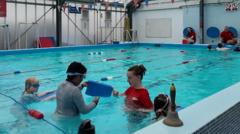
Drowning doesn't look like the movies. There is no waving arms, no shouting for help, and no dramatic splashing. It is quiet. It happens fast. That is why the recent demands from local swimming clubs for better school water safety lessons are so incredibly urgent.
We are failing our kids. Most parents assume that if their child can doggy paddle across a heated backyard pool, they are safe. They aren't. Standard school water safety lessons are often treated as a checkbox exercise, a fun day out of the classroom rather than an essential life-saving program. Swim clubs see the reality every day. Kids arrive at community pools without the most basic survival instincts.
The current system is broken, and changing it requires looking at what actually keeps a person alive in open water.
The illusion of pool safety
Most school programs focus heavily on stroke technique. They want kids to look good doing the front crawl or the breaststroke. While technique matters for fitness, it won't save a child who falls into a freezing lake or gets caught in a rip current at the beach.
Real survival swimming is entirely different. It means knowing how to float on your back when panic sets in. It means understanding cold water shock, which can paralyze your muscles in seconds. Most school water safety lessons take place in warm, indoor pools where the environment is perfectly controlled. The real world is never controlled.
When a swim club calls for better education, they want a shift in focus. We need to teach children how to handle unexpected situations. Falling into water fully clothed is a classic example. Have you ever tried to swim in jeans and a heavy sweatshirt? It feels like trying to swim through wet cement. Yet, very few school programs simulate this.
Where the national curriculum drops the ball
Many education frameworks technically require primary schools to teach swimming. The targets usually sound reasonable on paper. For instance, kids are supposed to be able to swim 25 meters unaided by the time they leave primary school.
But 25 meters in a calm, shallow pool is a low bar. It creates a false sense of security for parents and teachers alike. If a child hits that 25-meter mark, everyone celebrates and ticks the box. Then that same child goes to a local river or a beach, gets knocked over by a wave, and panics because they can't touch the bottom.
We need to raise the standard. A true water safety curriculum must include open water theory, hazard recognition, and peer-rescue techniques. Kids shouldn't be taught to dive in and save a struggling friend; they need to learn how to use ropes, branches, or flotation devices from the safety of the bank. Right now, these concepts are rarely mentioned in a standard school block.
Pool closures and the logistics nightmare
To be fair to schools, they face massive logistical hurdles. This isn't just about a lack of will. Local authority budgets are stretched to the absolute limit, and public pools are closing down at an alarming rate.
When a local pool closes, a school has to bus their students further away. That eats up travel time and skyrocketing transport costs. A half-hour swim lesson suddenly takes up an entire afternoon of the school day. Because of this, many schools compress their swimming education into a single two-week block once a year.
A two-week crash course does not build muscle memory. Swimming is a skill that requires regular exposure. When a child only steps into a pool for ten days out of the entire year, they forget almost everything before the next summer rolls around.
Swim clubs have the infrastructure and the coaches, but they cannot carry the burden alone. They need a direct partnership with schools and local governments to ensure pools stay open and accessible.
What real water safety education looks like
If we want to fix this, we have to rewrite the lesson plan completely. True water safety education isn't about collecting badges for distance. It focuses on the core principles of survival.
First, teach the "Float to Live" method. If you fall into water unexpectedly, your instinct is to swim hard. That uses up your oxygen and leads to drowning. Teaching kids to fight that instinct, lean back, star-fish, and float until their breathing regulates is the single most important skill they can learn.
Second, introduce environmental awareness. Children need to know how to spot a rip current from the shore. They need to understand that calm water on the surface of a river can hide deadly undercurrents underneath.
Third, build stamina over distance. Instead of focusing on speed, lessons should focus on treading water for extended periods. Ten minutes of continuous treading is far more useful in an emergency than a fast 50-meter sprint.
Moving beyond the classroom
Parents cannot simply assume the school has this covered. You need to verify what your child is actually learning. Ask the school tough questions. Are they learning to survive, or are they just playing with pool noodles?
If the school program is lacking, look to your local community swim clubs. Many offer targeted water safety courses during school holidays that focus specifically on open water survival.
We have to stop treating swimming as a luxury sport or an optional hobby. It is a fundamental safety requirement, no different than wearing a seatbelt or learning how to cross the street. Demand better from your local school board, advocate for your community pools, and make sure your kids know how to handle the water before they ever step near a beach.