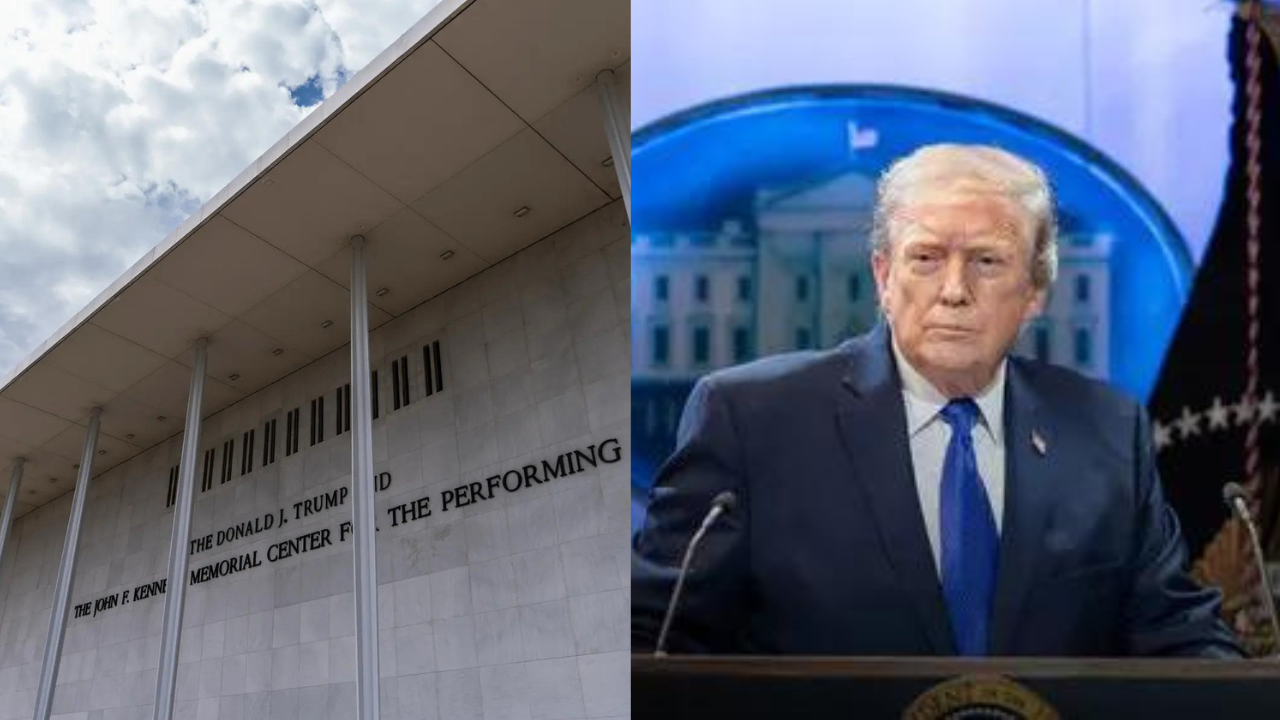
The corporate media is throwing a victory parade for historic preservation, but they are celebrating a corporate suicide pact.
U.S. District Judge Christopher Cooper’s 94-page block-buster ruling, which orders the immediate stripping of Donald Trump’s name from the John F. Kennedy Center for the Performing Arts and halts its scheduled two-year closure, is being hailed as a triumph for the rule of law. Representative Joyce Beatty is taking victory laps. Preservationists are weeping tears of joy over the protection of Edward Durell Stone's original 1970s architecture. If you enjoyed this post, you might want to look at: this related article.
They are blind to the balance sheet.
By celebrating the removal of the "Trump Kennedy Center" moniker and blocking the physical overhaul, the cultural establishment has won a purely symbolic battle while guaranteeing structural insolvency for Washington’s premier arts venue. For another look on this event, check out the recent update from Forbes.
I have watched cultural institutions blow through hundreds of millions of dollars on vanity projects, and I have watched them bleed out from deferred maintenance. What the legacy media framing misses entirely is that the Kennedy Center was already in a financial death spiral long before Trump installed himself as board chairman. Ticket sales were down, subscriptions were cratering, and the Washington National Opera ended its 55-year residency.
The establishment believes this ruling saves a monument. In reality, it traps an ailing institution in a legal and financial purgatory it cannot survive.
The Legal High of Statutory Purism
Judge Cooper’s ruling relies on an ironclad, albeit shortsighted, reading of the law. The Kennedy Center’s organic statute dictates that the center is named for John F. Kennedy. Period. The board cannot unilaterally slap a co-branding deal on the facade to please a sitting president.
"Congress gave the Kennedy Center its name, and only Congress can change it."
On the merits of statutory bounds, the ruling is correct. But look at the wreckage left in the wake of this legal purism.
To win this symbolic victory, the plaintiffs had to block the entire two-year renovation plan. The court called the board's decision to close "ill-informed and seemingly preordained." Perhaps it was. But halting the closure does not magically fix the underlying physical reality. The facility requires an urgent, massive restoration. Even the plaintiffs admit the infrastructure is failing.
By decoupling the money from the monument, the court has left the building structurally compromised and operationally paralyzed.
The $257 Million Funding Illusion
The lazy consensus assumes that because Congress approved $257 million for the renovation, the money is safely sitting in a vault ready to be spent under a different name. This is a profound misunderstanding of how federal appropriations and high-donor fundraising intersect in Washington.
Trump didn't just sign off on federal cash; he tied his personal brand and political capital to a massive private fundraising apparatus. Kennedy Center officials admitted in court filings that Trump had already raised tens of millions in private capital and pledged to secure an additional $150 million over the next two years.
That private money was not given out of a deep, abiding love for avant-garde theater or mid-century modern architecture. It was given to build the "Donald J. Trump and John F. Kennedy Memorial Center."
Remove the name, and the private capital vanishes.
Worse, look at Trump’s immediate reaction on Truth Social. He did not vow to fight the ruling in an endless cycle of appeals. Instead, he washed his hands of it, instructing the Department of Commerce to arrange a full transfer of the institution back to Congress.
This is the ultimate poison pill. A federalized cultural institution completely dependent on the whims of a divided Congress for its operational, maintenance, and management budgets is an institution marked for death.
Imagine a scenario where a Republican-led House refuses to fund operations because the center stripped Trump's name, while a Democratic Senate refuses to fund it unless specific progressive programming is guaranteed. The Kennedy Center will become a weaponized line-item in the next budget showdown, stuck in a permanent continuing resolution loop while its roof leaks and its seats rot.
The Ghost Calendar Catastrophe
The most immediate, brutal consequence of this ruling is the operational vacuum it creates over the next 24 months.
In preparation for the scheduled July closure, the Kennedy Center board did exactly what any responsible management team would do: they cleared the calendar. They wound down programming. They laid off the vast majority of their production, stage, and administrative staff. High-profile national tours, including the cash-cow run of Hamilton, packed up and booked other venues.
Judge Cooper’s injunction states that his decision "does not purport to dictate how the Center should be run." But by blocking the closure after the staff has been fired and the shows have been canceled, the court has ordered an empty stadium to stay open.
- The Staffing Void: You cannot rebuild a world-class theatrical production team in 14 days.
- The Calendar Void: Major Broadway tours and symphony orchestras plan their routes two to three years in advance. You cannot fill a 2,400-seat theater with local community acts and hope to break even.
- The Fixed Costs: The lights must stay on, the skeletal security crew must be paid, and the climate control must be maintained to protect the instruments and interiors—all with zero ticket revenue coming in.
The establishment won the right to keep John F. Kennedy’s name unblemished on the outside of a dark, empty, bankrupt building.
The Architecture Fetish Over Cultural Utility
The second lawsuit, brought by preservation groups like the DC Preservation League, complained that the administration had already caused "historic harm" by painting the building's 200 original gold exterior columns white.
This is aesthetic elitism masking as public service.
An arts center is not a mausoleum. Its primary value is its utility to the living culture, not its preservation as a static 1971 time capsule. The Trump plan, which included exposing the building’s steel skeleton and constructing a massive new ballroom, was explicitly designed to turn a cold, institutional monolith into a high-yield event space capable of cross-subsidizing non-commercial performing arts.
Yes, the methods were aggressive. Yes, the board acted with executive high-handedness. But the status quo preservationists offer no alternative model for financial sustainability. Their strategy is to keep the building exactly as it was, even if nobody is inside it.
The Wrong Question Entirely
The public debate is bogged down in a tribal argument: Is Trump desecrating a monument to JFK, or is an activist judge blocking progress?
This is completely the wrong question.
The real question we should be asking is why a premier national cultural institution is structured so precariously that its physical survival depends entirely on the vanity of whoever occupies the Oval Office.
The institutional model of the Kennedy Center is broken. It relies on a delicate, unsustainable mix of federal handouts, elite socialite galas, and blockbuster commercial theater loops. When any one of those pillars wobbles, the whole tent collapses. Trump saw the vulnerability and leveraged it to buy a piece of architectural immortality. The court saw the overreach and used a technicality to smash it.
The downside of my contrarian view is obvious: allowing political figures to buy naming rights to national monuments sets a dangerous precedent. It turns the National Mall into a corporate strip mall.
But the alternative we are looking at today is worse. We have saved the name of the monument at the cost of its utility. The legal victory won by the cultural elite ensures that the Kennedy Center will spend the next two years as a hollowed-out political football—pristine, historic, legally compliant, and completely dead inside.