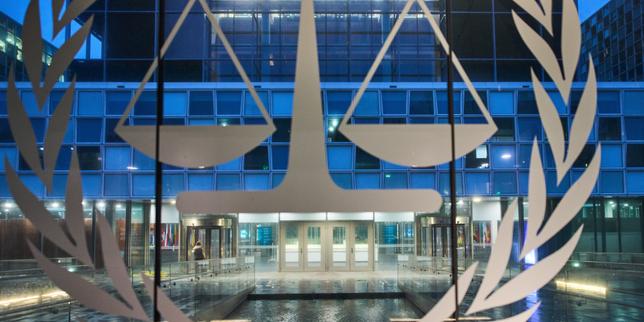
The International Criminal Court just took another massive blow to its credibility in Africa. Niger, Mali, and Burkina Faso announced their departure from the tribunal, blasting it as a selective tool used by Western powers to target African leaders while ignoring global atrocities elsewhere. If you have followed the chaotic geopolitics of the Sahel over the last few years, this announcement shouldn't surprise you at all. It is the logical next step for three military-led nations that are systematically burning down their old bridges with the West.
The decision cuts deep into the heart of international law. For years, the International Criminal Court faced accusations of bias. Critics pointed out that the court spent its first decade almost exclusively prosecuting Africans while turning a blind eye to actions by powerful Western nations or their allies. By walking away, Niamey, Bamako, and Ouagadougou are doubling down on their sovereignty. They are telling the world that they will no longer accept external judicial oversight from a court they view as compromised.
This move creates a legal vacuum that will alter how accountability, justice, and conflict operate in West Africa.
The breaking point for the International Criminal Court in the Sahel
The decision to quit the Rome Statute did not happen overnight. Relations between the International Criminal Court and these three nations have been rotting for years. Mali initially referred its own situation to the court back in 2012 during the height of its northern insurgency. Since then, the court opened investigations into war crimes committed by various armed groups. But the political landscape flipped completely after successive military coups shook the region between 2020 and 2023.
When military juntas took power in Bamako, Ouagadougou, and Niamey, their priorities shifted. They stopped cooperating with Western institutions. They kicked out French military forces. They withdrew from the regional bloc ECOWAS. The International Criminal Court quickly became the next logical target.
The immediate catalyst for the split stems from a deep frustration with what these regimes call judicial imperialism. Sahelian leaders frequently point out the hypocrisy of global justice. They ask why international prosecutors are incredibly quick to investigate human rights abuses in Africa but move at a snail's pace, or not at all, when dealing with major global conflicts involving Western allies. This argument resonates strongly with local populations who are tired of external interference.
Sovereignty over global oversight
By rejecting the court, the Alliance of Sahel States is signaling a total break from the post-colonial legal framework. The leaders of these nations argue that their domestic courts are fully capable of handling any legal infractions or human rights issues within their borders. They want to control their own narrative.
This shift presents a massive challenge for international human rights organizations. For decades, groups like Amnesty International and Human Rights Watch relied on the threat of International Criminal Court intervention as a tool of last resort. The idea was simple. If a state refused to prosecute war crimes, the international community would step in. That leverage is now completely gone in this part of West Africa.
Without the threat of international prosecution, military leaders have a free hand to conduct counter-insurgency operations exactly how they see fit. The region is currently fighting a brutal war against jihadist factions linked to Al-Qaeda and the Islamic State. These military governments argue that international legal constraints only hamper their ability to fight terrorists who do not play by any rules anyway.
A systemic shift toward new global alliances
This legal divorce reflects a much larger geopolitical realignment. As Niger, Mali, and Burkina Faso distance themselves from Western-backed institutions like the International Criminal Court, they are actively embracing new partners. Moscow and Beijing are filling the void at lightning speed.
Russia provides military assistance and security details without attaching strings related to human rights or democratic transitions. China brings infrastructure investments. Neither country cares about the Rome Statute. In fact, Russia withdrew its signature from the treaty years ago, and China never signed it in the first place. By aligning with these superpowers, the Sahel nations are building a shield against Western diplomatic pressure.
This leaves the International Criminal Court in a weak position. The court already struggles to enforce its warrants. It has no police force of its own. It relies entirely on the cooperation of member states to make arrests. When entire regions opt out of the system, the court loses its geographic reach and its practical ability to deter future abuses.
What happens to ongoing investigations
You might wonder what happens to the cases and investigations that are already on the books. Legally speaking, a withdrawal from the Rome Statute takes a full year to become official after the formal notification is submitted. Even after that period ends, a country is technically still liable for obligations that incurred while it was a member.
That is the theory. The practical reality is completely different.
Do not expect Mali or Burkina Faso to hand over suspects or allow international investigators to roam around their territory anymore. Ground operations by international prosecutors will stall completely. Local authorities will simply ignore requests for cooperation, leaving active files stuck in permanent bureaucratic limbo.
The local courts will take over, but critics argue these domestic judicial systems lack the independence required to prosecute top-tier military officials or state-backed actors. The domestic courts will likely focus their energy exclusively on prosecuting captured jihadist fighters, ensuring that state forces remain entirely insulated from legal scrutiny.
How other African nations might respond
The exit of the Sahel states could trigger a dangerous domino effect across the continent. This is not the first time African nations have threatened a mass walkout from the International Criminal Court. Years ago, Burundi actually left, and nations like South Africa and Kenya seriously debated pulling the plug after the court targeted their leaders.
While many African nations chose to stay and fight for reforms from within the system, the bold exit of the Alliance of Sahel States provides a blueprint for others. Any African government facing intense international pressure over domestic policies now has a clear path forward. They can simply label the court a political weapon, pack their bags, and walk away.
To stop a wider exodus, the court needs to change how it operates. It must demonstrate that it can apply international law equally, regardless of the target's geopolitical alignment. If the tribunal continues to look like an institution that only prosecutes leaders from developing nations, it will face more defections.
If you are tracking international relations or doing business in West Africa, stop assuming that Western legal standards hold the same weight they did a decade ago. Update your risk assessments to reflect a completely fragmented legal environment in the Sahel. Watch the upcoming African Union summits closely to see if other nations echo the rhetoric coming out of Niamey, Bamako, and Ouagadougou. The era of unquestioned global judicial oversight in Africa is officially over.