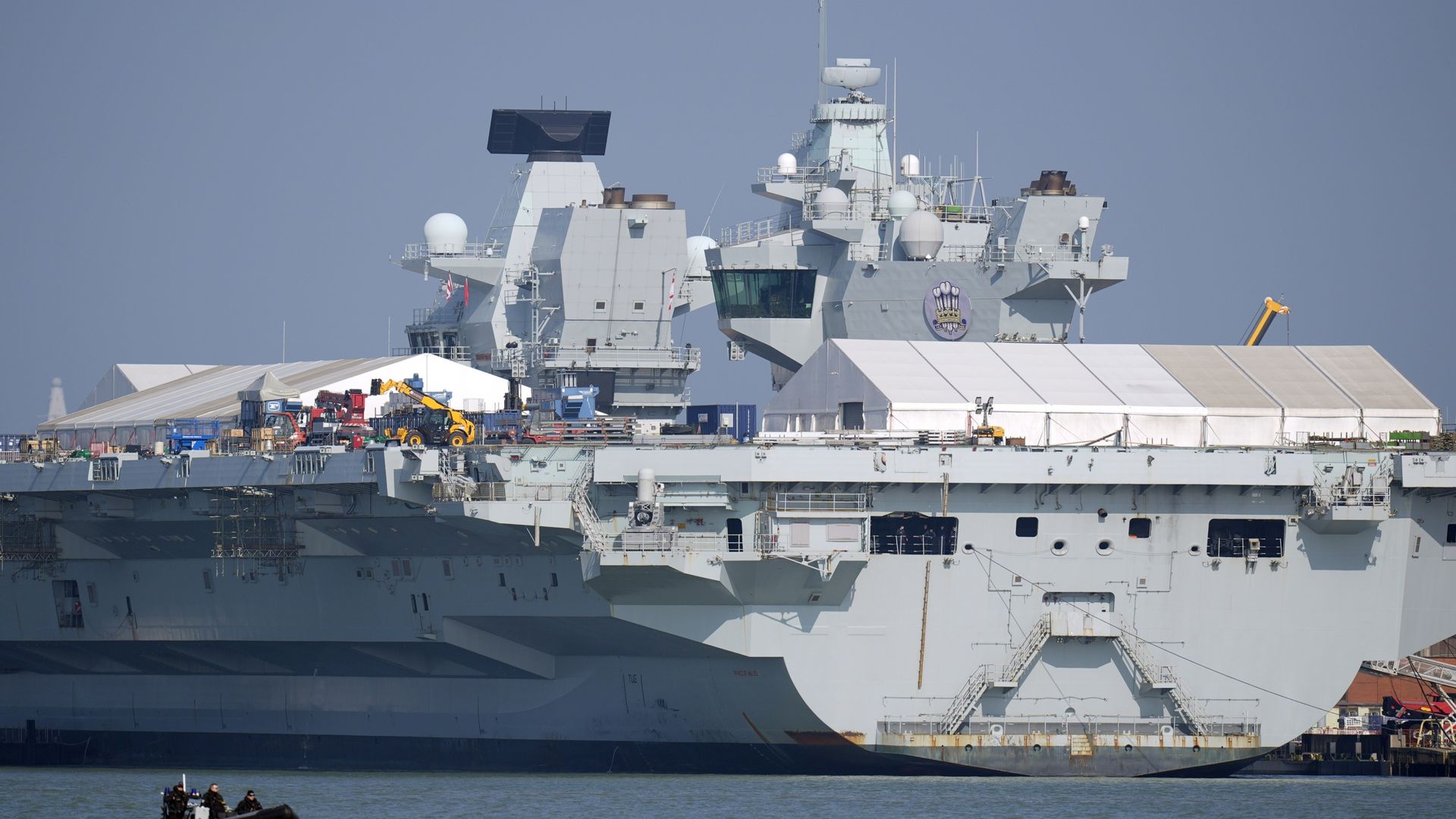
Another deployment, another mechanical headache. The Royal Navy’s massive £3.5 billion aircraft carrier, HMS Prince of Wales, is stuck at a jetty in Stavanger, Norway. The Ministry of Defence calls it a minor technical issue. They always do. But when your multi-billion-pound flagship suffers yet another breakdown during a high-stakes deployment to the Arctic, the official PR spin wears thin.
This isn't an isolated incident. It's part of a frustrating pattern that raises serious questions about British naval readiness. If you've been tracking the career of the Queen Elizabeth-class carriers, you know this story by heart. These ships look terrifying on paper, but they struggle with the basics of staying afloat and operational.
Let's look at the actual reality behind the latest breakdown, what it means for NATO security in the High North, and why these massive warships keep running into trouble.
The Stavanger Stall and the Real Cost of Carrier Operations
HMS Prince of Wales left Loch Long in Scotland with plenty of momentum. It headed north alongside the Type 45 destroyer HMS Duncan and the RFA Tidespring tanker. The mission was straightforward: fly the flag, work with NATO and the Joint Expeditionary Force, and show Russia that the UK can secure the North Atlantic.
Instead, the ship is sitting in a Norwegian port city while engineers scramble. The Ministry of Defence insists the vessel will sail in the coming days. They haven't disclosed exactly what broke down this time. Navy sources admit that behind closed doors, this latest glitch is devastating for crew morale.
You can't blame them. The crew of 678 personnel—which swells to 1,600 when the full air wing is embarked—trains relentlessly for these missions. To get sidelined in a friendly Scandinavian port before the real work even begins is embarrassing.
The financial footprint of these issues is massive. Maintaining and repairing the twin carriers, HMS Queen Elizabeth and HMS Prince of Wales, has already drained over £1 billion from the UK defense budget. When things go wrong at sea, the bills pile up fast.
A History of Breaking Down at the Worst Time
To understand why this latest malfunction stings so badly, you have to look at the track record of these 65,000-ton behemoths. They are the largest warships ever built for the Royal Navy. They can carry up to 72 aircraft, including 36 advanced F-35B stealth fighters. Yet, their mechanical reliability has been plagued by bad luck and questionable engineering.
- August 2022: HMS Prince of Wales suffered a massive mechanical failure just after leaving Portsmouth for high-profile exercises with the US Navy. An external coupling on the starboard propeller shaft snapped because it was misaligned during installation. The ship spent months in dry dock at Rosyth for repairs.
- Early Years: The same vessel suffered two separate, severe internal floods during its first year of service after being commissioned in 2019. One leak filled an engine room with thousands of gallons of water, ruining critical electrical systems.
- 2024: Sister ship HMS Queen Elizabeth had to pull out of a major NATO exercise off the Norwegian coast at the last minute. The culprit? A nearly identical coupling issue on its own starboard propeller shaft. HMS Prince of Wales had to take its place.
It is a bizarre reality. The UK built two identical carriers so that one would always be available while the other underwent maintenance. Instead, both ships have a habit of failing when the spotlight shines brightest.
The Strategic Nightmare in the High North
This isn't just a British problem. It's a NATO headache. The North Atlantic and the Arctic are no longer sleepy maritime backwaters. They are critical geopolitical choke points. Russian submarine activity in the GIUK (Greenland, Iceland, and United Kingdom) gap is at its highest level since the Cold War.
The UK carrier strike group is supposed to be the primary European deterrent in these waters. When a carrier suffers a technical issue, it leaves a massive gap in anti-submarine and air defense coverage. HMS Duncan is an incredibly capable Type 45 air defense destroyer, but it cannot replace the sheer radar presence, command facilities, and helicopter-borne anti-submarine capabilities of a 284-meter carrier.
Without the carrier active, the Royal Navy relies heavily on its Merlin MK2 helicopters and the Crowsnest radar systems to track underwater threats. If the platform holding those helicopters is stuck at a pier in Norway, the entire naval strategy for the High North gets compromised.
What the Royal Navy Must Do Next
Building complex warships is incredibly hard. Things break. But the British public and international allies are losing patience with the phrase "minor technical issue." The Royal Navy needs to transition from firefighting individual crises to fixing systemic issues.
First, engineering transparency must improve. Hiding behind vague defense statements only fuels speculation that these ships have deep, foundational design flaws. If the issue in Stavanger is a simple auxiliary system failure, the Ministry of Defence should state it openly.
Second, the procurement and maintenance pipeline needs a drastic overhaul. The UK cannot afford to keep spending hundreds of millions of pounds on emergency dry-dock repairs every time a propeller shaft or an engine component decides to quit.
If you are following defense spending, the lesson here is clear. Hard power isn't measured by the size of the ship you build. It's measured by whether that ship can actually leave the harbor when a crisis hits. Right now, the Royal Navy has a lot of steel, but not enough reliability. The coming days in Norway will show whether this latest issue is just a quick fix or another long, expensive setback for the fleet.