Sixteen thousand kilometers of salt water and silent air separate the dust of New Delhi from the lush, humid air of Port of Spain. On a map, the distance is an absurdity. One is a sprawling continental giant, a tectonic plate of history and ambition; the other is a twin-island heartbeat in the Caribbean, where the pace of life is dictated by the trade winds and the rhythm of the steelpan. Yet, if you stand on the boundary of a cricket pitch in either place, the distance vanishes.
It is a strange magic. You might also find this connected article insightful: The MAHASAGAR Illusion Why Indias Maritime Diplomacy Is Paper Thin.
Consider a young boy in Port of Spain. His name is irrelevant because his story is universal. He is crouched in a narrow alleyway, holding a piece of weathered wood. His "wicket" is a set of crates stacked against a sun-bleached wall. He isn't thinking about geopolitics. He isn't thinking about the Indian External Affairs Minister, S. Jaishankar, or the diplomatic nuances of a bilateral meeting.
He is thinking about the spin of the ball. As highlighted in recent articles by The Guardian, the results are notable.
Across the ocean, another child is doing the exact same thing in a crowded Mumbai lane. They are mirrors of each other, separated by history and geography but united by a specific, shared obsession. When Dr. Jaishankar stood in Trinidad and Tobago recently, he wasn't just checking a box on a diplomatic itinerary. He was acknowledging that the red leather ball, held together by six rows of hand-stitched twine, is perhaps the most effective diplomat the world has ever seen.
The Ghost of the 1970s
To understand why this connection matters, we have to look past the modern stadiums and the corporate sponsorships. We have to go back to a time when the relationship between India and the Caribbean was being forged in the heat of competition.
In the early 1970s, Indian cricket was a story of survival. The team was often seen as the underdog, the polite visitor that would fold under pressure. Then came the 1971 tour of the West Indies. Sunil Gavaskar, a man who would become a deity in the Indian sporting pantheon, stepped onto Caribbean soil. He didn't just play; he dominated. He scored 774 runs in that series.
The locals didn't resent him. They sang about him.
Lord Relator, a legendary calypsonian, composed a song that echoed through the streets of Trinidad. "It was Gavaskar, the real master," the lyrics went. This wasn't just sports reporting set to music. It was the birth of a shared identity. The people of Trinidad and Tobago, many of whom trace their ancestry back to the indentured laborers who arrived from Indian shores over a century ago, saw a piece of themselves in that success.
The cricket pitch became a space where the trauma of the past—the migrations, the labor, the displacement—could be processed through the lens of excellence. It turned a cold historical fact into a living, breathing bond.
More Than Just a Game
When we talk about "soft power," we often mean movies, food, or music. But cricket is something deeper for India and Trinidad and Tobago. It is a shared language. You can drop a person from Port of Spain into the middle of a village in Uttar Pradesh, and if they start talking about the mechanics of a late cut or the ethics of a "Mankad," the cultural barriers dissolve instantly.
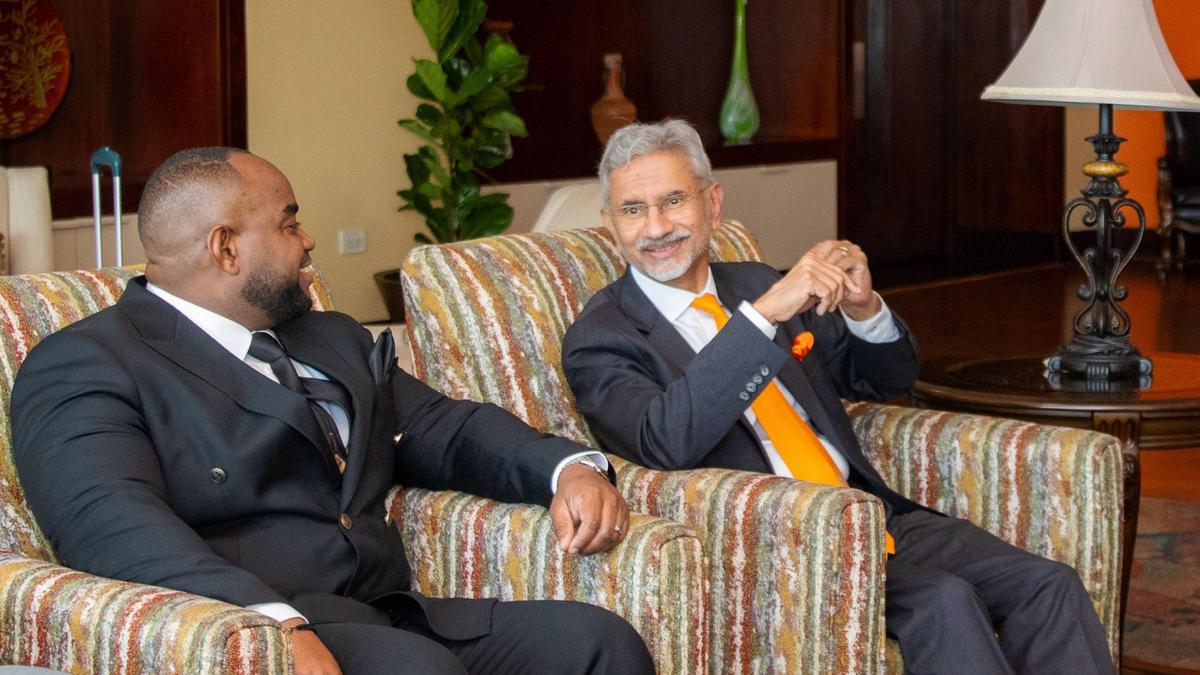
During his visit, Jaishankar highlighted that this "special dimension" of the relationship is what allows the two nations to talk about much heavier topics—energy security, trade, technology, and healthcare. It is easier to sign a memorandum of understanding when you have spent decades cheering for the same legends.
Consider the presence of the Caribbean Premier League (CPL) and the Indian Premier League (IPL). These aren't just businesses. They are the modern Silk Road. Players like Kieron Pollard and Sunil Narine are household names in India. They aren't "foreigners" in the eyes of an Indian fan; they are heroes who wear the colors of Mumbai or Kolkata.
This exchange creates a feedback loop of familiarity. When an Indian IT firm looks to expand into the Caribbean, or when a Trinidadian energy company seeks a partnership in South Asia, they aren't walking into a room of strangers. They are walking into a room of people who understand the same metaphors.
The Invisible Stakes
Why does this matter now? Why should we care about a diplomat talking about sports in an era of global instability?
The world is fragmenting. Old alliances are fraying, and new ones are often transactional and cold. In this environment, "organic" connections are worth more than any trade deal. The relationship between India and Trinidad and Tobago isn't manufactured by a marketing agency. It was built over 150 years of shared struggle and shared joy.
There is a vulnerability in this. To love a sport is to be open to heartbreak. When India loses to the West Indies, or vice versa, there is a genuine emotional toll. But that pain is a sign of life. It means the relationship isn't just on paper. It exists in the hearts of millions of people who care enough to be angry, or ecstatic, or devastated.
Jaishankar’s visit was a reminder that we often overlook the most powerful forces in our lives because they seem too simple. We look for complexity in policy papers, but the real power lies in the things that make us sit on the edge of our seats at 2:00 AM, watching a screen, waiting for a bowler to begin his run-up.
The Weight of the Heritage
There is a specific kind of silence that falls over a crowd when a game reaches its peak. It’s a heavy, expectant quiet. In that moment, the history of the Indian diaspora in the Caribbean—the "Kala Pani" crossings, the preservation of traditions against all odds—feels incredibly present.
The people of Trinidad and Tobago have curated a culture that is uniquely theirs, yet deeply connected to the Motherland. Their food, their festivals, and their names all whisper of a journey that began long ago. Cricket is the thread that keeps that journey from being forgotten. It is the bridge that allows a third-generation Trinidadian to feel a surge of pride when India succeeds on the world stage, and for an Indian fan to feel a kinship with the flair and "calypso" style of Caribbean play.
This isn't about nostalgia. It’s about the future.
As India moves toward its goal of becoming a leading global power, it needs partners who understand its soul, not just its balance sheet. Trinidad and Tobago, as a gateway to the Americas and a key player in the Caribbean Community (CARICOM), offers more than just geographic strategy. It offers a mirror.
The Pulse of the Pitch
The sun sets over the Queen's Park Oval. The long shadows of the palm trees stretch across the grass, reaching toward the center of the field. In the stands, the talk isn't about GDP or maritime security. It's about whether the pitch will take spin in the fourth innings. It's about the "sweet spot" on a willow bat.
But the diplomat is watching. He knows.
He knows that every time a young girl in Chaguanas picks up a ball, she is part of a grander design. He knows that every time a technician in Bangalore watches a highlight reel of Nicholas Pooran, the two nations move an inch closer together.
We live in a world that tries to quantify everything. We measure "impact," "engagement," and "return on investment." But how do you measure the feeling of a whole nation holding its breath? How do you put a price on the shared roar of a crowd that spans two different hemispheres?
The red stitch on the cricket ball is more than just a seam. It is a suture. It holds together two cultures that, by all rights, should have drifted apart a century ago. Instead, they are closer than ever.
The game goes on. The ball is bowled. The bat swings. And somewhere in that brief moment between the release and the contact, sixteen thousand kilometers simply cease to exist.