Western intelligence briefs and mainstream defense blogs love a good crisis. The narrative is always identical: a regional militant group threatens a choke point, global supply chains stand on the precipice of collapse, and energy markets prepare for a catastrophic shock.
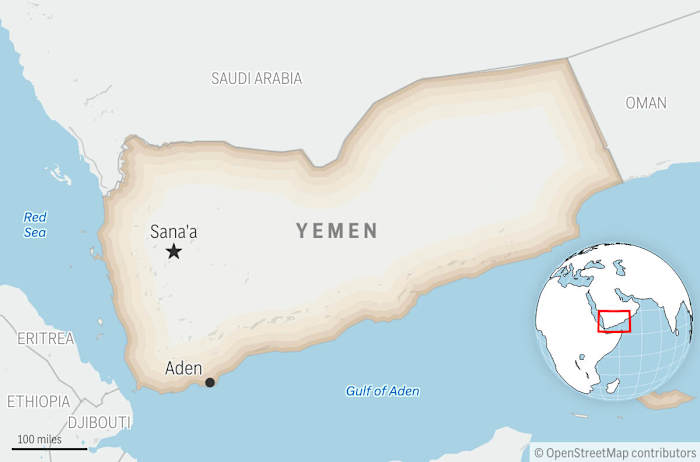
The latest panic centers on the Bab al-Mandab strait. Media outlets are breathlessly reporting that Yemen’s Houthi movement will entirely block Saudi shipping at this vital Red Sea gateway. It sounds terrifying. It makes for fantastic cable news chyrons.
It is also a profound misunderstanding of modern maritime logistics, regional energy politics, and the actual limits of asymmetrical warfare.
The lazy consensus treats the Red Sea like a highway that can be blocked by parking a single broken truck across the lanes. The reality is far more complex, highly transactional, and remarkably resilient. The Houthis are not about to crash the global economy, and Saudi Arabia is not defenseless.
Let's dismantle the panic.
The Geography Fallacy: The Red Sea Has a Back Door
Commentators look at a map, see a narrow strait, and assume total vulnerability. This ignores basic infrastructure.
Saudi Arabia is not a landlocked nation dependent on a single exit point. I have spent years analyzing supply chain risk architectures, and the first rule of logistics is redundancy. The Saudis spent decades building for this exact scenario.
Enter the East-West Crude Pipeline.
This massive infrastructure project spans the Saudi peninsula, connecting the oil-rich Eastern Province directly to the port of Yanbu on the Red Sea.
- The Capacity: The pipeline can move roughly 5 million barrels of crude oil per day.
- The Bypass: Yanbu sits well north of the Bab al-Mandab strait.
- The Reality: Saudi crude destined for Europe or North America via the Suez Canal does not even need to pass the Houthi-controlled coastline.
When analysts scream about a total blockade of Saudi shipping, they assume every drop of oil must travel south past Yemen. It does not. The infrastructure to bypass the bottleneck already exists, is operational, and can absorb a massive redistribution of export volume.
The Myth of the Total Blockade
To truly block a maritime gateway, a force needs total sea denial capability. The Houthis possess anti-ship cruise missiles, loitering munitions, and fast attack craft. These are highly effective tools for harassment, asymmetric disruption, and driving up insurance premiums. They are completely inadequate for a total, sustained blockade.
A real blockade requires constant surveillance, absolute air superiority, and the ability to intercept every vessel entering a designated zone.
Imagine a scenario where a localized militant force attempts to halt all traffic through a 20-mile-wide channel while facing modern naval coalitions. The moment a systematic, indiscriminate blockade is attempted, the rules of engagement change.
Harassment is tolerated by the international community because the cost of escalation is high. A total shutdown of international transit triggers a disproportionate kinetic response that no localized group can survive long-term.
Furthermore, shipping companies are not helpless targets. They adapt. They reroute around the Cape of Good Hope. Yes, it adds 10 to 14 days to the journey. Yes, it increases fuel costs and strains container capacity. But a delay is not a destruction of supply. It is a price hike. The global economy handles price hikes; it does not freeze because a single strait becomes high-risk.
The Tehran Strings: The Limits of Proxy Control
The conventional wisdom dictates that Iran snaps its fingers and the Houthis execute orders. This overlooks the fundamental friction between sponsors and proxies.
Iran uses regional leverage to negotiate sanctions relief and project power. Tehran does not want a total regional conflagration that destroys its own economic lifelines. China is Iran’s largest oil customer. China relies heavily on stable global trade routes, including the Red Sea, for its manufacturing exports.
If the Houthis completely close the Red Sea, they do not just hurt the West or Saudi Arabia. They directly damage Beijing's economic interests.
I have seen corporate risk boards completely misjudge state-backed actors by assuming monolithic alignment. Tehran will allow the Houthis to rattle sabers, launch sporadic strikes, and score propaganda victories to satisfy domestic audiences. Tehran will not allow them to permanently alienate China or trigger a full-scale Western intervention that decimates the asset they spent billions building.
The Insurance Shell Game
What actually happens when tension rises in the Bab al-Mandab? The crisis isn't military; it’s financial.
War risk underwriters immediately spike premiums for vessels transiting the zone. This is where the media misinterprets the threat. The Houthis don't need to sink ships to disrupt trade; the insurance market does it for them.
However, this creates a massive opportunity for alternative flag states and state-backed insurance pools. We are already seeing the emergence of dark fleets and non-Western insurance consortia that operate completely outside the traditional London maritime insurance matrix. Russian, Chinese, and regional entities frequently absorb the risk themselves, allowing traffic to flow regardless of Western risk assessments.
The Western maritime monopoly is not absolute. The threat of rising insurance premiums merely accelerates the fragmentation of global shipping into parallel ecosystems—one risk-averse and Western-compliant, the other risk-tolerant and state-insulated.
The Real Vulnerability Nobody Is Talking About
If you want to worry about a real vulnerability, stop looking at the surface of the water. Look at the seabed.
The Bab al-Mandab is a critical corridor for undersea fiber-optic cables that carry the vast majority of digital traffic between Europe and Asia.
- A severed pipeline causes a temporary spike in oil prices.
- A severed data cable causes immediate, catastrophic disruptions to global financial markets, cloud computing, and international communications.
Sinking a tanker requires sophisticated missile guidance. Cutting a submarine cable requires a low-tech anchor dragged along the sea floor by a rogue fishing trawler. Yet, defense analysts remain obsessed with anti-ship missiles while ignoring the physical infrastructure underpinning the digital economy right beneath the hulls.
Stop asking if the Houthis can stop the oil. Start asking what happens when the internet goes dark between Mumbai and Marseille. That is the asymmetry that matters.
The threat at the Red Sea gateway is a highly orchestrated exercise in leverage, not an existential threat to global commerce. The channels will remain volatile, the premiums will remain high, and the ships will keep moving.