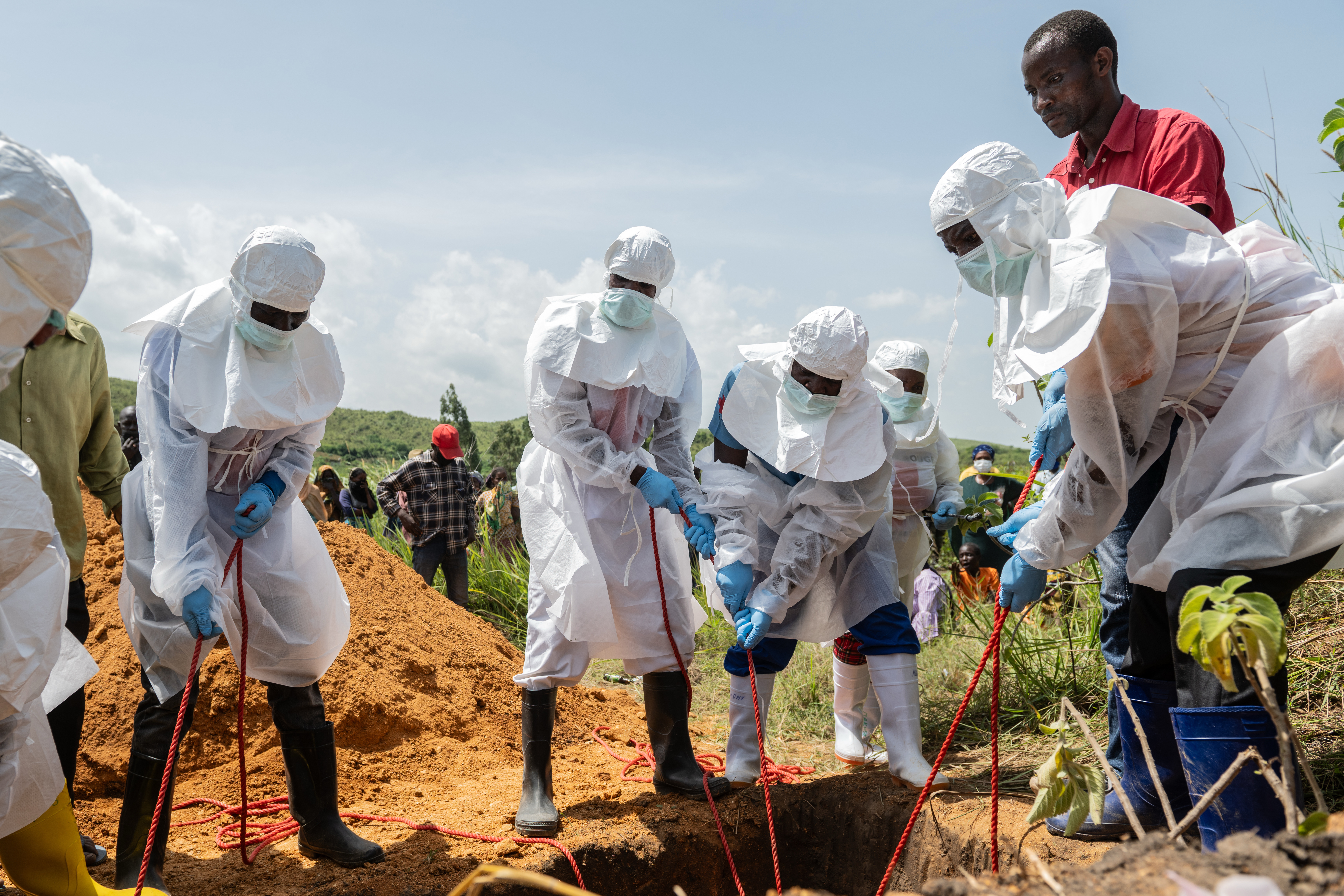
The plastic sheets of an isolation ward have a specific, agonizing sound when the wind hits them. It is a sharp, relentless snapping. In the eastern forests of the Democratic Republic of Congo, that sound is often the only warning that a community is about to be consumed.
We measure catastrophes in numbers because numbers are clean. They stay inside the lines of a spreadsheet. This week, the spreadsheet from the World Health Organization got heavier. Tedros Adhanom Ghebreyesus, standing before microphones in Geneva, announced a number that should make the world stop moving: more than 900 suspected cases of Ebola.
Nine hundred.
To the global public, that number is a data point. It is a blip on a news feed, easily scrolled past between a celebrity divorce and a stock market dip. But to understand what is actually happening in the dust of North Kivu and Ituri provinces, you have to look past the digit. You have to look at the ink.
In the makeshift operations clinics, health workers use a physical map pinned to a corkboard. Every time a call comes in over the scratchy radio—a mother bleeding in a village three miles from the nearest road, a teenager who collapsed at a market—a red dot is pressed into the paper. Right now, those dots are clustering. They are bleeding into one another, turning the paper from a map into a stain.
Consider a hypothetical family in a village just outside Beni. Let us call the father Alphonse. He does not know about the World Health Organization. He does not read the press releases issued in Switzerland. What Alphonse knows is that his eldest daughter went to a funeral last week, came home with a headache, and is now shivering so violently that the wooden frame of her bed rattles against the mud wall.
He wants to hold her. He wants to wipe the sweat from her forehead with his bare hand.
If he does, he might die.
This is the cruelty of the virus. It weaponizes human empathy. It takes our most primal, beautiful instinct—the urge to comfort our dying children—and turns it into a vector for slaughter. The fluid that escapes the body carries a viral load so concentrated that a single touch can pass the sentence down to the next person in line.
But the real problem lies elsewhere. It is not just the biology of the filovirus; it is the terrain of human fear.
The eastern DRC is not a blank slate. It is a region scarred by decades of conflict, deeply rooted mistrust of authority, and a rotating cast of armed militia groups. When men in white hazmat suits descend from white SUVs, they do not look like saviors to the local population. They look like astronauts. They look like an occupying army.
Rumors travel faster than the pathogen. The whispers in the marketplaces say that the foreigners brought the disease to make money. They say the treatment centers are places where people are taken to have their organs harvested. When you live in a place where violence has been the only constant for thirty years, believing a conspiracy theory is not foolishness. It is a survival mechanism.
As a result, people hide.
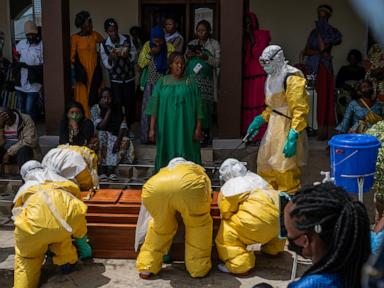
They hide their sick in the dark corners of their huts. They bury their dead at night, under the cover of the forest canopy, bypassing the safe burial teams who arrive with bleach sprays and body bags. Every secret burial is a match dropped into dry brush. Every hidden fever is a new cluster waiting to explode.
The response teams are fighting on two fronts simultaneously. On one side is a virus that liquefies internal organs. On the other is a population so terrified that they sometimes throw stones at the ambulances.
Dr. Tedros noted that the risk remains very high at the national and regional levels. That is the diplomatic way of saying the dam is creaking. The disease has already crept toward the border of Uganda. All it takes is one infected trader, one desperate grandmother boarding a wooden minibus to seek a healer across the provincial line, and the numbers cease to be a Congolese tragedy. They become an international emergency.
We have been here before. The memories of the West Africa outbreak a decade ago are still fresh enough to draw blood. We promised then, with all the solemnity of international treaty-making, that we would never let the response mechanisms lag again. We built rapid-response teams. We developed experimental vaccines.
The vaccines exist now. They are a triumph of modern science, a shield that can stop the virus in its tracks if administered quickly enough around an active case. But a vaccine in a cold-storage unit in Goma is useless if the road to the outbreak is controlled by rebels with Kalashnikovs. Science cannot cure a war zone.
Look closely at how a crisis like this unfolds. It is slow until it is instantaneous.
For weeks, the numbers creep upward. Twenty cases. Fifty. One hundred. The public grows accustomed to the low hum of anxiety. The collective consciousness normalizes the threat. Then comes the tipping point—the moment where contact tracing becomes impossible because there are simply too many branches on the transmission tree to follow.
With 900 suspected cases, the tree is already a forest.
The health workers on the ground are exhausted. Their eyes are bloodshot behind their plastic visors. They work in suffocating heat, sealed inside layers of impermeable gear that turn their own sweat into a pool around their ankles. They know that a single tear in a rubber glove, a single moment of fatigue where they rub an itchy eye before decontaminating, could mean their own name is written on the ward whiteboard next week.
Yet they go back in. They walk back through the plastic zippers because they know that if they stop, the red dots on the map will keep marching southward toward major urban centers.
This is not a story about a faraway continent with unfamiliar problems. The distance between a remote village in North Kivu and a major international airport is exactly one flight. The global health infrastructure is only as strong as its most vulnerable link, and right now, that link is being stretched until the fibers are snapping.
The world tends to look away from the DRC until the bodies pile high enough to be seen from space. We treat the region as a permanent casualty of geography, an inherently chaotic place where tragedy is just part of the weather. But this outbreak is not an act of God. It is a failure of sustained attention.
The funding for these interventions is always reactive. The money flows after the headline becomes terrifying, never when the first three cases are whispered about in a rural clinic. By the time the bureaucracy moves, the virus has already stolen a three-month head start.
Think again of Alphonse.
Imagine him sitting on a low stool outside his home as the sun dips below the tree line. The air smells of charcoal smoke and damp earth. Inside, his daughter’s breathing has become shallow, wet, and labored. He has a choice to make before morning. He can call the health line, knowing that if he does, people in white suits will come and take her away, and he may never see her face again. Or he can stay, keep her close, and prepare to bury her according to the traditions of his ancestors.
His choice will dictate whether the number tomorrow is 901, or whether it becomes 910.
The fate of the regional health system does not rest in the hands of the bureaucrats in Geneva, despite their earnest speeches and policy directives. It rests entirely on whether Alphonse can be convinced to trust the people who claim they want to save him.
The wind picks up again outside the isolation ward in Beni. The plastic sheets snap against the wooden posts, loud as pistol shots in the quiet African night, marking the seconds as the ink continues to dry on the map.