Blood on the Tide
The wind along the Atlantic coastline used to carry a specific kind of silence.
If you walked the New England shoreline in the late nineteenth century, you would hear the low thrum of the surf and the sharp cry of gulls. But you wouldn't hear the piercing, shrill whistling of the bird with the bright carrot-red beak and the fierce yellow eyes.
They were gone.
Hunted for their plumage to adorn ladies' hats, squeezed out by coastal development, and squeezed further by egg collectors, the American oystercatcher was effectively wiped out in New England by the early 1900s. A bird that had spent millennia prying open clams with a bill as sharp and sturdy as a bone folder simply vanished from northern beaches.
It is easy to look at a coastal map and see blue meeting yellow—ocean meeting sand. We view the beach as a static playground. We lay down towels. We plant umbrellas. But to a shorebird, the beach is a high-stakes obstacle course where every square foot is fought over by rising tides, hungry foxes, unleashed dogs, and human footprints.
When a species vanishes from an ecosystem, the silence is heavy. For decades, the salt marshes and barrier islands of the Northeast lacked that loud, theatrical sentinel.
Then, something shifted.
The Watchers in the Dunes
Consider a hypothetical volunteer named Sarah.
Imagine her standing on a windswept stretch of Massachusetts beach at six in the morning. The fog is so thick it tastes like salt on her tongue. She is wearing worn rubber boots, holding a pair of heavy binoculars, and staring at a tiny cluster of wooden stakes wrapped in bright orange twine.
Inside that square of twine is a shallow scrape in the sand. No twigs. No soft feathers. Just three speckled eggs resting precariously inches above the high-water line.
Sarah isn't a high-paid scientist. She is a retired teacher who traded her classroom for cold wind and dune restoration. She sits on a overturned bucket for four hours every morning to make sure beachgoers don't accidentally step on those eggs, or that off-leash dogs don't scatter the frantic parents.
Multiplied across dozens of coastal towns, thousands of people like Sarah started showing up.
Conservation wasn't achieved through a single massive silver bullet. It was won through millions of dull, quiet, repetitive decisions made by humans who decided that a little bird was worth sharing the sand with.
Wildlife managers began placing symbolic fencing around nesting areas. They managed predators like raccoons and feral cats that thrived on human trash near beaches. They persuaded local towns to close small sections of public beaches during crucial nesting weeks in late spring.
It was agonizingly slow work.
A single storm can wash away an entire season of eggs. A single off-leash terrier can destroy a nest in three seconds flat. But slowly, the math started to change.
A Forty-Five Percent Shift
Numbers don't lie, but they rarely tell the whole emotional story.
Today, the American oystercatcher population along the United States coast has climbed roughly 45% higher than it was during low points in recent decades. The recovery is widely regarded as one of the most successful coastal conservation efforts in modern North American history.
How did a bird that was totally erased from the New England landscape make such a dramatic comeback?
The answer lies in coordinated tracking and deep human patience. Scientists realized that protecting the birds in Massachusetts meant nothing if they were dying in their winter habitats in South Carolina, Georgia, or Florida.
They began banding the birds with large, readable plastic leg tags—like tiny, bright-colored license plates.
Suddenly, a bird tagged by a volunteer on a cold beach in Maine could be spotted six months later by an observer sitting on a warm dock in the Florida Keys. The data connected the dots. Conservation groups across state lines began acting like a single, unified defense network rather than isolated local clubs.
When predators threatened nests, stewards erected specialized exclosures. When high tides threatened to wash out low-lying nests, trained biologists subtly elevated the nests, placing sand underneath to lift the eggs just high enough above the creeping water line.
It was micro-engineering at the scale of bird tracks.
The Cost of Sharing
Sharing space is hard. Humans are naturally selfish with their leisure spaces. We buy beach houses to see the water, not to look at string fences and signage warning us away from the dunes.
The conflict between beachgoers and shorebirds was—and still is—intense. Local economies rely heavily on summer tourism. Closing a stretch of sand during peak season triggers real pushback from business owners, fishermen, and vacationers who feel squeezed out.
Yet the shift happened because communities began to realize that a dead ecosystem eventually benefits no one.
A beach that supports a breeding population of oystercatchers is a healthy beach. It means the intertidal zone is rich with mussels, clams, and marine life. It means the dunes are intact enough to prevent erosion during winter nor'easters. The birds are an alarm system for the health of the very coastlines that protect human homes from storm surges.
When we save the bird, we inadvertently save the barrier island that keeps the ocean from taking the highway.
The Sound on the Wind
Standing on the shoreline today, the experience is fundamentally different than it was a century ago.
If you walk along the barrier beaches of the East Coast now during the heat of May or June, you are likely to hear it before you see it. A sharp, loud, piercing kleep! ringing out over the sound of the crashing waves.
You look toward the wet sand right where the tide recedes.
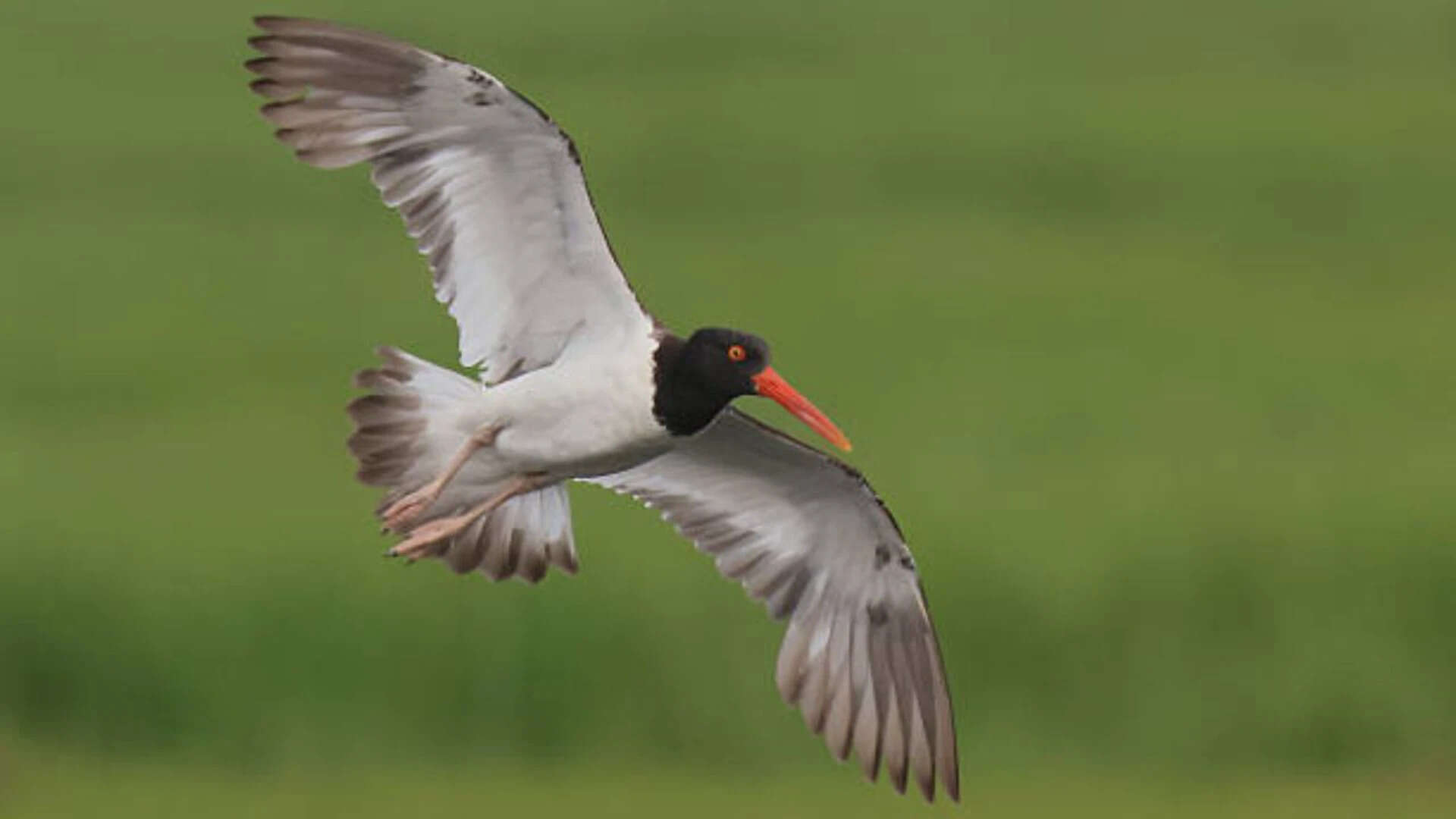
There stands a bird with a jet-black head, a chocolate-brown back, a bright white belly, and that unmistakable, impossibly bright orange-red bill. It struts with an air of absolute ownership. It jabs its beak into the wet sand with surgical precision, popping open a shell in a fraction of a second.
It does not look like a guest on the beach. It looks like the owner.
The 45% rise in their numbers isn't just a win for wildlife managers or birdwatchers with expensive cameras. It is proof that human damage to the natural world is not always an irreversible, one-way street. We caused the silence on the beaches, and through tedious, passionate, daily effort, we brought the sound back.
The tide rolls in, soaking the damp sand, and the bird takes flight, its black-and-white wings cutting across the gray sky, shouting its arrival to anyone willing to listen.