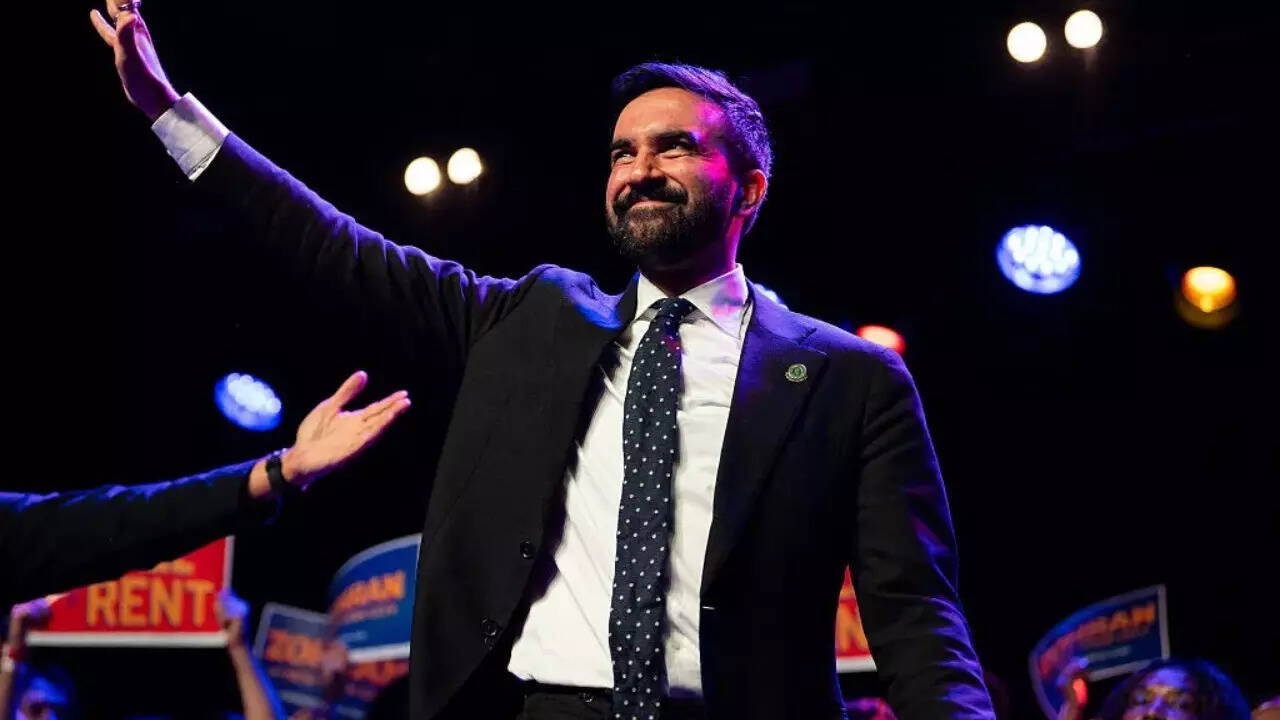
New York State Assemblymember Zohran Mamdani recently drew a sharp line in the sand regarding his political ambitions and the highest office in the United States. Born in Kampala, Uganda, the democratic socialist lawmaker faces a hard constitutional ceiling. Article II, Section 1, Clause 5 of the US Constitution explicitly mandates that only a natural-born citizen can ascend to the presidency. When pressed on whether this foundational law should be altered to accommodate naturalized citizens like himself, Mamdani demurred, stating the founding document looks good the way it is.
This position complicates the traditional narrative surrounding progressive political strategy. It raises immediate questions about structural exclusion, constitutional originalism, and the pragmatic realities of modern political branding. Why would a lawmaker dedicated to systemic overhaul choose to defend a rule that fundamentally locks him, and millions of other immigrant Americans, out of executive power?
The answer lies beneath the surface of standard political rhetoric. By examining the mechanics of constitutional amendments, the current climate of American nativism, and the strategic calculus of progressive outsiders, we can see that Mamdani’s stance is less about constitutional reverence and more about cold political survival.
The Iron Fortress of Article II
Amending the US Constitution is nearly impossible by design. The framers built a system that requires an overwhelming national consensus to alter even a single syllable of the text. To remove the natural-born citizen requirement, an amendment would need a two-thirds majority vote in both the House of Representatives and the Senate, followed by ratification from three-fourths of the states.
In a deeply fractured political ecosystem, achieving this level of unity on an issue touching immigration and national identity is a fantasy.
The historical context of the clause itself remains a powerful anchor in American jurisprudence. The restriction was originally woven into the foundational fabric of the nation to prevent foreign monarchs from infiltrating the young republic and seizing executive control. John Jay, who would become the first Chief Justice of the Supreme Court, explicitly urged George Washington to ensure that the command of the armed forces should not devolve upon any person not a natural-born citizen.
While the threat of an 18th-century European royal coup has long since vanished, the underlying skepticism of foreign influence remains a potent force in American electorate psychology. Any serious legislative push to dismantle this clause would instantly ignite a ferocious cultural backlash. For an immigrant politician, leading that specific charge is a fast track to political marginalization.
Strategic Deflection in Contemporary Politics
National figures who challenge structural barriers often find themselves defined entirely by those barriers. For a progressive focused on material conditions—such as housing costs, healthcare access, and labor rights—getting bogged down in a theoretical debate about his own eligibility for the White House is a tactical disaster. It shifts the conversation away from policy and moves it toward personal ambition.
By declaring that the Constitution looks good the way it is, a foreign-born politician effectively disarms critics who are eager to paint them as fundamentally un-American or overly self-serving.
This move functions as a shield. It allows a legislator to maintain absolute focus on local and state battles where actual power can be wielded. In the context of New York politics, where Mamdani has built his base, legislative victories depend on organizing working-class communities around tangible economic grievances. Spending political capital to argue that the federal government should allow naturalized citizens to run for president yields zero returns for a constituency struggling with rising rents in Queens.
Furthermore, this stance reflects a broader reality within modern progressive strategy. The focus has shifted from seeking high-profile federal office to building durable power from the ground up. State legislatures and municipal governments have become the primary battlegrounds for policy experimentation. Defending the constitutional status quo on the presidency costs nothing in these arenas, while earning a degree of insulation from mainstream media attacks.
The Mirage of Inclusion
The debate over the natural-born citizen clause frequently resurfaces whenever a charismatic, foreign-born leader rises through the political ranks. Past figures on both sides of the aisle, from former Michigan Governor Jennifer Granholm to former California Governor Arnold Schwarzenegger, sparked similar conversations. Yet, every single push to amend the requirement has died quietly in committee rooms.
The hard truth is that the American electorate retains a deeply ingrained bias toward native-born leadership when it comes to the ultimate executive authority. Acknowledging this fact is not an admission of defeat; it is an exercise in political realism.
Challenging this specific constitutional barrier requires an immense expenditure of resources for an uncertain outcome. For political movements aiming to alter the economic trajectory of the country, picking a fight over who gets to sit in the Oval Office is an expensive distraction from the work of building majorities in the legislative branch. Power is not sole-sourced from the presidency.
By accepting the perimeter established by the framers, an ambitious outsider repositions themselves. They are no longer a frustrated aspirant banging on the gates of the White House. Instead, they become a disciplined operator working entirely within the existing rules of the game to maximize leverage where it actually counts. The system remains rigged against the foreign-born executive, but the real levers of change were always located closer to home.


