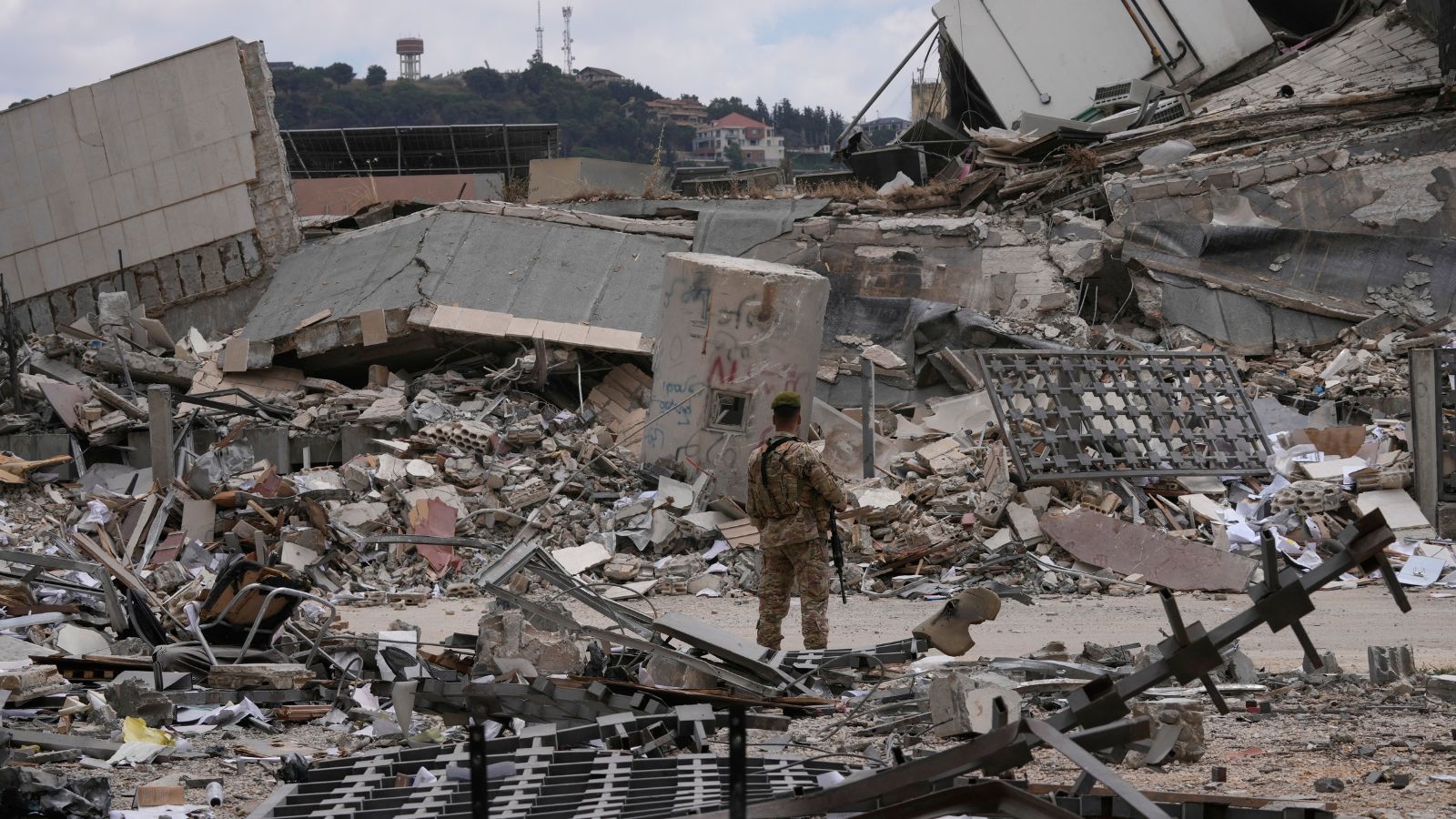
The diplomatic machinery in Islamabad has produced a document that both Washington and Tehran are holding up as a triumph, but the reality on the ground tells a vastly different story. When Mohammad Bagher Ghalibaf, the head of the Iranian negotiating team and speaker of the parliament, stood before cameras in Baku to declare the new Islamabad Memorandum of Understanding a formal declaration of American defeat, he was not merely engaging in standard state-sponsored theater. He was exploiting a massive structural shift in the regional balance of power. The deal, signed after a brief but catastrophic conflict that began with waves of American and Israeli airstrikes on February 28, has left the Islamic Republic battered but strategically ascendant. By forcing Washington to the negotiating table through a calculated chokehold on global energy corridors and asymmetric retaliation against neighboring states, Tehran has demonstrated the limits of Western military dominance.
Washington presents the framework as a necessary stabilization measure to restore maritime commerce and freeze nuclear advancements. The narrative spinning out of the White House emphasizes economic pragmatism, agricultural relief, and the resumption of crude shipments through the crucial waters of the region. But underneath the political salesmanship lies a bitter truth that veteran observers of Middle Eastern diplomacy recognize all too well. The United States entered this conflict intending to permanently dismantle Iran's forward defense network and its nuclear infrastructure. Instead, it has settled for a fragile sixty-day pause that leaves Tehran's core capabilities intact, its regional proxies bloodied but operational, and its political system entirely unshaken. This is the classic trap of asymmetric warfare, where a superpower must achieve absolute victory to succeed, while a regional revisionist power only needs to survive to win. For a closer look into this area, we recommend: this related article.
The Mechanics of the Islamabad Memorandum
The text finalized through Pakistani mediation establishes a delicate sixty-day window intended to transition a temporary cessation of hostilities into a permanent diplomatic settlement. On paper, the compromises look symmetric. The United States has signaled a willingness to offer conditional sanctions relief and unfreeze billions of dollars in sovereign Iranian assets currently held in foreign bank accounts. In return, Tehran has committed to halting its direct attacks on shipping lanes, reopening the Strait of Hormuz to international transit, and pausing the upward trajectory of its uranium enrichment activities.
The immediate catalyst for the American signature was not diplomatic altruism but severe economic reality. The maritime blockade imposed by Iran during the height of the fighting sent global energy markets into a tailspin, exposing the extreme vulnerability of the global supply chain. Freight insurance rates skyrocketed, major shipping conglomerates rerouted vessels around Africa, and the political cost of sustained inflation began to threaten domestic stability in the West. By targeting the energy infrastructure of its immediate neighbors and demonstrating its capacity to close the world's most critical maritime bottleneck, Tehran effectively held the global economy hostage until Washington blinked. To get more details on this development, extensive analysis can also be found at The Guardian.
The agreement relies on a two-phase architecture that many seasoned diplomats fear is structurally flawed. The first phase, which is currently underway, demands an immediate halt to all offensive operations and the mutual enforcement of a ceasefire across multiple theaters, including Lebanon. The second phase requires both sides to sit down in Islamabad to iron out the highly contentious details of a permanent treaty, covering everything from ballistic missile ranges to long-term atomic monitoring. It is a sequence fraught with peril. History shows that temporary ceasefires in this theater frequently serve as opportunities for restructuring, rearming, and intelligence gathering rather than genuine reconciliation.
Domestic Theater and the Rhetoric of Victory
For the ruling elite in Tehran, the Islamabad agreement is a political lifeline that will be used to legitimize decades of economic hardship and military spending. Ghalibaf’s speech was carefully calibrated to resonate with both a domestic audience weary of international isolation and a regional network of aligned militias looking for validation. By framing the agreement as a direct consequence of resistance rather than a concession born of weakness, the regime is attempting to erase the memory of the severe damage inflicted by Western airstrikes during the initial phase of the war.
A sudden shift in political fortunes. The Iranian state apparatus has spent the last several weeks broadcasting footage of downed western drones and smoking ruins in neighboring Gulf states to convince its populace that the sacrifice was worth the cost. In their telling, the fact that the United States had to rely on a third-party mediator like Pakistan to sue for peace proves that the policy of maximum pressure has failed. They are not entirely wrong. When a state can withstand a concentrated air campaign by the world's premier military superpower and still emerge with its political structure and regional alliances intact, it has achieved a form of defensive victory.
This rhetoric complicates the path toward a permanent settlement. By locking themselves into a narrative of total victory, Iranian negotiators have severely restricted their own room for compromise during the upcoming technical talks. Any concession on permanent nuclear inspections or missile limitations will now be viewed by hardliners in Tehran as a betrayal of the victory achieved through the blood of the nation's soldiers. Washington faces a mirror-image problem, where any relaxation of sanctions without verifiable, irreversible dismantled infrastructure will be savaged by domestic critics as a historical act of appeasement.
Gulf Capital Panic and the Rubio Mission
The diplomatic fallout from the Islamabad memorandum is already visible across the capitals of the Gulf Cooperation Council. Governments in Abu Dhabi, Riyadh, and Manama watched the signing of the agreement with a mixture of disbelief and profound anxiety. These states bore the brunt of Iran's retaliatory strikes, suffering significant damage to commercial infrastructure and energy installations during the brief war. For them, a rapid American signature on a document that fails to address Iran’s regional missile arsenal feels like a profound abandonment.
The sudden deployment of Secretary of State Marco Rubio to the region underscores the depth of this diplomatic rift. Rubio’s first stop in the United Arab Emirates was designed to project an image of unwavering American commitment, but behind closed doors, the conversations were undoubtedly tense. Gulf leaders are acutely aware that Washington's appetite for sustained military intervention in West Asia is waning. They have seen this pattern before. The realization that American security guarantees are conditional on Washington’s domestic political winds is forcing a fundamental recalculation in every capital along the southern coast of the Gulf.
These regional states are now caught in a dangerous geopolitical vice. On one hand, they must maintain their security relationship with the United States to deter future aggression. On the other hand, they must find a way to coexist with a permanent regional power that has just demonstrated its willingness and ability to inflict severe damage on their economies. Ghalibaf subtly alluded to this dilemma in his speech, offering a vision of regional security managed exclusively by local states without foreign interference. It was a thinly veiled invitation for the Gulf states to distance themselves from Washington or face the consequences when the current ceasefire eventually expires.
The Nuclear Verification Mirage
The most explosive point of contention in the wake of the Islamabad agreement is the future of Iran's nuclear program. While the text calls for a freeze on high-level enrichment, the two sides are already locked in a bitter public dispute over what that means in practice. International Atomic Energy Agency chief Rafael Grossi stated confidently in Tokyo that inspections of targeted Iranian nuclear sites are absolutely going to happen as part of the deal. Tehran immediately issued a flat denial, asserting that no such inspection regime had been agreed upon or scheduled.
This discrepancy highlights the fundamental weakness of the memorandum. The United States and its allies view nuclear verification as the core objective of any diplomatic engagement with Tehran. Iran, conversely, views its nuclear knowledge and accumulated material as its ultimate geopolitical leverage, something to be traded only for the total elimination of western economic restrictions. The war did not destroy Iran's deeply buried enrichment facilities; it merely paused their operations. With the technical knowledge firmly established, any freeze that relies on voluntary compliance or ambiguous inspection protocols is essentially a temporary truce rather than a permanent solution.
The reality of modern enrichment makes verification an incredibly complex task. Once a nation has mastered the centrifuge technology and produced significant quantities of highly enriched uranium, the timeline to weaponization becomes a matter of political will rather than industrial capacity. Even if inspectors are eventually allowed back into known sites like Natanz or Fordow, the international community will remain haunted by the specter of covert facilities hidden deep within the country's mountainous interior. The Islamabad deal does nothing to resolve this underlying trust deficit. It simply kicks the problem down the road for another sixty days.
The Broken Ledger of Strategic Deterrence
The long-term consequence of the Islamabad Memorandum of Understanding is the severe degradation of Western deterrence in the region. For years, the foundational assumption of international security in West Asia was that the United States would use its overwhelming conventional military superiority to enforce red lines regarding maritime freedom and nuclear proliferation. That assumption has been tested in a hot war, and the results have not favored the status quo.
The conflict demonstrated that conventional military power cannot easily neutralize a highly distributed, deeply dug-in adversary utilizing asymmetric tactics. A multi-billion-dollar air defense system can intercept dozens of incoming drones, but it costs a fraction of that amount for an adversary to launch hundreds more, eventually overwhelming the defenses through sheer volume. When the economic cost of defending a shipping lane exceeds the economic cost of a diplomatic retreat, the superpower will eventually choose the retreat. Tehran calculated this dynamic perfectly.
The upcoming technical talks in Islamabad are highly unlikely to produce a comprehensive, lasting peace treaty. The structural drivers of the conflict remain completely unaddressed. Iran remains committed to expelling Western military forces from its periphery, Israel remains convinced that an intact Iranian nuclear program poses an existential threat, and the Gulf states remain deeply skeptical of both American resolve and Iranian intentions. The Islamabad Memorandum of Understanding has not ended the war in West Asia. It has merely concluded the opening chapter of a much larger, much more dangerous transformation of the regional order.