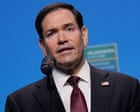
The transatlantic security alliance is facing its most severe existential strain since the fall of the Soviet Union. Western European capitals are frozen in panic over shifting American troop commitments and explicit warnings from Washington. The friction reached a boiling point in Helsingborg, Sweden, where U.S. Secretary of State Marco Rubio made it plain that the White House is openly questioning the core value of the alliance. Rubio confirmed that the upcoming Ankara summit will be an unprecedentedly tense historical crossroads, driven entirely by Donald Trump’s profound dissatisfaction with European compliance.
The shockwaves from this diplomatic fracture are hitting Europe immediately. This is not the familiar, long-standing American complaint about European nations failing to spend enough on their own domestic militaries. The current crisis is far more dangerous. Washington is furious because European allies flatly refused to back the U.S.-Israeli military campaign in the Middle East. For decades, European leaders assumed American protection was a permanent guarantee. That assumption is now dead.
The Middle East Fractures the Atlantic Alliance
The underlying mechanism of NATO has always been a transactional calculation. Washington provides a nuclear umbrella and massive conventional forces; Europe provides geopolitical alignment and strategic geography. But the ongoing war with Iran has shattered that bargain.
When the White House demanded solidarity and access to operations, major European allies blinked. Spain went so far as to deny the U.S. military the use of its domestic bases for operations related to the conflict. Other European capitals resisted joining a U.S.-led coalition to secure the Strait of Hormuz against Iranian shipping threats and a proposed tolling system.
Rubio laid out the administration's blunt assessment before boarding his plane to Sweden. He asked why NATO is good for America if its key rationale—allowing the U.S. to project power globally through regional bases—is revoked by the host countries during a major conflict. When a member nation denies the U.S. the use of those bases during an active war, the fundamental utility of the alliance dissolves from a Washington perspective.
The White House views this European hesitation as a betrayal of a foundational partnership. European diplomats, conversely, view the American operations in the Middle East as a destabilizing distraction from the immediate security threats on the European continent. This strategic disconnect is no longer an academic debate among think-tank intellectuals. It is actively altering military deployments on the ground.
Concrete Drawdowns Over Political Disagreements
The political anger in Washington has already manifested as concrete military retrenchment. The Pentagon has systematically scaled back its commitment to the NATO Force Model, the very framework used to pool and activate rapid-response forces during a continental crisis.
- Troop Reductions: The U.S. cut 5,000 troops from Germany following public spats between Trump and German Chancellor Friedrich Merz.
- Deployment Halts: A planned brigade combat team deployment to Poland was abruptly halted, dropping the number of active U.S. brigade combat teams assigned to Europe from four down to three.
- Strategic Repositioning: The pool of American military capabilities available to bail out Europe in a sudden conflict is actively shrinking.
Administration officials like Vice President JD Vance and Pentagon representatives have publicly characterized these moves as temporary delays or routine rotational adjustments rather than punitive drawdowns. The diplomatic reality in Brussels tells a different story. European officials were completely blindsided by these decisions. The abrupt adjustments occurred despite explicit American promises to coordinate military movements to prevent security gaps on Europe's eastern flank.
Europe is learning that American protection is contingent on global compliance. The old guard of the American foreign policy establishment used to view European security as an end in itself. The current administration views it strictly through a lens of national interest and reciprocity.
The Five Percent Target and the Illusion of Cohesion
European officials are scrambling to put out the fire before the leaders gather in Turkey. NATO Secretary-General Mark Rutte has tried to play the peacemaker, validating Trump's disappointments while desperately urging European states to commit resources to the Strait of Hormuz within days.
The primary diplomatic strategy among European ministers has been an attempt to buy back American goodwill with defense spending promises. Continental diplomats had hoped to steer the upcoming Ankara summit toward a grand showcase of European defense budgets, aiming for an unprecedented benchmark of five percent of gross domestic product.
This financial maneuvering will likely prove insufficient. Raising defense spending to five percent takes years of legislative budget battles and industrial scaling; it does nothing to solve the immediate operational crisis in the Middle East. Furthermore, empty promises of future spending do not erase the diplomatic reality that Spain, Germany, and others broke ranks when Washington demanded operational backing against Tehran.
The strategic objectives of Washington and Western Europe have fundamentally diverged. Europe wants a shield against regional continental threats, while Washington demands a global coalition partner. If Europe refuses to act as that partner, the shield will continue to contract.
Ankara and the Post American Reality
The upcoming summit in Turkey will not be a routine display of international unity. It is shaping up to be an administrative reckoning where the United States forces a public audit of the entire alliance.
European capitals must now confront a reality they avoided for nearly a century. They can either surrender their independent foreign policy lines to align perfectly with Washington's global military operations, or they can watch the steady, permanent withdrawal of American conventional forces from the continent. The middle ground of enjoying American military protection while publicly criticizing and obstructing American foreign policy has vanished.
The security architecture of the Western world is being dismantled by the very country that built it. European leaders who rely on calm reassurances from traveling diplomats are misreading the situation. The troop reductions, the canceled deployments, and the sharp rhetorical questions from the Secretary of State are the true indicators of American intent. The era of unconditional American defense guarantees is over.


