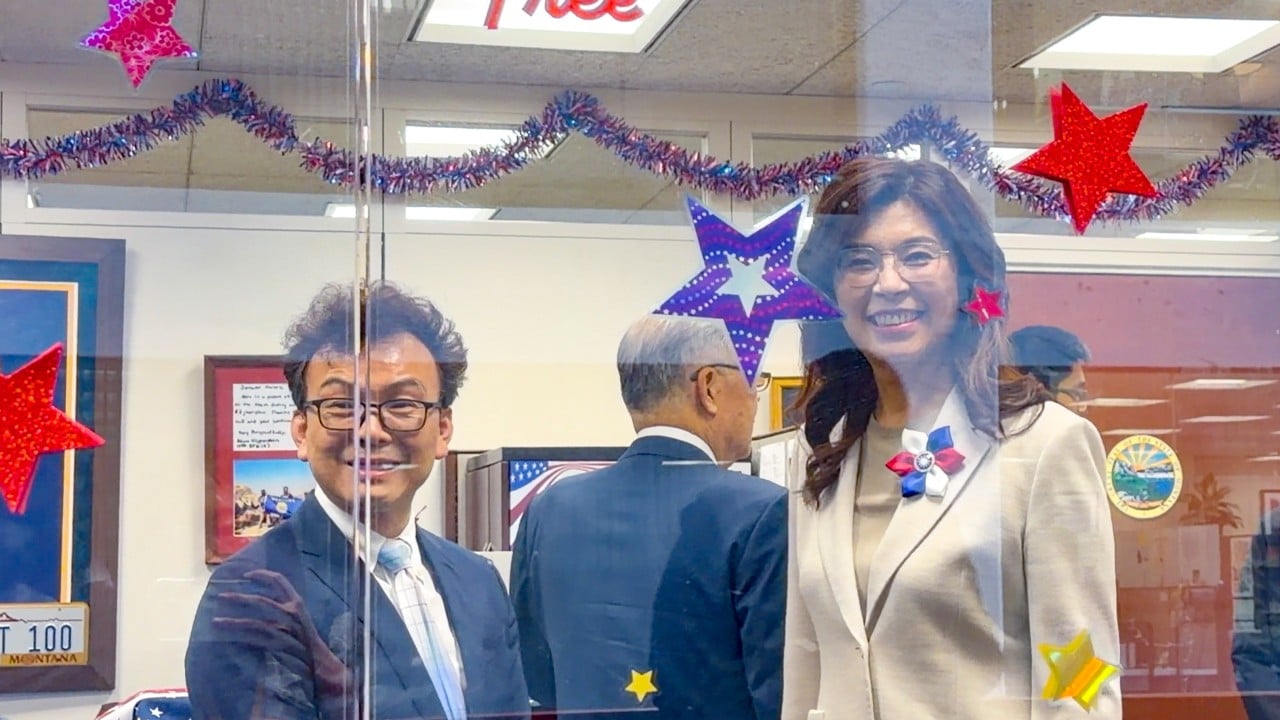
Kuomintang Chairwoman Cheng Li-wun arrived in Washington this week with an audacious pitch to shield America from an "avoidable war" in the Taiwan Strait. Her high-stakes meetings with influential Republicans—including Senator Steve Daines, House Foreign Affairs Committee Chairman Brian Mast, and Representative Young Kim—signal a quiet but profound shift in how U.S. lawmakers are evaluating the fragile peace in East Asia. By offering Washington an alternative to the ruling Democratic Progressive Party's uncompromising stance, the opposition leader is actively weaponizing regional anxieties to position her party as the ultimate guarantor of stability.
The trip is a calculated effort to undo years of political messaging by Taipei's current administration. For nearly a decade, Washington took a straightforward view of Taiwan: the ruling DPP was the reliable partner on defense, while the opposition Kuomintang (KMT) was viewed with skepticism due to its Beijing-friendly posture. Cheng is deliberately turning that dynamic on its head. Her meetings reveal a sophisticated strategy to exploit growing American frustrations over defense spending limits and energy security, transforming the KMT from a suspected liability into an indispensable diplomatic pressure valve. Learn more on a similar subject: this related article.
The Strategy Behind the Charm Offensive
Cheng took the helm of the KMT in late 2025, an unconventional leader who initially broke into politics as a DPP activist before crossing the aisle. That unorthodox background gave her the agility to pull off a stunning diplomatic maneuver just months ago. In April 2026, she traveled to Beijing and secured a direct summit with Chinese President Xi Jinping—the first such meeting for a KMT chief in nearly a decade.
That meeting did not just boost her domestic standing; it completely reordered the geopolitical calculus. When Xi met with U.S. President Donald Trump in mid-May, the Chinese leader used his prior talks with Cheng as leverage, arguing that the White House's view of Taiwan did not represent the true will of the Taiwanese majority. More reporting by Associated Press explores related views on this issue.
Now, Cheng is in Washington to deliver the second half of her strategy. She is pitching the KMT as the only political force that can communicate with both Washington and Beijing, effectively offering a diplomatic off-ramp. To an American political establishment increasingly wary of open-ended foreign entanglements, the message is highly alluring. If the KMT can talk to Xi, the logic goes, the risk of a miscalculated war drops significantly.
Exploiting the Defense Spending Rift
The primary point of friction between Washington and Taipei right now centers on cold, hard cash. The Trump administration has openly pressured Taiwan to drastically scale up its defense capabilities. President Lai Ching-te proposed a massive $40 billion special defense budget to fund vital American arms purchases. However, the opposition-controlled legislature aggressively slashed that proposal, passing a significantly reduced $25 billion spending cap.
This budget cut drew sharp rebukes from Trump administration officials, who have since placed a pending $14 billion U.S. arms sale to Taipei on hold. Trump has even publicly floated using the arms package as a negotiating chip with China, while simultaneously hinting at a direct call with President Lai.
Taiwan Defense Budget Dispute (2026)
Proposed by Lai Administration:  $40 Billion
Approved by KMT-Led Assembly:   $25 Billion
U.S. Arms Sales Paused:         $14 Billion
During her closed-door sessions on Capitol Hill, Cheng moved swiftly to manage the fallout. She explicitly told lawmakers that the KMT does not oppose American arms purchases. Instead, she reframed the budget cuts as a matter of fiscal discipline and anti-corruption oversight.
It is a brilliant piece of political theater. By framing the opposition as the adult in the room guarding the public purse, Cheng is attempting to neutralize the "anti-defense" label that the DPP has successfully pinned on her party for years. Yet, the pressure remains intense. Representative Young Kim’s office confirmed that U.S. lawmakers are explicitly pushing Cheng for a concrete commitment to self-defense spending, viewing it as the baseline test of Taiwan's resolve.
Weaponizing the Energy Crisis
While defense dominated the initial headlines, Cheng discovered an unexpected vulnerability among U.S. lawmakers: deep frustration over Taiwan’s domestic energy policy. The ruling DPP has long maintained a strict anti-nuclear stance, aiming to phase out nuclear power entirely. This policy has triggered persistent blackouts and raised serious questions in Washington about the island's industrial resilience in the event of a Chinese maritime blockade.
Cheng seized on this anxiety during her discussions with Senator Steve Daines and Representative Chuck Fleischmann. She highlighted the KMT’s staunch support for restarting Taiwan’s nuclear reactors and deepening technological cooperation with the U.S. on advanced nuclear energy.
"The American side expressed outright frustration with the current administration's anti-nuclear stance," Cheng told reporters in Washington.
By aligning the KMT with American concerns over the vulnerability of Taiwan's semiconductor-heavy power grid, she managed to pivot the conversation away from her controversial Beijing trip toward a practical, shared security interest.
A High Stakes Gambit for 2028
The ultimate target of Cheng’s intense itinerary isn’t just policy; it is the 2028 presidential election. By showing voters at home that she can sit down with Xi Jinping in April and comfortably lobby top-tier U.S. senators in June, she is systematically dismantling the DPP's monopoly on foreign affairs.
There are still massive blind spots in her approach. Her claim that Beijing prefers a peaceful resolution over military coercion relies heavily on taking Xi Jinping at his word—a proposition many in Washington's intelligence community view as dangerously naive. Furthermore, while House Foreign Affairs Chair Brian Mast noted he will take "intelligence from anywhere I can get," some U.S. lawmakers remain deeply unsettled by the opaque nature of what Cheng actually promised Xi during her closed-door summit in Beijing.
Whether Cheng succeeds in securing a direct meeting with Donald Trump before her 15-day tour ends remains an open question. Such a meeting would be utterly unprecedented for an opposition leader without official public office. But even without it, her Washington blitz has already achieved its core objective. She has successfully injected the KMT's alternative vision directly into the bloodstream of American foreign policy, ensuring that from this point forward, Washington can no longer afford to view Taiwan through a single political lens.