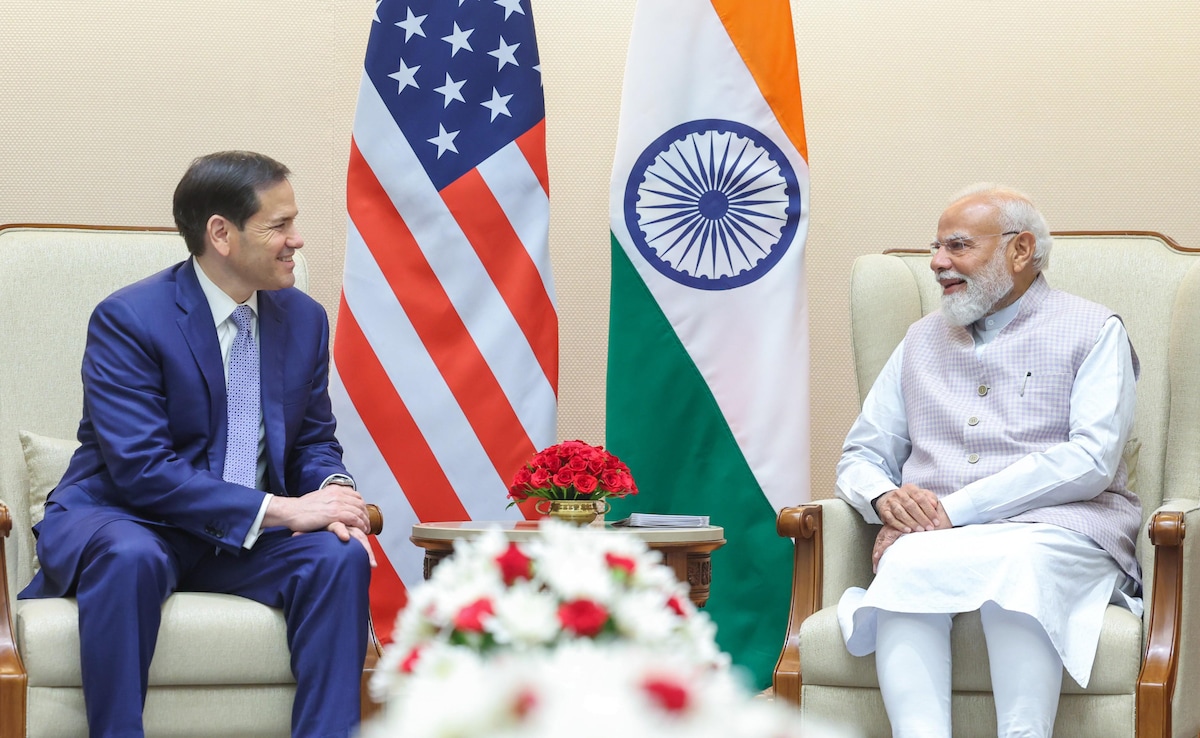
The United States has quietly upended how it doles out entry permits in its busiest global market. During a high-stakes diplomatic sweep through New Delhi, US Secretary of State Marco Rubio unveiled a new America First visa scheduling tool, a mechanisms-driven reset specifically engineered to prioritize corporate travelers, investors, and executives who feed bilateral commercial interests.
The immediate reality is simple. If your travel directly injects capital into the US economy or cements strategic supply chains, you move to the front of the line. If you are a standard tourist, a hopeful student, or an IT professional caught in administrative backlogs, you face longer waits. By explicitly linking consulate wait times to economic utility, Washington is using its visa queue as a raw instrument of industrial policy.
This is not a routine administrative upgrade. It is a calculated transactional pivot disguised as bureaucratic efficiency.
The Premium Lane for Global Capital
Consular operations in India have buckled under historical demand for years. In 2024, the US mission issued over one million nonimmigrant visas, yet wait times for initial interviews routinely stretched across hundreds of days. Under the newly announced system, the State Department is splitting the queue.
The core of the strategy is an algorithmic triage tool integrated into the consular scheduling platform. Applicants representing corporations with major US footprints, or those managing parts of the $20 billion in Indian investment inside America, receive expedited access to appointment slots.
The move rewards corporate giants while insulating the American economy from its own broken consular bureaucracy. For a tech executive traveling to manage an acquisition in Texas, the pathway clears. For the rest of the applicant pool, the backlog deepens.
Microscopic Vetting for the Rest
To understand why this premium fast-track was built, one must look at the quiet policy shifts that choked the pipeline over the last six months. In late 2025, the State Department implemented mandatory social media vetting and digital tracking requirements for H-1B skilled work visas and H-4 dependents.
The consequences were immediate.
- Daily interview capacities plummeted because consular officers had to cross-reference years of digital footprints.
- Mass cancellations swept through the H-1B pipeline in early 2026, leaving thousands of corporate employees stranded.
- The drop-box interview waiver program was drastically restricted. Previously, anyone with a visa expired within 48 months could bypass the interview; that window has been slashed to 12 months, forcing a massive wave of renewal applicants back into the physical lines.
The introduction of the America First visa scheduling tool is an admission that the system cannot handle both intense security vetting and high-volume business travel simultaneously. Rather than fixing the underlying processing friction, Washington chose to insulate its preferred economic class from the fallout.
The Collateral Damage of Strategic Triage
While US Ambassador to India Sergio Gor speaks publicly about hitting $500 billion in bilateral trade, the ground reality for non-corporate applicants is shifting toward panic.
Consider the student population. Fresh F-1 visa appointment slots for the autumn 2026 academic intake vanish within minutes of release. Under a strict new queue-management system, desperate students who refresh the scheduling portal too often or attempt to switch consulate locations are hit with automatic 72-hour system lockouts.
Consular Queue Triage System (Post-May 2026)
─────────────────────────────────────────────────────────────
High Priority: Corporate Travelers, Billion-Dollar Investors
Medium Priority: Institutional Students, Repeat Visa Holders (Within 12 mos)
Low Priority: First-Time B1/B2 Tourists, H-1B Tech Workers
By prioritizing corporate titans, Washington risks Alienating the broader Indian public. The frustration is palpable among families trying to visit relatives or young engineers seeking to start their careers under H-1B sponsorships. They are finding that their access to the US is being bartered to make room for corporate interests.
Geopolitics in the Consular Annex
The timing of Rubio's announcement at the dedication of a new US Embassy Support Annex in New Delhi reveals the broader geopolitical game. The US is desperate to decouple critical technology supply chains from Beijing, and India is the primary alternative hub.
The visa tool is an incentive. It signals to New Delhi that corporate cooperation on defense, semiconductors, and green energy will be rewarded with frictionless movement for elite personnel.
Yet, this transactional framework exposes a deeper friction in the bilateral relationship. Washington wants Indian supply chains and Indian capital, but it remains deeply hesitant about Indian migration. Just days before Rubio landed in India, the administration announced that many temporary visa holders residing in the US may be forced to return to their home countries before they can apply for Green Cards.
The America First visa tool is the policy equivalent of a velvet rope. It welcomes the money and the executives who control it, while keeping the gate firmly closed to the broader population. Washington has made it clear that entry is no longer just a matter of eligibility, but a question of immediate economic value to the United States.