The United States Department of Justice has unsealed a federal indictment against 94-year-old former Cuban President Raúl Castro, charging him with murder, conspiracy to kill U.S. nationals, and destruction of aircraft. The charges stem from the February 24, 1996, shootdown of two civilian planes operated by the Miami-based exile group Brothers to the Rescue, an attack that killed four men in international airspace. While the legal filing targets a tragedy nearly three decades old, the true impetus is not historical closure. This indictment serves as the modern legal framework for a potential regime change operation in Havana, mirroring the exact playbook used to target Nicolás Maduro in Venezuela earlier this year.
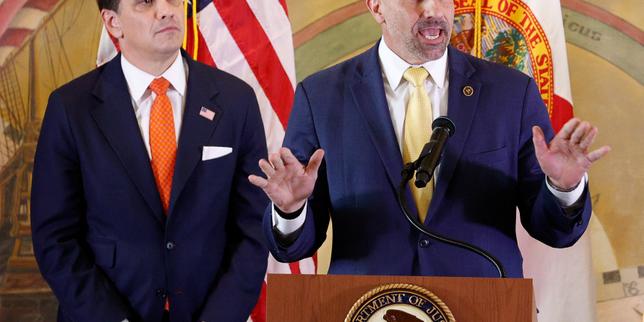
Acting Attorney General Todd Blanche made it clear during a press conference in Miami that the administration does not view this case as a toothless gesture. "This is not a symbolic indictment," Blanche stated, adding that the U.S. expects Castro to face trial "either by his own will or by another way." Given that Cuba does not extradite its citizens, the phrase "another way" carries a heavy, unmistakable weight in the current geopolitical climate. You might also find this similar article useful: The Outrage is Fake and the Court Challenges are Dead on Arrival Why Trump’s $1.776 Billion Fund is Standard Executive Power.
The Ghost of Caracas Over Havana
To understand the sudden legal urgency surrounding a 30-year-old military action, one must look at what happened in Venezuela in January. The U.S. military executed a raid in Caracas, capturing Nicolás Maduro and flying him to New York to face trial on drug trafficking charges. That operation relied entirely on a 2020 federal indictment as its legal justification.
By securing a formal murder indictment against Castro from a grand jury in the Southern District of Florida, Washington has created a parallel mechanism. The U.S. government now possesses a domestic legal basis to authorize direct operations against the upper echelons of the Cuban state. It is a strategy of judicial warfare, transforming cold-case criminal acts into active national security mandates. As discussed in latest coverage by The New York Times, the implications are worth noting.
The timing is far from accidental. Cuba is currently suffering under a near-total collapse of its energy grid, acute food shortages, and severe U.S. economic blockades on oil imports. Tensions are at an absolute breaking point. Cuban President Miguel Díaz-Canel immediately denounced the indictment as a manufactured pretext for military aggression, claiming the U.S. is inflating a historic dispute to justify an impending intervention.
The Dual Track of Pressure and Grandchildren
The Trump administration is running a complex double game. Publicly, the rhetoric is unrelenting. President Donald Trump warned that the U.S. will not tolerate "a rogue state harboring hostile foreign military, intelligence and terror operations just 90 miles from the American homeland." Behind the scenes, however, diplomatic channels remain open, though heavily lopsided.
Intelligence leaks reveal that CIA Director John Ratcliffe recently made a unpublicized trip to Havana. He did not meet with Díaz-Canel. Instead, Ratcliffe met with Raúl Castro’s grandson, Raúl Rodríguez Castro, colloquially known as "El Cangrejo."
Washington is actively scouting the next iteration of Cuban leadership. The message delivered to the younger Castro was direct: the U.S. is willing to facilitate an economic and political transition, provided the Cuban state dismantles the absolute control of GAESA—the omnipresent military conglomerate that runs the island's tourism, shipping, and retail sectors. Secretary of State Marco Rubio reinforced this position, offering the Cuban population a "new relationship" contingent on radical free-market reforms and multi-party elections.
The Logistics of a Three Decade Old Crime
The specific criminal charges focus entirely on Castro’s role as the Minister of the Revolutionary Armed Forces in 1996. The indictment alleges that Castro personally met with military commanders and authorized the use of lethal force against the civilian Cessna aircraft flown by Brothers to the Rescue.
The group had been conducting search-and-rescue missions for Cuban rafters fleeing the island, while occasionally dropping political leaflets over Havana. On that February afternoon, a Cuban MiG-29 fighter jet intercepted the Cessnas and blew them out of the sky.
Victims of the 1996 Shootdown:
------------------------------------------
• Armando Alejandre, 45
• Carlos Costa, 29
• Mario de la Peña, 24
• Pablo Morales, 29
Independent investigations by the United Nations and the Inter-American Commission on Human Rights concluded that the downing occurred over international waters, rendering the defense of sovereign airspace argument void under international law.
For thirty years, South Florida’s politically powerful exile community has demanded criminal accountability for these deaths. The original incident directly triggered the signing of the Helms-Burton Act, which codified the U.S. embargo into strict law. By unsealing these specific charges now, federal prosecutors have delivered a long-sought victory to Miami's anti-Castro constituency while simultaneously providing the White House with a potent geopolitical lever.
The Shield and the Trap
Whether this legal maneuver forces a collapse or triggers a violent backlash remains a dangerous variables. Analysts tracking Cuban military movements report that the regime has recently acquired several hundred defense drones, signaling that Havana is preparing for potential asymmetric conflicts. Professor Michael Bustamante of the University of Miami notes that while the indictment provides major political ammunition for the administration domestically, it could just as easily force a "circling of the wagons" within the Cuban military, hardliners who view any concession as suicide.
The U.S. attorney for the Southern District of Florida, Jason Reding Quiñones, has spent months building a specialized task force dedicated to investigating Castro-era officials. This indictment is merely the first public document generated by that effort. More sealed indictments targeting active Cuban generals are expected to follow.
Washington has laid out its terms clearly. The unsealed indictment of Raúl Castro means the old guard is officially out of options. The current regime can either negotiate a systematic dismantling of its military-run monopolies under the threat of indictment-backed force, or gamble that Washington won't use the exact same tactical playbook it perfected in the streets of Caracas.