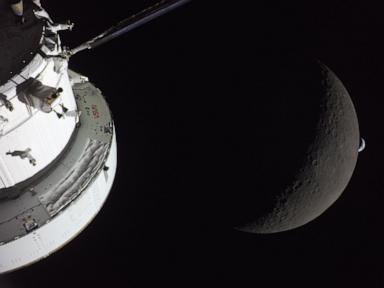
NASA just fundamentally changed the rules of modern space exploration. In a sweeping series of announcements, NASA Administrator Jared Isaacman and Moon Base program head Carlos Garcia-Galan unveiled a highly aggressive, $30 billion phased initiative to establish a permanent human outpost on the lunar surface. To fund and execute this massive shift, the space agency is quietly sacrificing its long-planned Lunar Gateway—an orbital space station that has absorbed billions of dollars and a decade of engineering. NASA is pivoting entirely to the surface.
The agency aims to orchestrate 25 launches and 21 landings in its initial phase alone, culminating in semiannual crewed missions by 2028. This rapid escalation bypasses traditional, slow-moving aerospace procurement in favor of a commercial-first "demand signal" to private contractors. While mainstream reports have focused heavily on the shiny new hardware, the real story lies in the brutal logistical, financial, and geopolitical realities forcing NASA to abandon orbit and dig into the dirt of the lunar south pole.
The Gateway Sacrificed for the Surface
For years, the Lunar Gateway was pitched as an indispensable stepping stone. The narrative was simple: an orbital outpost would act as a staging ground, allowing astronauts to transition from deep-space transit vehicles to specialized lunar landers. It was an elegant concept on paper. In reality, it was a multi-billion-dollar bottleneck.
The orbital mechanics required to maintain the Gateway in a Near-Rectilinear Halo Orbit meant that landing missions were bound to rigid orbital alignments. It limited access to the surface rather than expanding it. Furthermore, technical delays meant the station would not be fully operational until 2030 at the absolute earliest. With a political mandate to place American boots on the south pole before the end of 2028, NASA leadership faced an easy choice but a brutal bureaucratic execution. They cut the Gateway loose.
Every kilogram of payload, every dollar of funding, and all engineering resources previously earmarked for the orbital station are now redirected to the surface. The components and modules already under development for the Gateway will not be scrapped; instead, they are being aggressively redesigned to serve as habitats and infrastructure directly on the lunar terrain. This pivot represents an acknowledgment that the true value of the moon lies in what can be extracted, built, and occupied on the ground, not what can be observed from orbit.
Shifting From Bureaucracy to a High-Volume Conveyor Belt
The newly restructured Artemis program is dividing the construction of Moon Base into three distinct, capital-intensive phases. It abandons the traditional, fragile paradigm of relying on a single, government-owned vehicle.
| Phase | Timeframe | Funding Target | Key Objectives | Logistics Target |
|---|---|---|---|---|
| Phase 1 | Present–2028 | $10 Billion | High-rate surface access, robotic scouting, first crewed landing site validation. | 25 launches, 21 landings, 4 metric tons of cargo. |
| Phase 2 | 2029–2032 | $10 Billion | Semiannual crewed missions, surface power grids, pressurized long-range rovers, initial habitation modules. | 27 launches, 24 landings, 60 metric tons of cargo. |
| Phase 3 | 2033–2036 | $10 Billion | Permanent human habitation, deployment of surface nuclear reactors, long-range scientific exploration. | Transition to commercial launch vehicles, 150 metric tons of cargo. |
Phase 1 is already in motion. NASA is treating the commercial sector as a high-volume cargo delivery service rather than a collection of custom defense contractors. The space agency has issued a flurry of task orders to its Commercial Lunar Payload Services providers, demanding rapid deployment of robotic assets to the Shackleton Connecting Ridge.
The strategy is deliberately iterative. By launching dozens of uncrewed missions before a single astronaut kicks up dust in 2028, NASA can test hardware failures in real-time. Blue Origin’s Blue Moon Mark 1 Endurance lander will lead the vanguard to study plume-surface interactions—specifically, how rocket exhaust interacts with the abrasive, razor-sharp lunar regolith. Astrobotic’s Griffin lander and Firefly Aerospace will follow, delivering autonomous rovers and short-hop surveying drones to scout terrain.
The Economics of Long-Duration Lunar Survival
The immediate technical hurdle of Moon Base is not getting there. It is surviving the night.
A single lunar night lasts roughly 14 Earth days. Temperatures plunge to a staggering -130°C, a thermal shock that freezes standard electronics, fractures composites, and renders solar arrays completely useless. During the Apollo era, missions were carefully timed to land during the lunar dawn and depart before nightfall. You cannot run a permanent base on a part-time schedule.
"Building a moon base is going to be extremely hard," noted Carlos Garcia-Galan. "We want to graduate from delivering four metric tons of cargo to 60, and eventually 150 metric tons."
To survive this environment, Phase 1 and Phase 2 missions will rely heavily on Radioisotope Heater Units and advanced Radioisotope Thermoelectric Generators. These systems utilize the steady decay of plutonium-238 to generate heat and electricity independently of sunlight. However, these are merely stopgap measures.
The endgame for Phase 3 requires the deployment of fission surface power. A surface nuclear reactor, a concept heavily backed by recent White House directives, is the only technology capable of providing the steady, unyielding megawatts required to run life support systems, recharge massive lunar terrain vehicles, and power future resource-extraction refineries. Without nuclear power on the surface, Moon Base remains a collection of high-tech tents waiting to freeze.
The Sunset of the Space Launch System
The structural shift of the Artemis program exposes a deeper, unvarnished truth about the economics of modern spaceflight. The Space Launch System—NASA’s flagship, government-designed heavy-lift rocket—is too expensive to sustain a colony.
At an estimated cost of over $2 billion per launch, the SLS is a financial anchor. It will continue to ferry astronauts from Earth to lunar orbit aboard the Orion capsule for the next few critical missions, including the upcoming Artemis III orbital docking tests and the Artemis IV landing. But a cadence of one launch per year cannot support a base that requires dozens of annual supply runs.
NASA's strategy hinges entirely on a transition to commercial heavy-lift architectures. The agency has designed its Moon Base infrastructure to fit inside the massive payload fairings of SpaceX’s Starship and Blue Origin’s New Glenn. By forcing a fierce commercial competition between Elon Musk and Jeff Bezos, NASA is driving down the marginal cost per kilogram of lunar cargo.
The long-term survival of Moon Base relies on this transition becoming absolute. If the agency remains shackled to the political necessity of the SLS for routine cargo operations, the budget will collapse under its own weight before the first permanent habitat module is even bolted into the regolith. NASA is betting everything on the assumption that commercial rockets will achieve operational maturity and unprecedented launch cadences within the next 36 months. It is a calculated gamble, but in the unforgiving landscape of deep-space logistics, it is the only viable path forward.