Israel has officially asked India to designate Iran’s Islamic Revolutionary Guard Corps (IRGC) as a terrorist organization. Speaking in Tel Aviv, an Israeli official made the case explicit, calling the IRGC the "number one risk for the free world" and stating that New Delhi should join the ranks of Washington, Ottawa, and Brussels in outlawing the group.
But India will not do it.
While Western nations and Israel increasingly view the IRGC through a singular lens of global asymmetric warfare, New Delhi sees it through the lens of cold, hard continental realism. To understand why India will quietly ignore Israel’s expectations, one must look past the public rhetoric of counter-terrorism and examine the intricate web of energy security, geographic isolation, and the shadow war for Eurasia.
The Great Eurasian Bypass
India is a geopolitical prisoner of its own geography. To its west sits a deeply hostile, nuclear-armed Pakistan that blocks any land route to Central Asia, Russia, and Europe.
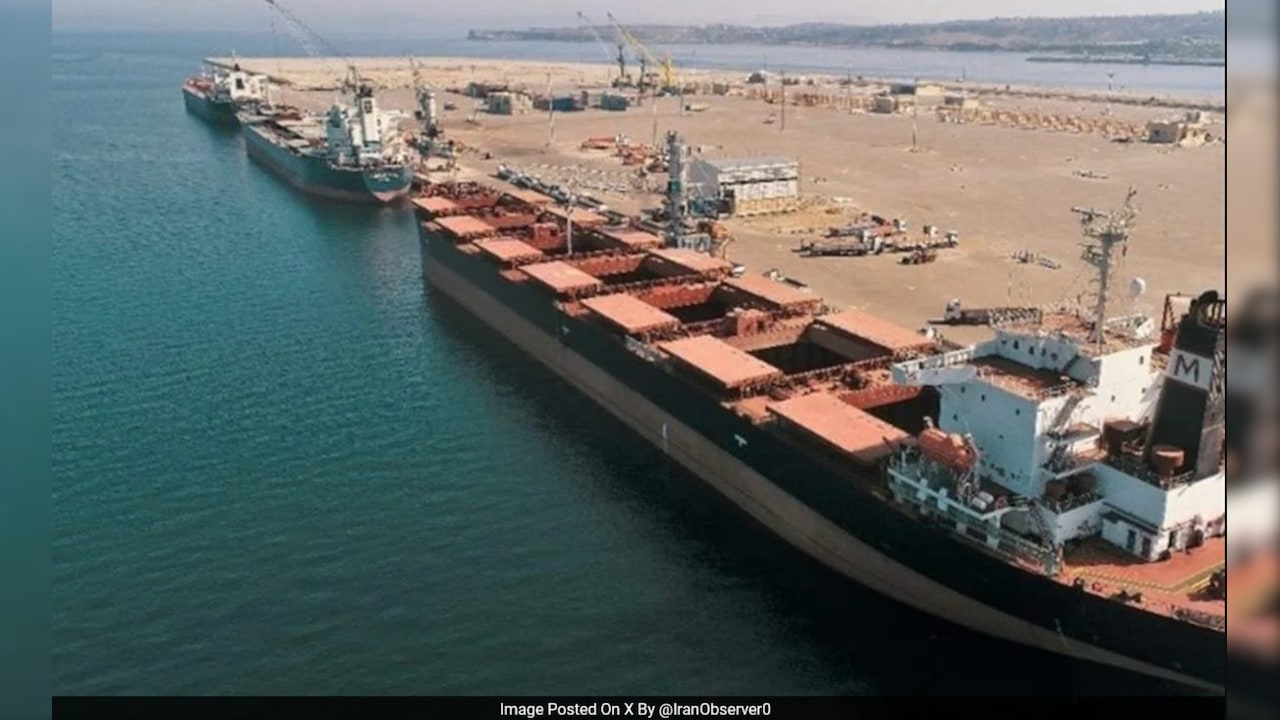
For two decades, New Delhi’s primary strategic antidote to this encirclement has been the Iranian port of Chabahar. Located on the Gulf of Oman, Chabahar is India’s gateway to the International North-South Transport Corridor (INSTC).
It is an open secret in intelligence circles that you cannot build massive infrastructure in Iran without dealing with the IRGC. The Corps is not just a military branch; it is an economic empire. Through engineering conglomerates like Khatam al-Anbiya, the IRGC controls the main arteries of Iranian construction, shipping, and port management.
If New Delhi were to black-list the IRGC under its Unlawful Activities (Prevention) Act (UAPA), it would effectively make it illegal for Indian state-owned entities and private contractors to operate in Chabahar. The multi-million-dollar port project, secured by a long-term ten-year bilateral contract, would collapse overnight. For India, abandoning Chabahar means handing the keys to Central Asian trade directly to China, which is already eager to absorb Iran into its Belt and Road Initiative.
The Chanakya Doctrine Meets the Axis of Resistance
India's foreign policy operates on the principles of strategic autonomy—a modern manifestation of the ancient Chanakya Doctrine, which prioritizes state survival and pragmatism over moral alliances.
New Delhi maintains a delicate, high-wire balancing act in West Asia. It enjoys unprecedented defense and intelligence cooperation with Israel. Simultaneously, it relies heavily on the Gulf Arab states for oil and remittances from millions of Indian expatriates. Yet, it refuses to sever ties with Iran.
Banning the IRGC would destroy this equilibrium. Consider the following realities:
- Energy Secrecy: While official figures show a drop in Indian imports of Iranian crude due to Western sanctions, gray-market tracking continuously suggests that Iranian oil still finds its way into Asian refineries via third-party ship-to-ship transfers.
- The Afghan Frontier: When the United States abruptly exited Afghanistan, it left India exposed to a Taliban-controlled Kabul. Iran, through the IRGC's Quds Force, shares India's deep anxieties regarding Sunni extremist groups like Islamic State-Khorasan (IS-K). New Delhi requires intelligence channels with the IRGC to manage threats on its northern periphery.
- The Maritime Crossfire: When Houthi rebels in Yemen targeted merchant vessels in the Red Sea and Arabian Sea, Indian naval destroyers deployed rapidly to protect commercial shipping. Publicly, India took a hard stance against piracy and drone strikes. Privately, Indian diplomats engaged Tehran to ensure that Indian-flagged crews and vessels were spared from the worst of the regional crossfire.
Designating the IRGC as a terrorist outfit would convert an ambiguous, useful relationship into an active, asymmetric conflict.
The Asymmetry of a Terror Designation
Israel’s push for a global ban on the IRGC gained significant momentum following the high-stakes escalation of recent years, including the targeted strikes that killed senior IRGC commanders like Hossein Salami. For Israel, the IRGC is an existential threat operating through proxies on its borders.
For India, the calculation is entirely different.
The Indian legal framework for designating terror groups via the UAPA requires strict, demonstrable proof of direct threats to Indian national security. While the IRGC has been linked by Western intelligence to plots against Israeli diplomats in New Delhi—such as the 2012 magnet bomb attack on an Israeli embassy vehicle—India chose to prosecute the local actors rather than indict the Iranian state apparatus.
+------------------------------------------------------------------------+
|                      THE IRGC TRIPLE THREAT                           |
+------------------------------------------------------------------------+
|  MILITARY          |  Controls Iran's ballistic missile programs and   |
|                    |  covert external operations (Quds Force).         |
+--------------------+---------------------------------------------------+
|  ECONOMIC          |  Monopolizes major construction, shipping, oil    |
|                    |  smuggling, and infrastructure networks.          |
+--------------------+---------------------------------------------------+
|  IDEOLOGICAL       |  Answers exclusively to Supreme Leader Khamenei,  |
|                    |  bypassing the conventional Iranian parliament.   |
+------------------------------------------------------------------------+
Furthermore, the legal fallout of a blanket ban presents an administrative nightmare that Western countries are only now beginning to realize. The IRGC relies heavily on conscription. Every year, hundreds of thousands of ordinary Iranian youth are randomly drafted into its ranks for mandatory military service. They are not ideologues; they are mechanics, clerks, and cooks.
A formal designation brands all these former conscripts as terrorists. Countries like Canada, which banned the IRGC, are now grappling with the unintended consequences of denying visas to innocent professionals who were forced to serve decades ago. India, with its own complex internal security dynamics, has no appetite to import a messy, Western-style bureaucratic quagmire.
When Expectations Hit Reality
The diplomatic push from Tel Aviv places New Delhi in an uncomfortable spotlight, but it is a pressure India has survived before.
When Washington imposed "maximum pressure" sanctions on Iranian oil, India complied ostensibly by cutting direct, official crude purchases. However, it extracted waivers where it could, particularly for Chabahar. India knows how to say "yes" in principle while acting in its own self-interest in practice.
Israel’s public declaration of its expectation is a classic diplomatic gambit designed to force a narrative. By making the request public, it raises the political cost for India to remain neutral.
Yet, New Delhi's silence on the matter is deafening. Indian diplomats will continue to receive Israeli delegations with high warmth, sign defense procurement deals, and share intelligence on mutual threats. But they will not sign a paper that alienates Iran, closes the door to Central Asia, and forces India into a Middle Eastern shadow war that it does not want to fight.
Strategic autonomy is not about pleasing everyone. It is about maintaining the freedom to choose your own enemies.