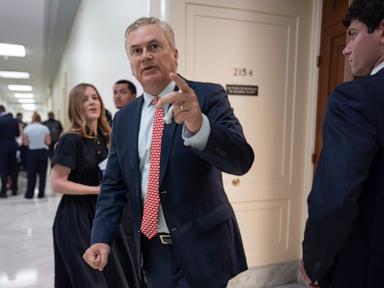
Kathryn Ruemmler, the former White House counsel and Goldman Sachs top lawyer, is testifying before the House Oversight Committee to answer for her extensive personal relationship with convicted sex offender Jeffrey Epstein. Lawmakers want to know why she received luxury gifts and maintained intimate contact with him long after his 2008 conviction. The deposition marks a critical escalation in the congressional effort to dissect the legal and financial networks that shielded Epstein for decades.
For years, the public narrative surrounding the Epstein network focused on politicians, academics, and crown princes. Now, the spotlight has shifted to the lawyers who managed the machinery of power. Ruemmler is not just another high-profile witness; she is the ultimate insider. Her scheduled appearance before the House panel represents a reckoning for the elite legal community that treated a registered sex offender as a valuable networking hub. You might also find this related article interesting: The Night the Sirens Didn't Stop in Manama.
The Illusion of Standard Representation
She was his lawyer. That is the defense Ruemmler and her representatives have repeatedly put forward to explain her years of communication with Epstein. In the high-stakes world of white-collar defense, representing unsavory characters is standard practice. Defense attorneys argue that everyone deserves representation, and that professional distance protects the lawyer from the client’s sins.
The documents tell a different story. As reported in recent articles by NPR, the results are significant.
Among the 8,400 pages of correspondence released by the Justice Department, the language used between Ruemmler and Epstein does not resemble a typical billing ledger. In a 2015 exchange, Ruemmler told a contact that she adored Epstein, comparing him to an older brother. She referred to him as "Uncle Jeffrey" in emails. These are not the words of an objective external counselor maintaining ethical boundaries. They are the words of a close confidante.
The gifts she received reinforce this intimacy. While practicing in the private sector after her stint in the Obama administration, Ruemmler accepted Hermes handbags, a Fendi coat, an Apple Watch, and luxury spa treatments from Epstein. To the average citizen, these look like bribes or payouts. To the investigative eye, they look like the currency of access, a way for Epstein to ensure that a former top government official remained within his orbit.
There is also the matter of practical favors. In 2015, Epstein asked Ruemmler if she could secure a White House tour for filmmaker Woody Allen and his wife, Soon-Yi Previn. Despite noting that the request might be politically sensitive, Ruemmler coordinated the tour, which took place later that year. This was not legal work. It was the facilitation of social prestige, orchestrated by a former White House counsel on behalf of a registered sex offender.
The Revolt Within Goldman Sachs
Wall Street protected her as long as it could. When the first wave of emails leaked, Goldman Sachs leadership publicly backed Ruemmler, pointing to her stellar credentials and her past as a tough federal prosecutor who helped put Enron executives behind bars. The firm’s Chief Executive Officer, David Solomon, originally tried to weather the storm.
The partners revolted.
In a investment bank where reputation is the only real asset, the rank-and-file partners began to ask why Ruemmler was being shielded. The internal anger grew so intense that her position became untenable. She announced her resignation in February, with an effective date of June 30. Yet, even in her departure, the corporate double standard was on full display. Goldman Sachs kept her on as senior counsel in an advisory role, a move that drew sharp criticism from progressives like Senator Elizabeth Warren and Representative Raja Krishnamoorthi.
This compromise pleased no one. It showed a firm unwilling to fully sever ties with a compromised executive, preferring instead to hide her in a quiet advisory role while she prepared for her congressional testimony. Solomon argued that the media coverage simply made it hard for her to execute her job, framing her departure as a practical business decision rather than an ethical failure. This corporate doublespeak is precisely what congressional investigators plan to target.
The Access Machine
To understand why Epstein targeted Ruemmler, one must understand how power operates in Washington and New York. Epstein was not just looking for legal advice; he was buying legitimacy. By associating with a former White House counsel who was once considered a candidate for U.S. Attorney General, Epstein could signal to other elites that he was still a viable player in polite society.
The strategy worked.
With Ruemmler in his corner, Epstein could secure meetings, pitch business ideas, and maintain his social standing. The calendar entries released by the Justice Department show scheduled hair and makeup sessions at Ruemmler's apartment, coordinated by Epstein's staff. This level of domestic coordination suggests a integration of lives that goes far beyond a lawyer defending a client in a courtroom.
It also raises questions about what Ruemmler knew. As a highly trained federal prosecutor, she was skilled at reading evidence and assessing credibility. She was aware of the Florida allegations and the structural details of Epstein's plea deal. Yet, she continued to advise him on how to handle media inquiries and manage his public image. The defense that she had no knowledge of ongoing criminal activity may be technically true, but it ignores the moral compromise of helping a known predator clean up his reputation.
The Broader Reckoning for Washington and Wall Street
Ruemmler is the seventeenth witness to face questioning in this broad bipartisan inquiry. The House Oversight Committee is systematically moving through the roster of Epstein’s elite contacts, which already includes tech billionaires and former presidents. By focusing on Ruemmler, the committee is targeting the connective tissue of the American establishment.
The implications extend far beyond a single lawyer’s career.
This investigation is exposing the quiet compliance of elite institutions. When a system allows a convicted sex offender to maintain close relationships with White House advisors, bank executives, and university presidents, the failure is not individual; it is systemic. The legal profession, which is supposed to uphold the rule of law, instead provided the tools to bypass it.
Congressman Raja Krishnamoorthi summarized the stakes of the upcoming testimony, noting that the inquiry must reveal how Epstein built and maintained his influence while running a massive trafficking operation. The public deserves to know how these relationships were managed, what favors were traded, and who looked the other way.
As Ruemmler prepares to face lawmakers, her legacy as a trailblazing prosecutor and White House counsel is permanently overshadowed. The tragedy is that this was entirely avoidable. She chose to accept the gifts, she chose to coordinate the social calendars, and she chose to call him family. The bill for those choices has finally come due.