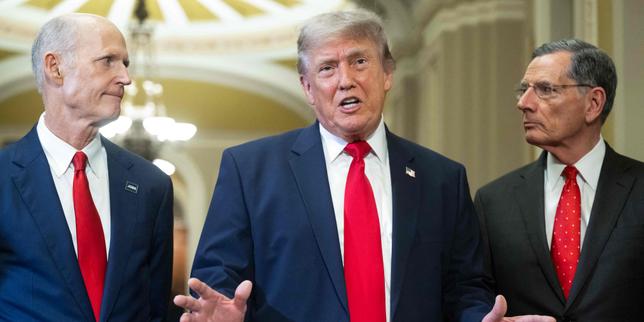
President Donald Trump abruptly threw the real estate market and Capitol Hill into chaos by refusing to sign the 21st Century ROAD to Housing Act, a sweeping, bipartisan housing package that had just cleared Congress with veto-proof majorities. Hours before a scheduled celebratory press conference and signing ceremony, the president announced via Truth Social that the event was cancelled. He declared he will not sign the housing legislation until the Senate passes the SAVE America Act, a highly contested voting measure requiring documentary proof of citizenship to register for federal elections. By holding a widely supported economic relief package hostage to a stalled election bill, the administration has set up an explosive constitutional showdown with its own party leaders.
The move blindsided lawmakers who spent months negotiating the housing package. The bill passed the House 358–32 and the Senate 85–5, margins that easily exceed the two-thirds threshold required to override a presidential veto. Rather than a veto, however, the executive branch is attempting to exert maximum leverage over Senate procedural rules. The president is demanding that Senate Majority Leader John Thune abolish the 60-vote filibuster threshold to force the voting bill through, a structural change that Thune and other key Republicans have already rejected due to a lack of intra-party consensus.
The Cost of the Capitol Hill Standoff
The legislative freeze hits American consumers at a time of severe economic strain. The 21st Century ROAD to Housing Act was designed to directly address the worsening affordability crisis in the residential real estate market. High interest rates have pushed mortgage terms past 6 percent, driving the monthly payment on a median-priced home to $3,100, a massive spike from $1,700 just a few years ago. Under these conditions, an American household now requires an annual income exceeding $120,000 to afford a standard home purchase.
The stalled bill contains several mechanism to lower these barriers.
- Corporate Landlord Restrictions: The legislation explicitly bars large institutional investors—those holding more than 1,000 properties—from purchasing single-family homes, aiming to curb corporate dominance in local markets.
- Regulatory Relief: It streamlines federal environmental reviews and amends zoning guidelines to cut down on construction delays for starter homes.
- Financing and Redevelopment: The package expands government-backed loans for manufactured housing and provides federal funding to convert abandoned commercial infrastructure into residential units.
By blocking the bill, the White House is delaying structural changes that real estate analysts state are necessary to boost depleted housing inventories. While local zoning laws mean the federal bill would not alter market prices overnight, stalling the legislation pauses long-term building pipelines and infrastructure projects that depend on the new federal subsidies.
The Filibuster Feud and the Voting Bill
The true target of the executive branch is not the housing market, but the internal rules of the Senate. The Safeguard American Voter Eligibility (SAVE) America Act passed the House in February but has remained deadlocked in the upper chamber. The bill makes photo identification and physical documents, such as a birth certificate or passport, mandatory for federal voter registration. Supporters frame the law as a vital defense against noncitizen voting, while voting rights organizations counter that the strict documentation rules would disenfranchise millions of eligible citizens who lack immediate access to these records.
The president has labeled the voting bill a national emergency, using the immensely popular housing package to break the Senate filibuster. This pressure campaign turned confrontational during a closed-door Senate Republican lunch, where the president rebuked lawmakers not only over the voting bill but also over a recent bipartisan Senate resolution aimed at curbing military actions in Iran.
A Fast Expiring Constitutional Clock
The administration faces a tight structural window to maintain this blockade. Under Article 1, Section 7 of the U.S. Constitution, a president has exactly 10 days, excluding Sundays, to either sign or veto a bill delivered by Congress. If the president takes no action within that 10-day window, the bill automatically becomes law without an executive signature, provided Congress remains in session.
Because Congress is entering a scheduled recess but utilizing pro forma sessions to remain technically active, a "pocket veto"—where a bill dies silently because Congress has adjourned—is legally unavailable. Consequently, the executive branch must either back down and let the bill pass, issue an official veto that Congress is highly likely to override, or successfully pressure the Senate into a historic procedural shift within days.