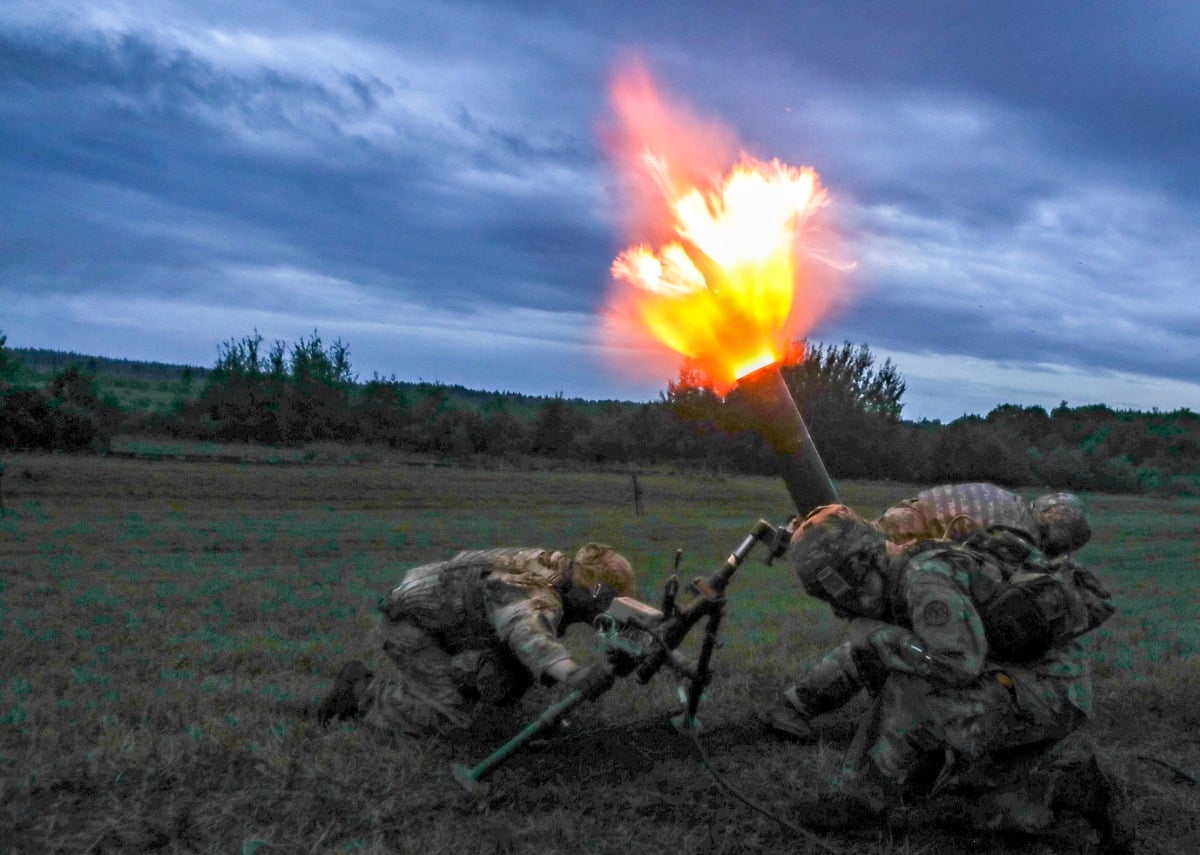
The United States Army recently standardized its new Mortars App across all M32A2 fire control units, permanently replacing the decades-old hardware that ground troops relied on for ballistic calculations. Operating on standard Android devices like ruggedized Samsung phones, the software completely consolidates the functions of two separate legacy systems that have burdened infantry logistics since the early 2000s. By moving fire control calculations to a mobile operating system, the military solved an expensive software engineering problem that has plagued the Department of Defense for more than a decade. The transition marks a significant shift away from proprietary, single-use hardware toward agile software.
For twenty years, mortar teams faced a cumbersome technological divide. Heavy and mounted mortar crews used the laptop-based Mortar Fire Control Software, which first entered service in 2003. Light, dismounted infantry units carried the Lightweight Handheld Mortar Ballistics Computer, introduced in 2004.
While both systems got the job done during the height of operations in Iraq and Afghanistan, they aged poorly. They ran on entirely different codebases. When the original civilian and military developers retired or took jobs in the private sector, they took their specialized institutional knowledge with them. The Army was left holding the bag on a mountain of technical debt.
The Cost of Rigid Code
The fatal flaw of the old systems was that the software was permanently married to the hardware. If the military wanted to upgrade to a newer, lighter physical device, engineers could not simply install the old program. They had to scrap everything and write the code again from scratch.
The crisis came to a head in 2015. The United States Marine Corps formally requested an Android version of the lightweight ballistic computer to reduce the physical weight carried by infantrymen. The initial attempt to port the old architecture over to a mobile platform failed to meet performance standards. The code was too bloated, too rigid, and too reliant on outdated processing logic.
Realizing that patch jobs would no longer cut it, the Weapons and Software Engineering Center at Picatinny Arsenal abandoned the legacy structure entirely. Engineers spent years building a completely new foundation called the Common Fire Control Framework. This modular blueprint became the backbone of the newly standardized Mortars App.
Moving Beyond Single Use Hardware
The immediate benefit for soldiers on the ground is purely physical. Carrying a lightweight tablet or a smartphone is far easier than lugging around a specialized, heavy military laptop. The new app handles complex fire control calculations instantly, matching the speed of modern consumer applications while maintaining strict military accuracy.
However, the real victory happened behind the scenes in the development pipeline. Because the new software architecture is entirely device-agnostic, the code is no longer trapped on a single piece of hardware. If the military decides to shift from Android to a completely different operating system a decade from now, the core framework remains intact.
Furthermore, the modular nature of the application means future upgrades do not require massive teams of developers or multi-million dollar overhauls. A small team can write a patch or add a feature, test it, and roll it out to the field in a fraction of the time it used to take.
The Risks of Commercial Operating Systems
Shifting critical weapon systems to a commercial operating system introduces distinct challenges, particularly concerning cybersecurity and electronic warfare.
Standard Android platforms are naturally more vulnerable to exploitation than isolated, proprietary hardware. Malicious actors constantly look for vulnerabilities in consumer operating systems. In a combat environment, a corrupted piece of software or a compromised device could miscalculate coordinates, leading to catastrophic friendly fire incidents or missed targets.
To mitigate this, the military utilizes heavily locked-down, hardened versions of the operating system that strip out commercial tracking, communication, and data-sharing capabilities. The devices do not connect to public cellular networks or standard internet infrastructure. Instead, they rely on encrypted tactical radio networks to pass targeting data.
Even with these precautions, the risk of electronic jamming remains a reality. If an adversary successfully jams GPS and tactical data networks, digital tools lose much of their utility. Mortar crews must still maintain proficiency with manual aiming circles and paper plotting boards. Digital efficiency cannot completely replace analog survival skills.
Field Adoption and Future Implementations
Despite the underlying security debates, field reception has been highly favorable. Units like the 82nd Airborne Division, heavily accustomed to the old laptop systems, adopted the mobile application with minimal training during field trials. The user interface mimics the logical workflow of the legacy software, which kept training timelines short.
The standardization achieved in early 2026 solidifies this mobile framework as the default platform for the foreseeable future. The software is already being integrated into broader automated initiatives, such as the vehicle-mounted Scorpion Light 81mm mobile mortar system, which automatically aligns the weapon tube based on digital map inputs. By solving the software architecture problem first, the military ensured that future weapon systems can plug directly into a mature, stable digital ecosystem without reinventing the wheel.