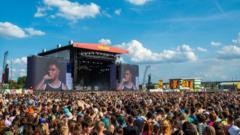
The standard long weekend at Richfield Avenue might be changing forever. Festival Republic, the team behind Reading Festival, filed an application with Reading Borough Council to permit full-scale live music on the main stages on Thursday. For decades, Thursday has been the soft launch of the weekend. It is the day you haul heavy tents across muddy fields, fight for a decent camping spot near the arena, and settle in with warm drinks. The entertainment was strictly restricted to smaller tents, late-night DJ sets, or silent discos.
This new licensing shift changes the entire dynamic of the event. If you are holding a weekend ticket, you are looking at an entire extra day of massive headliners.
Organizers want to maximize the site value. Running a massive festival infrastructure costs millions. Leaving the primary stages dark on Thursday while tens of thousands of campers sit around waiting for Friday stopped making financial sense to promoters years ago. Rumors about this change circulated in music forums for seasons, but official council documents confirmed the active push to rewrite the site's operating rules.
The Licensing Battle with Reading Borough Council
Securing permission for an extra day of arena performances is not a simple rubber-stamp job. The local local government looks at applications through a microscope. They have to balance the massive economic injection the festival brings against the sheer misery of local residents dealing with noise, traffic, and litter.
The core of the application rests on altering the existing premises license. Currently, the strict decibel limits and timing restrictions prevent the main PA systems from firing up until Friday morning. By asking for Thursday main stage music, organizers must prove they can control sound bleed into nearby residential areas like Caversham.
Local councilors face immense pressure from neighborhood groups. For residents living just across the River Thames, the festival represents three days of locked gates, closed roads, and bass rattling their windows. Adding a fourth day of main-arena volume feels like an intrusion to them. Festival Republic argues that keeping people inside the main arena area actually reduces chaos in the campsites. When people have a massive stage to watch, they aren't wandering around causing mischief in the camping zones. It gives the crowd a focal point.
What This Means for Weekend Ticket Holders
If you have ever attended Reading, you know the Thursday scramble. You arrive early, pitch your tent, and then find yourself with a lot of dead time. You either drink at your campsite or head to the smaller tents that get packed to a dangerous degree.
Opening the main stages early completely alters the value proposition of your weekend ticket.
- Better value for money: Ticket prices spike every year. Getting four days of top-tier bands instead of three softens the blow of those high prices.
- Reduced arena crowding: Smaller tents won't get overwhelmed on Thursday evening because the crowd spreads across the massive main field.
- Pacing issues: Trudging through a four-day festival requires serious stamina. If you go too hard on Thursday afternoon watching a massive sub-headliner, you might burn out before Sunday night's closing act.
You also have to consider the logistics of getting to the site. If the main stage fires up on Thursday afternoon, everyone will try to arrive on Wednesday evening or Thursday morning. The traffic gridlock around Reading station and the IDR could reach unprecedented levels.
The Hidden Economic Reality of UK Festivals
The festival industry faces brutal economic conditions. Dozens of independent UK events folded over the last few years due to soaring production supply costs, skyrocketing artist fees, and supply chain issues. Even massive entities like Reading and Leeds are not immune to these pressures.
To survive, events must scale up or find new revenue streams.
Festival Economic Drivers:
- Main Arena Food & Drink Tariffs (Massive profit margins)
- VIP/Luxury Camping Upgrades (High-income segments)
- Extra Day Sponsorship Activation (Brand visibility)
By opening the main arena a day early, the festival generates millions in extra food and drink sales. Bars that usually stay shuttered until Friday can start churning out drinks 24 hours earlier. Merchandise stalls get an extra day of foot traffic. Sponsors get their logos in front of eyes for an extended period. It turns a three-day commercial window into a four-day powerhouse.
Artists also benefit. The modern touring schedule is packed tightly. Booking agencies struggle to fit all their clients into the limited Friday-to-Sunday slots across European summer festivals. An extra day opens up slots for two or three more major names, making the overall lineup far more attractive than the competition.
Noise Controls and Environmental Hurdles
The environmental protection teams at the council hold the ultimate veto power over this application. Modern festival sound systems use advanced directional arrays to keep the music focused tightly on the crowd, minimizing the sound that travels upward and outward. Even with the best tech, low-frequency bass notes travel for miles through the open air.
The proposed license modification includes strict sound-monitoring frameworks. Independent acoustic engineers must sit at the perimeter of the site, constantly measuring decibel levels. If the wind shifts and pushes the sound toward the town center, the festival sound engineers are forced to pull back the volume instantly.
Waste management presents another massive problem. An extra day of full arena operations creates hundreds of tons of additional plastic cups, food wrappers, and general refuse. The cleanup operation after the festival already takes over a week. Extending the main stage timeline squeezes the window the team has to restore Richfield Avenue to a usable public space.
How to Adapt Your Festival Strategy
If the council approves this change, you cannot treat the event the same way you used to. Your old survival strategy will leave you exhausted and broke by Saturday night. You need to adjust your approach to handle the extended marathon.
Rethink Your Packing List
You are adding an extra twenty-four hours of physical wear and tear. Pack double the amount of dry socks you think you need. Wet feet destroy a festival experience faster than a bad lineup. Bring extra high-calorie snacks to keep your energy up without spending fifty quid a day at food trucks.
Pace Your Consumption
Do not treat Thursday like a sprint. The temptation to drink everything in your cooler the moment your tent is secure is incredibly strong. When the main stage is roaring at 4 PM on Thursday, you need to treat it like a regular festival day. Sleep is your friend.
Map Your Travel Early
Do not show up at Reading station on Thursday noon expecting a smooth walk to the red gate. The train platforms will be absolutely swamped. If you can secure a Wednesday early-entry permit, take it. Getting your camp established a day before the music kicks off lets you wake up fresh when the arena gates open.
The decision from the licensing committee will reshape the UK summer calendar. If Reading successfully expands its footprint into Thursday, expect every other major weekend festival to try the exact same thing. It is a bold move driven by survival and profitability, and the fans will be the ones who either reap the rewards or suffer the exhaustion.