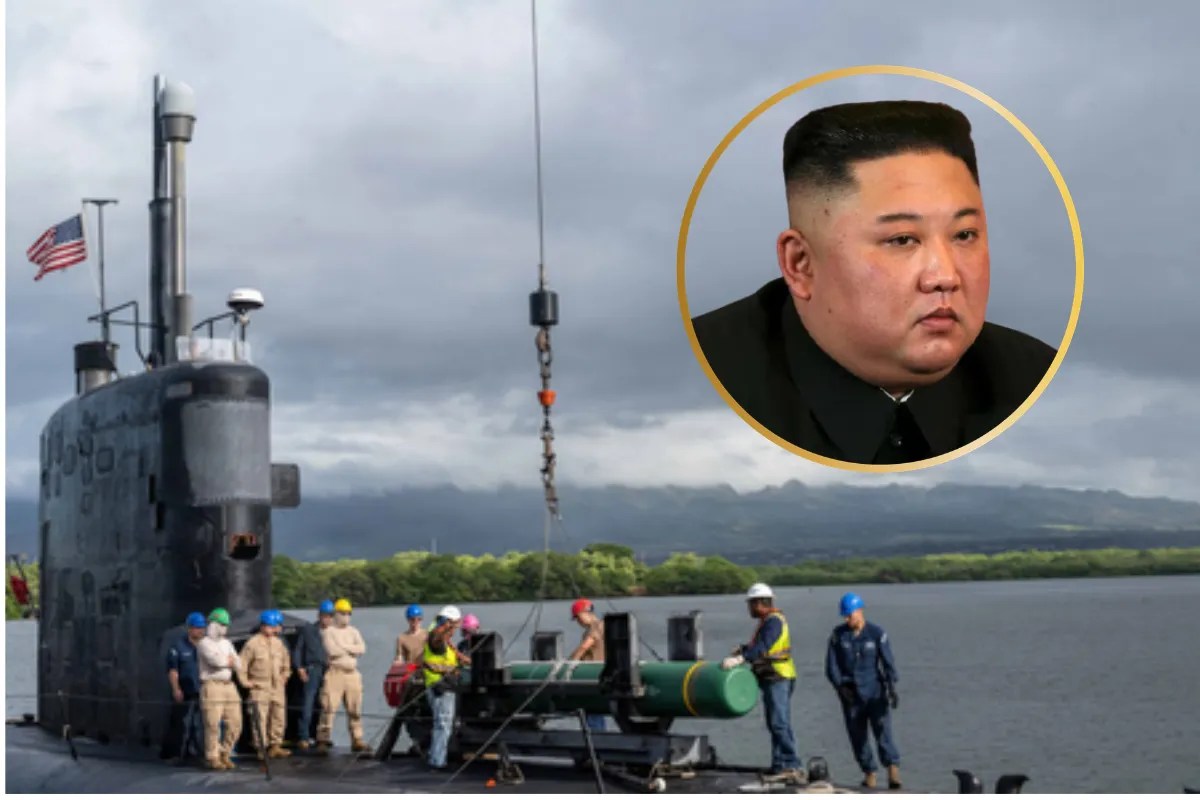
North Korea has declared that the latest round of massive military exercises between the United States and South Korea is no longer a routine show of deterrence but an overt dress rehearsal for an invasion. Pyongyang warned that the Korean Peninsula is spiraling toward an uncontrollable nuclear conflict. This escalation follows a series of high-intensity live-fire drills along the Demilitarized Zone, which North Korean state media described as a direct provocation demanding an immediate, overwhelming response. The rhetoric marks a dangerous shift from standard political posturing into active preparation for an imminent hot war.
While Washington and Seoul maintain that these maneuvers are purely defensive, the scale and composition of the forces involved tell a different story to military planners in Pyongyang.
The Anatomy of the Escalation
The friction centering around the peninsula is not a new phenomenon, but the strategic environment has fundamentally altered. For decades, joint drills followed a predictable script of simulated defense and counter-attack. The current iterations, however, incorporate specific scenarios that North Korea views as an existential threat, including decapitation strikes against its leadership and the sudden deployment of American strategic assets like nuclear-capable bombers and carrier strike groups.
Pyongyang reacts with predictable fury to these deployments because its military leadership operates under a doctrine of asymmetric vulnerability. They know they cannot win a conventional, prolonged war against the combined forces of the United States and South Korea. Therefore, their defense strategy relies entirely on early escalatory dominance. When American B-52 bombers fly within striking distance of the border, North Korea views it as a pre-emptive threat that requires a matching display of nuclear readiness.
The current friction is exacerbated by the total collapse of diplomatic communication channels. Hotline phones sit silent in empty rooms. Without a mechanism to clarify intentions, a simple navigation error or a miscalculated radar sweep could trigger a catastrophic chain reaction.
Moving Beyond Simple Deterrence
The alliance between Washington and Seoul has shifted its public messaging from keeping the peace to demonstrating overwhelming retaliatory capability. This shift is designed to reassure a nervous South Korean public that has grown increasingly skeptical of the American nuclear umbrella. Some factions within Seoul have openly called for the country to develop its own independent nuclear arsenal, a move that would permanently shatter the non-proliferation framework in East Asia.
To prevent Seoul from going nuclear, Washington has felt compelled to show more muscle. This means bigger drills, more visible weapons, and harsher public statements.
The strategy is backfiring. Instead of intimidating Kim Jong Un, it provides his regime with the perfect domestic justification to accelerate their own weapons programs. Every flight of an American spy plane becomes front-page news in Pyongyang, used to convince the local population that sacrifice is necessary to defend the motherland against foreign aggression.
Force Deployment Metrics on the Peninsula
==================================================
Asset Class            US/ROK Alliance    North Korea
--------------------------------------------------
Strategic Bombers      Regular Rotations  None
Submarines             Nuclear-Armed SSBN Conventional Only
Short-Range Missiles   Precision Guided   Mass Stockpiles
Active Personnel       Over 600,000       Over 1.2 Million
==================================================
This numbers game obscures the underlying danger. North Korea has codified a law that allows for the automatic and immediate use of nuclear weapons if its leadership or command structure is threatened. By practicing drills that look exactly like an invasion preparation, the US and South Korea are dancing on the edge of a tripwire that could activate that automated doctrine.
The New Global Alignment Sustaining Pyongyang
North Korea no longer stands isolated in its confrontation with the West. The geopolitical chessboard has rearranged itself in ways that give Pyongyang unprecedented leverage and economic insulation. The deepening alliance between North Korea and Russia has transformed from a marriage of convenience into a foundational pillar of Eurasian security dynamics.
Pyongyang supplies conventional artillery shells and ballistic missiles to support Russian military campaigns. In return, Moscow provides critical economic relief, food security, and potentially highly advanced military technology. This transfer of knowledge could significantly upgrade North Korea’s satellite capabilities and submarine technology.
- Sanctions Evasion: Russian vetoes at the United Nations have effectively dismantled the international monitoring mechanisms that used to enforce economic blockades against Pyongyang.
- Energy Security: Shipments of refined petroleum products keep the North Korean military machine fueled, neutralizing the primary leverage Western sanctions once held.
- Diplomatic Shielding: China and Russia consistently block any attempts by the UN Security Council to condemn or punish North Korean missile tests, rendering international legal pressure useless.
This support network changes how Pyongyang calculates risk. In the past, severe economic strain might force the regime back to the negotiating table. Today, the regime feels economically secure enough to ignore Western pressure entirely, confident that its northern neighbors will keep its economy afloat.
The Failure of Regional Diplomacy
The traditional tools of statecraft have failed to alter the trajectory of the Korean Peninsula. Decades of alternating between economic sanctions and promises of aid have resulted in a North Korea that is vastly more dangerous today than it was at the turn of the century. The core mistake of Western policy has been the assumption that North Korea would eventually trade its nuclear program for economic integration.
For the regime in Pyongyang, the nuclear program is not a bargaining chip. It is the sole guarantee of survival. They looked at the fates of regimes in Iraq and Libya that abandoned their unconventional weapons programs and concluded that disarmament is a form of suicide.
"A state that surrenders its primary means of defense in exchange for paper guarantees from Western powers is a state that will not survive the decade."
This mindset means that demanding complete, verifiable, and irreversible denuclearization as a prerequisite for talks is an absolute non-starter. It ensures that diplomatic rooms remain empty while the military infrastructure on both sides grows more lethal by the week.
Tactical Realignments on the Ground
On the ground, the military posture is shifting from static defense to dynamic readiness. South Korea has invested heavily in its three-axis defense system, which includes pre-emptive strike capabilities, missile defense networks, and plans to eliminate North Korean leadership in the event of an outbreak of hostilities. This overt commitment to a pre-emptive option forces North Korea to keep its missile systems on hair-trigger alert.
The danger of this setup is structural. If North Korean radar indicates that a South Korean strike is underway, the regime cannot afford to wait and see if the threat is real. They must launch their missiles before they are destroyed on the ground. The timeline for decision-making has shrunk from days to minutes.
The situation is further complicated by the deployment of uncrewed systems. Drones from both sides regularly cross the border, testing air defense networks and gathering intelligence. These small, low-flying aircraft are difficult to track and easy to misidentify, adding another layer of unpredictability to an already volatile border region.
The international community must come to terms with a stark reality. The policy of containment has failed to stop North Korea from becoming a functional nuclear state. Continuing to treat the situation as a temporary crisis that can be solved with more sanctions or larger military exercises is an exercise in self-delusion that risks a catastrophic miscalculation. The current joint drills are not happening in a vacuum; they are taking place in an environment where both sides have already prepared the battlefield for the worst-case scenario.