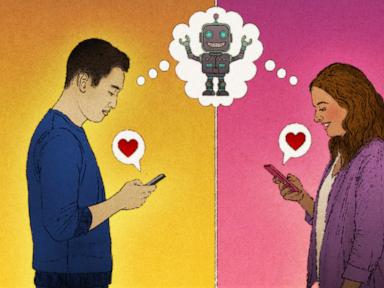
The vibration in your pocket doesn't feel like a threat. It feels like a connection. It is the subtle, rhythmic pulse of a smartphone notifying you that someone, somewhere, wants your attention. In our hyper-connected digital lives, we have been conditioned to respond to that buzz with an immediate hit of dopamine. We reach for the screen out of habit, boredom, or a deep-seated human need to be acknowledged.
But behind that screen lies a multi-billion-dollar industry engineered by shadow architects who understand human psychology better than most therapists. They do not hack our devices; they hack us. They exploit our loneliness, our impatience, and our professional ambitions.
Consider three distinct paths where ordinary trust is turned into a weapon. These paths do not belong to the gullible or the naive. They belong to people who are tired, people who are busy, and people who are simply looking for a break.
The Architect of the Empty Porch
Let us start with a scenario that plays out in millions of suburban neighborhoods every single afternoon. Let us call her Sarah. Sarah is a project manager working from home, juggling a spreadsheet that refuses to balance, a cold cup of coffee, and a looming deadline. Her phone buzzes.
USPS Notice: Your package cannot be delivered due to an incorrect address. Please update your details within 24 hours to avoid return to sender. Link: post-office-redelivery-update.com
Sarah is expecting a package. Or maybe she isn't, but her brain instantly fills in the blanks—perhaps it is the birthday gift for her mother, or the replacement charging cable she ordered late last night. The message triggers a micro-flash of anxiety. Return to sender? That means friction. It means delays.
She clicks. The website looks perfect. The blue and eagle logo of the postal service is crisp, the fonts are identical, and there is even a tracking number box. It asks for a re-delivery fee of $1.50. It is a trivial amount. She inputs her credit card number.
Within forty minutes, Sarah’s bank accounts are being drained in increments of $499 from an automated server in Eastern Europe.
This is the delivery notification trap, a modern iteration of "smishing" (SMS phishing). According to the Federal Trade Commission, imposter texts of this nature ranked as one of the most common forms of fraud reported, costing consumers hundreds of millions of dollars annually. The scammers do not need to breach a secure government database. They simply need to send out ten thousand automated text messages a minute, knowing that at any given moment, a certain percentage of the population is waiting for a box to arrive.
The real trick isn't the fake website. It is the artificial urgency. By placing a 24-hour countdown on the resolution, the scammer bypasses the logical brain. The victim enters a state of panic-driven compliance.
To protect yourself from the empty porch trap, you must cultivate a habit of deliberate friction. When a message demands immediate action regarding a delivery, never click the provided link. Instead, open a completely separate browser window. Go directly to the official website of the carrier—whether it is UPS, FedEx, or the postal service—and paste the tracking number there. If the message came via text message from a random ten-digit mobile number rather than a verified five-digit short code, it is almost certainly a hostile attempt to capture your credentials.
The Scripted Solitude
If the delivery scam preys on our desire for convenience, the next mechanism targets something far more fragile: our desire to be seen.
Imagine a man named David. He is fifty-four, recently divorced, and living in a quiet apartment that feels entirely too large. The evenings are the hardest part. The television mumbles in the background, offering noise but no companionship. He creates a profile on a mainstream dating application, hoping for a conversation.
Within two days, he receives a message from Clara. Her profile picture shows a woman with kind eyes standing on a windy beach. She is articulate, attentive, and deeply interested in David’s life. She asks about his childhood, his favorite books, and how he copes with the quiet evenings. For the first time in two years, David feels a surge of optimism. They move their conversation off the dating app and onto an encrypted messaging service like WhatsApp, a classic tactic designed to evade the dating platform's automated fraud detection algorithms.
For three months, Clara becomes the emotional anchor of David's day. They exchange hundreds of messages. They plan to meet, but something always intervenes—a sudden business trip to Singapore, a family medical emergency, a broken webcam. David ignores the red flags because the alternative is returning to the silence of his apartment.
Then comes the pivot. Clara doesn't ask for cash directly. She talks about her future. She mentions how she is securing her financial independence through a specialized cryptocurrency trading platform recommended by her uncle. She shares screenshots of her soaring balances. She tells David she wants them to build a life together, but she needs him to be secure, too.
"I can show you how to do it," she writes. "It’s simple. We can do it together."
David invests $5,000. The proprietary website she links him to shows his investment doubling within a week. Emboldened by love and greed, he liquidates his retirement account and transfers $120,000 into the digital wallet.
When he finally tries to withdraw a portion of the funds to pay for a flight to see her, the platform demands a 20% "clearance fee" to release the money. David reaches out to Clara in a panic. Her profile is gone. The phone number is disconnected. The website is a ghost.
This is romance fraud combined with investment manipulation, often referred to in cybersecurity circles as "pig butchering"—a term derived from the practice of fattening an animal before slaughter. The emotional devastation far outweighs the financial ruin. David did not just lose his life savings; he lost the future he had allowed himself to believe in.
The data surrounding these interactions is staggering. The FBI’s Internet Crime Complaint Center consistently reports that romance scams result in some of the highest financial losses per victim of any cybercrime category. The perpetrators are rarely lonely individuals operating out of a basement; they are often part of highly organized, international syndicates operating out of compound facilities where forced labor is used to run thousands of fake profiles simultaneously.
Defeating the scripted solitude requires an uncompromising commitment to reality. If an online romantic partner introduces any financial element into the relationship—whether it is cryptocurrency, a business opportunity, or a plea for emergency medical funds—the relationship must be assumed to be a fabrication. Furthermore, running a reverse-image search on a partner's profile photos can instantly reveal if the image has been stolen from an innocent social media user halfway across the world.
The Mirage of the Golden Handshake
The third avenue of exploitation targets our professional identity. It sneaks past our defenses because it cloaks itself in the language of validation and career advancement.
Consider Marcus, a graphic designer who has been searching for a stable remote role for six months. The job market is brutal, filled with automated rejection letters and silent listings. One morning, he receives an email from a recruiter representing a mid-sized healthcare consultancy.
Subject: Career Opportunity: Senior Remote Designer (Contract-to-Hire)
The email notes that the recruiting team discovered Marcus's portfolio on LinkedIn and found his aesthetic perfectly aligned with their upcoming rebranding campaign. The salary offered is 15% above the market average. Marcus feels a profound sense of relief. The validation washes away months of professional self-doubt.
The interview process is swift, conducted entirely over a messaging platform like Telegram or via a series of written questionnaires. Marcus convinces himself this is simply how modern, agile companies operate. Within forty-eight hours, he receives an official offer letter complete with corporate letterhead and signatures from the human resources department.
Then comes the logistical requirement. The company informs Marcus that due to security protocols, he must use their approved vendor to purchase his remote workstation equipment: a high-end laptop, an external monitor, and specialized software. The company provides him with a digital check for $4,500 to cover the expenses.
"Deposit the check into your personal account," the onboarding specialist instructs. "Once the funds clear, wire the balance to our hardware vendor so they can ship your pre-configured machine."
Marcus deposits the check using his mobile banking application. The balance appears in his account almost immediately—a standard banking convenience known as provisional credit. Believing the funds are secure, Marcus wires $4,500 of his own money to the designated vendor.
Three days later, the corporate check bounces. It was completely counterfeit. The vendor was a front for the scammer. The $4,500 Marcus wired is gone forever, and his bank freezes his account for depositing fraudulent funds. The job never existed.
This employment scam relies on our inherent desire to be recognized for our skills. Scammers exploit the vulnerabilities of the modern gig economy and remote work culture to turn a victim's ambition against them.
Protecting your professional life requires recognizing that no legitimate enterprise operates this way. A genuine employer will never send a check to a prospective employee with instructions to purchase equipment from a specific vendor via wire transfer or peer-to-peer payment applications. True onboarding processes involve comprehensive video interviews, verifiable employment contracts, and equipment shipped directly from corporate inventory without financial transactions passing through the employee’s personal bank account.
The Architecture of Awareness
The common thread linking Sarah, David, and Marcus is not a lack of intelligence. It is the exploitation of their humanity. The scammer's greatest tool is never a sophisticated line of malicious code; it is the ability to create a high-emotion environment where critical thinking becomes a luxury the victim feels they cannot afford.
The solution to this systemic vulnerability is not to withdraw from the digital landscape entirely. That is impossible. The solution is to introduce a culture of systemic skepticism into our daily interactions with technology.
When your phone vibrates, look at it not as a trusted friend, but as a doorway to a crowded public square. Enjoy the convenience, embrace the connectivity, but keep your hand firmly on your wallet. The most powerful antivirus software on earth is not something you download from an app store. It is the simple, quiet decision to pause, take a breath, and question the voice on the other side of the glass.