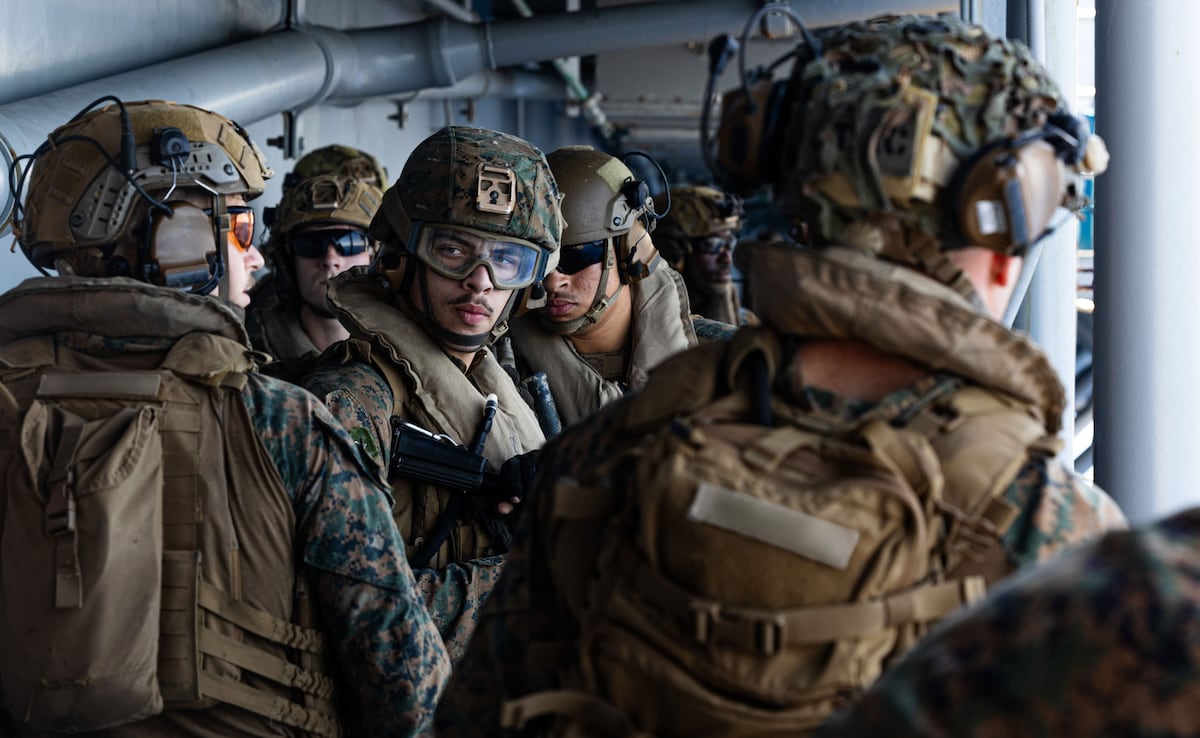
The headlines are screaming about a "security breach" because an Iran-linked group published the home addresses of 2,000 U.S. Marines. The media is treating this like a sophisticated heist of the century. It isn't. It is a mundane data aggregation exercise that highlights a truth the military-industrial complex refuses to admit: your personal data is already public property.
Stop looking for a "hacker" in a dark hoodie. The real culprit is the $250 billion data brokerage industry that we have legally allowed to index every breath we take. This leak isn't a failure of Pentagon firewalls; it is a failure of the American privacy model. If you think your "private" life exists anywhere outside of a disconnected bunker, you are living in a fantasy.
The Myth of the "Targeted Breach"
Most reporting on this leak suggests that a foreign adversary "infiltrated" a secure database to extract these names. That is almost certainly a lie. In the modern intelligence era, you don't need to hack the Department of Defense to find out where a Sergeant lives.
You just need a credit card and an account with a commercial data aggregator.
Most of these "leaks" are simply the result of Open Source Intelligence (OSINT) and the scraping of public records. When a Marine signs up for a credit card, buys a home, or registers to vote, that data is harvested. When they download a "free" flashlight app or a weather tracker, their GPS coordinates are sold to the highest bidder.
I’ve seen intelligence analysts map out the entire personnel roster of a specific military base using nothing but "anonymized" fitness tracking data. We are talking about people who think they are secure because they use a VPN, while their smart fridge is broadcasting their location to a server in a country that doesn't like us.
The Data Life Cycle of a Service Member
- The Lead: A service member creates a social media profile.
- The Enrichment: A data broker links that profile to a voter registration record.
- The Target: An adversary buys a "Military Interests" or "Veteran" marketing list from a third party.
- The "Leak": The adversary publishes the list to cause domestic panic.
The "leak" is just the marketing department of a foreign intelligence agency taking credit for a shopping trip.
Why the Pentagon Cannot Fix This
The immediate reaction from leadership is always the same: "We will increase cybersecurity training."
This is useless. It’s like telling someone to use a better umbrella while they are standing at the bottom of the ocean.
The Pentagon can secure its internal servers, but it has zero control over the dozens of private companies that hold the digital identities of its personnel. Your bank, your insurance provider, and your favorite retail store are all massive vulnerabilities. They are the soft underbelly of national security.
The core problem is Data Persistence. Once information is digitized, it never dies. It only changes hands. We are operating on a 1990s security philosophy in a 2026 reality. We tell troops to "watch what they post," while the real threat is what they can't help but generate: their digital exhaust.
The Failure of Traditional OPSEC
Operational Security (OPSEC) used to mean not talking about ship movements in a bar. Today, OPSEC is an impossible task. To truly be "secure," a Marine would have to:
- Never own a smartphone.
- Never use a credit card.
- Never register a vehicle.
- Never have a LinkedIn profile.
Since that is impossible in a modern economy, the current military strategy is effectively "hope for the best." That isn't a strategy; it’s a prayer.
The Intelligence Value of Fear
Why would an Iran-linked group bother "leaking" addresses that are technically available for $19.99 on a "People Search" website?
Because the goal isn't assassination; the goal is Psychological Disruption.
They want the families of these Marines to feel unsafe in their own living rooms. They want to create a friction point between the service member and the home front. If a spouse is terrified that a radical group has their home address, that Marine is less focused on the mission.
By treating these leaks as "sophisticated attacks," the media does the adversary's work for them. We validate their power. We turn a basic Google search into a national security crisis.
The contrarian truth? We should be more worried about the data we willingly give away than the data that is stolen. A leak of 2,000 addresses is a drop in the bucket compared to the billions of data points flowing into foreign-owned apps every single day.
Stop Asking "How Did They Get It?"
The question "How did they get it?" is a distraction. They got it because it was for sale.
Instead, ask: "Why are we allowing our service members to be sold as products?"
The U.S. government spends billions on stealth fighters to hide from radar, but it does almost nothing to hide the literal humans who fly them. We have created a society where "privacy" is a premium feature that most people can't afford.
If you are a service member, you need to understand the mechanics of Identity Obfuscation. Standard privacy settings are a joke. They are designed to keep your nosy neighbor away, not a state-sponsored actor.
Hard Truths for the Digital Age
- Encryption is a temporary shield. Today's "unbreakable" code is tomorrow's hobbyist project.
- Anonymity is a lie. With enough data points, "anonymized" data can be deanonymized with high accuracy.
- Convenience is the enemy. If an app makes your life easier, it is likely because it is extracting something from you that is worth more than the service it provides.
The Actionable Pivot: Radical Digital Hygiene
If you want to protect your people, you don't buy more firewalls. You change how they exist in the digital world.
We need to move toward a model of Burner Identities. We need to allow service members to register for utilities, housing, and services using government-backed aliases or shielded entities. We need to treat a home address like a classified coordinate.
But we won't do that. It’s too expensive. It’s too "inconvenient." It disrupts the flow of commerce.
So, instead, we will get more "leaks." We will get more screaming headlines. We will get more "thoughts and prayers" from the Pentagon.
The Marine Corps leak isn't a sign that the "bad guys" are winning. It's a sign that we have already lost the war for privacy, and we are just now noticing the bodies.
The data is out there. It’s been out there for years. The only difference now is that someone decided to put a bow on it and call it a "hack" to watch us scramble.
Stop being shocked. Start being invisible.
Burn the profiles. Opt out of the aggregators. Treat your smartphone like the tracking beacon it actually is. Or keep pretending that a "strong password" is going to save you from a world that has already cataloged your every move.
The choice is yours, but the clock ran out a long time ago.
Don't wait for the next leak to realize you're already naked on the internet.