The asphalt of a New York City playground in the dead of summer smells like hot tar and cheap rubber. If you sit close enough to the chain-link fence of Flushing Meadows Corona Park, you can hear seven different languages spoken before a single ball is kicked. It is a loud, crowded, unforgiving place to grow up.
For a skinny kid in the early 2000s, that patch of Queens was the entire world. He didn’t look like royalty. He didn’t act like it. He wore the same scuffed sneakers as everyone else, chasing a ball across the concrete until the streetlights flickered to life.
But his last name carried the weight of an entire continent.
Timothy Weah spent his childhood running away from a ghost. His father, George Weah, is not just a man; he is an institution. The only African footballer to ever win the Ballon d'Or. A icon who conquered AC Milan, Paris Saint-Germain, and the hearts of millions, before eventually becoming the President of Liberia. To bear the name Weah in the football world is to be born with a target on your back and an impossible standard in your shadow.
Yet, Timothy did not take his first steps on the manicured grass of European academies. He took them in the chaotic melting pot of New York. And that difference changed everything.
The Weight of the Name
Imagine walking into a locker room where everyone already thinks they know who you are. They expect the father’s stride, the father’s lethal instinct, the father’s magic.
George Weah grew up in the slums of Monrovia, fighting through poverty and civil war to reach the pinnacle of global sport. His story is one of survival, grit, and raw, unadulterated power. Timothy’s story, by contrast, is about identity. Born in Brooklyn, raised in Queens and Pembroke Pines, Florida, he was a child of the African diaspora navigating the complexities of a modern American upbringing.
His mother, Clar Weah, a Jamaican-born businesswoman, provided the anchor. She was the one who insisted that Timothy find his own voice, away from the blinding glare of his father’s legacy. In Queens, nobody cares who your dad is if you can't hold your own on the pitch. The local league matches were intense, physical, and deeply multicultural. He played alongside sons of immigrants from Colombia, Guyana, Italy, and Albania.
This wasn't the sterile environment of elite American youth soccer clubs where parents pay thousands of dollars for pristine uniforms. This was street football. It taught him a different kind of survival. It gave him an elasticity of mind, an ability to read people from all walks of life, and a deep-seated desire to be judged solely on his own merits.
The Choice of a Jersey
The intersection of Timothy’s worlds forced a decision that would define his career before it truly began. He held three passports. He could have played for Liberia, honoring his father’s homeland and instantly becoming the savior of a football nation. He could have played for France, where he spent formative years in the PSG youth system. He could have chosen Jamaica, celebrating his mother’s roots.
Instead, he chose the United States.
It was a choice that baffled traditionalists. Why eschew the romanticism of Liberia or the guaranteed silverware of France for a country where soccer is often an afterthought?
The answer lies back on those New York streets. Timothy felt American. He was a product of the U.S. soccer ecosystem, specifically the New York Red Bulls academy, before moving abroad. Choosing the USMNT was his ultimate act of independence. It was a statement: I am building something new, not inheriting something old.
When he scored against Wales in the 2022 World Cup in Qatar, the significance was cosmic. George Weah, for all his greatness, never got to play in a World Cup. Liberia never qualified during his prime. Sitting in the VIP boxes in Doha, watching his son smash the ball into the back of the net on the world’s biggest stage, the elder Weah wept. The circle had closed, but not in the way anyone had predicted. The son had reached the summit his father never could, wearing the red, white, and blue.
The Modern Nomad
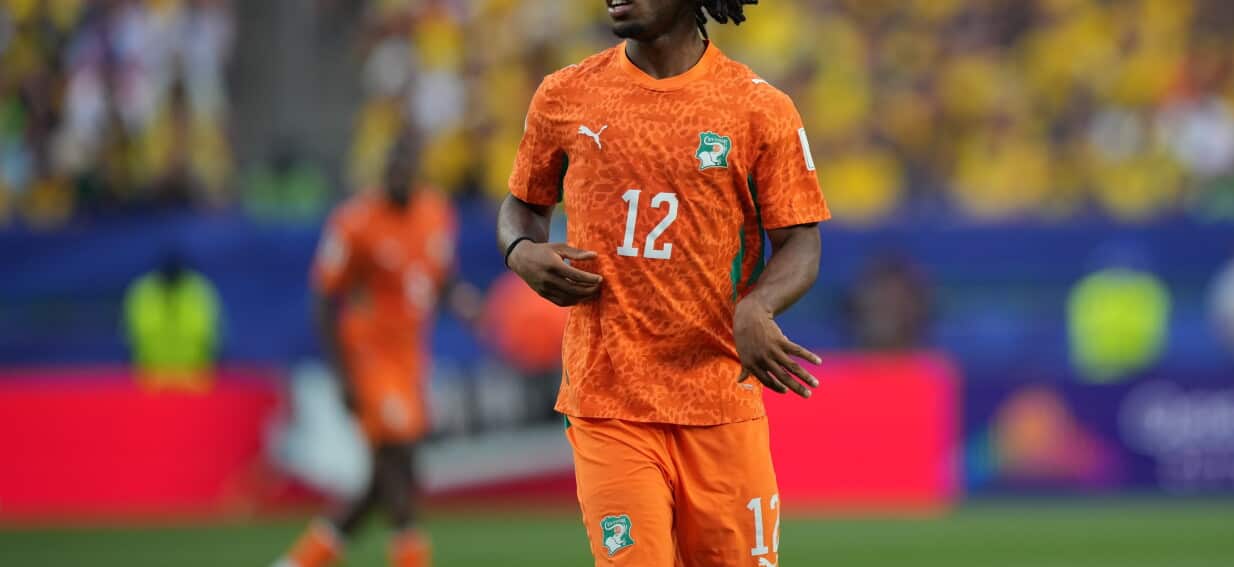
To understand Timothy Weah today, you have to look at how he moves. He does not play with the heavy, direct burden of a traditional number nine like his father. He is versatile. He operates on the wings, tracks back, and fills spaces with a tactical intelligence honed in France with Lille and Celtic in Scotland, before landing at Juventus in Italy.
He speaks with a quiet, measured confidence. He makes music in his spare time, dropping trap tracks under a pseudonym, deeply connected to the cultural pulse of American hip-hop. He is just as comfortable discussing fashion in Milan as he is discussing tactical pressing triggers in Turin.
The modern footballer is often criticized for being detached from reality, living in a bubble of wealth and PR-managed social media feeds. But Timothy’s multi-layered background makes him unique. He understands the pressure of the elite, but he also remembers the kid from Queens who just wanted to play.
He remains acutely aware of the skepticism that follows him. Critics often wonder if his opportunities were greased by his lineage. Every poor performance is analyzed through the lens of comparison. If he misses a chance, the internet reminds him of what his father would have done.
But watch him closely during a match. When things go wrong, there is no theatrical despair. There are no tantrums. He simply turns around, adjusts his socks, and sprints back into position.
The Noise Outside the White Lines
The burden of being a Weah extends beyond sport. When your father is a head of state, your life is inherently politicized. Timothy has had to navigate the delicate balance of supporting his family while maintaining his neutrality as an American athlete.
During his father’s presidency, every political shift in Monrovia rippled across the Atlantic, bringing questions that a young winger should never have to answer. He handled it with a maturity that bypassed his years, focusing his public statements entirely on the game and his teammates.
He found solace in the locker room of the USMNT, a group composed largely of young players with similarly diverse, hyphenated identities. Christian Pulisic, Weston McKennie, Yunus Musah—these are men who understand what it means to be American in a global sport that traditionally looks down on Americans. They are a generation of pioneers, and Timothy is their most cosmopolitan soul.
The journey from the concrete fields of Corona Park to the Allianz Stadium in Turin is miles apart geographically, but emotionally, they are tethered. The kid who learned to survive in the chaotic diversity of Queens is the same man who now locked eyes with the fiercest defenders in Serie A.
There is a quiet dignity in refusing to mimic a legend. Timothy Weah did not try to be the next George Weah. He realized early on that the position was already filled. Instead, he chose a harder, more uncertain path: being the first Timothy. And in doing so, he turned a famous surname into a personal identity, carved out of the very asphalt that raised him.