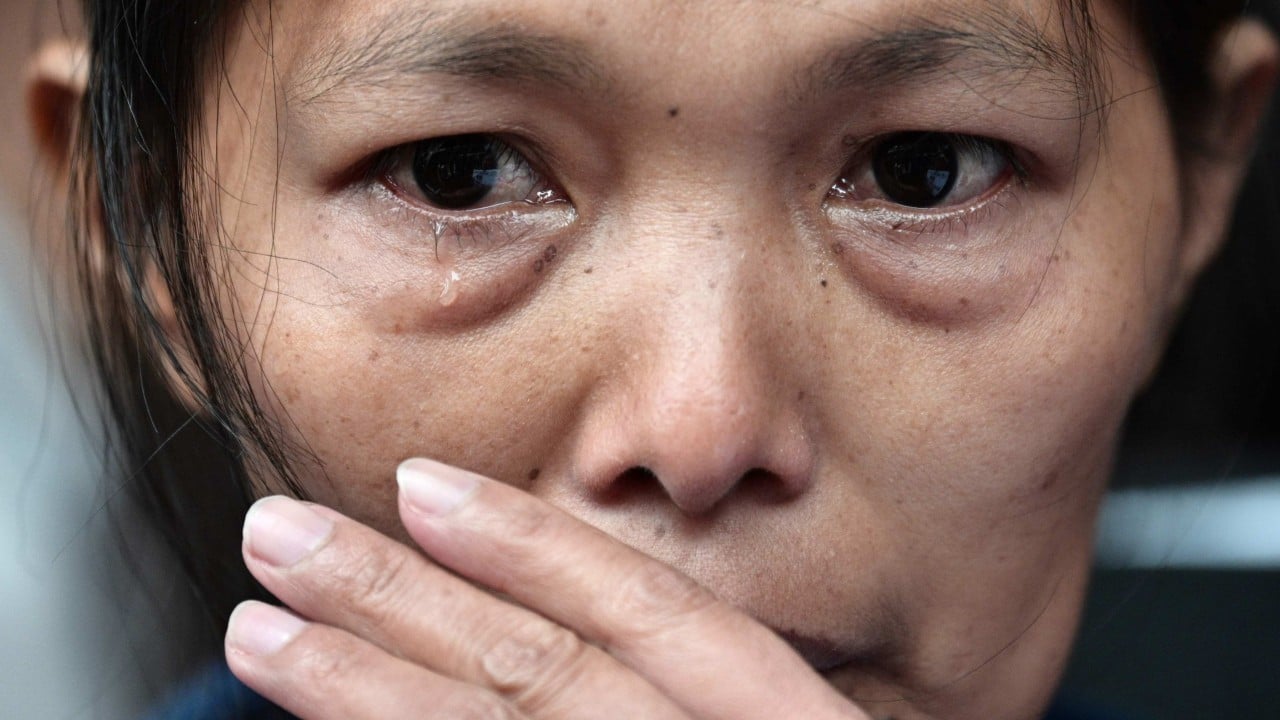
A Hong Kong court recently ordered an employer to pay HK$251,000 to the estate of Joan Sarmiento Gumatay, a Filipino domestic helper who was summarily fired after being diagnosed with cervical cancer. Gumatay passed away before the legal battle concluded, leaving her son to pursue the claim. While advocacy groups celebrated the ruling as a victory against unlawful termination, the financial award exposes a deeper systemic failure. The statutory limits of Hong Kong labor laws mean that for exploitative employers, firing a dying worker remains a calculated economic decision rather than an unthinkable legal risk.
This judgment exposes the structural precarity governing the city's 340,000 migrant domestic workers. The legal framework protects employers far more effectively than it safeguards the vulnerable laborers who keep the city running.
The Mathematical Calculation Behind Unlawful Dismissal
When an employer fires a domestic helper diagnosed with a terminal illness, the decision is rarely impulsive. It is a financial calculation. Under current Hong Kong regulations, employers are responsible for the medical expenses of their domestic workers. When a diagnosis like cancer emerges, the prospective medical bills can easily climb into hundreds of thousands of dollars.
The statutory penalty for wrongful dismissal under the Employment Ordinance is shockingly low. The compensation awarded to Gumatay’s estate did not stem from punitive damages designed to deter future exploitation. Instead, it was an accumulation of unpaid wages, sickness allowance, and a modest sum for discrimination. For a wealthy household, paying a couple of hundred thousand Hong Kong dollars years down the line after a protracted court battle is often cheaper than funding immediate private oncology treatments or managing the administrative burden of a sick live-in worker.
The law lacks teeth because it treats human rights violations as simple contractual breaches. If the maximum financial penalty for breaking a law is less than the cost of complying with it, the penalty becomes merely a cost of doing business. Employers weigh the low probability of a worker launching a multi-year legal campaign against the absolute certainty of immediate medical bills. Most migrant workers lack the resources, language skills, or residency status to remain in Hong Kong to fight these battles through the District Court or the Equal Opportunities Commission. Gumatay's case is the exception because her family refused to let the matter drop after her death, a rare act of endurance that most migrant families cannot afford.
Structural Traps Within the Two Week Rule
The primary mechanism that enforces silence among abused or sick domestic workers is the immigration policy known as the Two-Week Rule. Once a contract is terminated, a migrant domestic helper must leave Hong Kong within 14 days unless they obtain special visa extensions from the Immigration Department.
[Immigration Deadline: 14 Days] ---> Must secure new employment or leave
                                 ---> High risk of homelessness during litigation
                                 ---> Severely limits access to public healthcare
This policy creates a logistical nightmare for anyone attempting to seek justice through the legal system. A worker who has just been fired while battling stage-four cancer is suddenly forced to navigate complex legal paperwork, secure shelter, and arrange medical care, all while staring down a two-week deportation clock. The Immigration Department does grant extensions for those with pending court cases, but these extensions prevent the worker from taking new employment. The worker becomes entirely dependent on charity, shelters, or family remittances just to survive the duration of the lawsuit.
Furthermore, public healthcare access for non-residents is tied directly to a valid visa. The moment a helper's contract is severed, their status as an "eligible person" for subsidized public hospital treatment comes under immediate threat. A cancer patient requires continuous, uninterrupted therapy. By terminating the contract, the employer effectively cuts off the worker's access to the public medical system, forcing them to choose between returning to their home country where advanced cancer treatments may be unavailable, or staying in Hong Kong as a destitute litigant. The legal system relies on the physical and financial exhaustion of the plaintiff to resolve disputes quietly.
The Fiction of Comprehensive Domestic Worker Insurance
Every employer in Hong Kong is legally required to take out employees' compensation insurance. Most opt for standard domestic helper insurance packages sold by mainstream commercial providers. These policies are widely marketed as comprehensive solutions that protect both parties in the event of illness or injury.
The reality is far more restrictive. A standard, low-cost domestic helper policy covers basic outpatient visits and a very small cap on hospital surgeries, typically ranging from HK$25,000 to HK$50,000 per year. Critical illnesses such as cancer, stroke, or heart disease require specialized treatments, extended hospitalization, and expensive targeted therapies that far exceed these policy limits.
When the insurance policy caps out, the legal liability shifts entirely back to the individual employer under the Employment Ordinance. This creates an immediate conflict of interest. The employer faces a choice between absorbing massive personal financial liability or finding a pretext to terminate the employment contract. The regulatory framework fails to mandate high-ceiling critical illness coverage for domestic workers, leaving a massive gap between what the law requires an employer to pay for and what insurance actually covers. The result is a system that incentivizes termination at the precise moment a worker requires stability.
Institutional Skepticism and the Burden of Proof
Winning a discrimination case in Hong Kong courts requires an exceptionally high standard of proof from the employee. The Equal Opportunities Commission can investigate claims under the Disability Discrimination Ordinance, but the process moves at a glacial pace. Employers routinely cite performance issues, financial hardship, or personality clashes as alternative reasons for termination, effectively masking the underlying discriminatory motive.
In Gumatay’s case, the evidence was clear enough to satisfy the court, but many workers face subtler forms of pressure. Employers may make living conditions intolerable, reduce food rations, or demand intense physical labor from a weakening worker until the employee resigns voluntarily. A voluntary resignation absolves the employer of statutory severance pay and complicates any subsequent claim of medical discrimination.
The legal avenues available to domestic helpers are segmented across different bodies. The Labour Tribunal handles basic wage disputes and contractual breaches, but it cannot adjudicate discrimination claims. Discrimination claims must go through the District Court, a venue that requires formal legal representation, adherence to complex civil procedure rules, and significant financial risk if the case is lost. The institutional fragmentation ensures that only a tiny fraction of meritorious claims ever reach a judge.
Redefining the Parameters of Legal Recourse
Relying on retroactive court awards to correct systemic exploitation is a failed strategy. The HK$251,000 awarded to Gumatay’s family did not save her life, nor does it fundamentally alter the risk assessment for other employers. Genuine reform requires structural changes to both immigration policies and financial regulations.
First, the government must decouple a domestic worker’s medical care eligibility from their current employment status. If a worker is diagnosed with a severe illness during their employment, their access to subsidized public healthcare must be guaranteed for the duration of their treatment, regardless of whether the employer terminates the contract. This removes the immediate threat of medical deportation and reduces the leverage an employer holds over a sick worker.
Second, the insurance mandates must be modernized. The government should enforce a mandatory, state-backed or heavily regulated critical illness insurance scheme specifically for migrant domestic workers. The premiums for such high-limit policies would naturally be higher than current basic packages, but the cost would be distributed across the hundreds of thousands of employers in the city. By pooling the risk, individual families would not face sudden financial ruin upon a worker's diagnosis, eliminating the primary economic incentive for unlawful termination.
The current framework operates on the assumption that domestic helpers are temporary, disposable commodities rather than human beings with a right to dignity and medical security. Until the financial penalties for discrimination are made truly punitive and the immigration laws are decoupled from medical care, the courts will continue to preside over cases where justice arrives far too late.


