The marble halls of Washington, D.C., have a specific acoustic quality. They are designed to amplify grandeur, to make the scraping of a shoe sound like a historical event and to turn the utterance of a politician into an edict. But on a Tuesday that felt much like any other, those same halls echoed with a sound that wasn't grand at all. It was the distinct, sharp crack of a political narrative stretching past its breaking point.
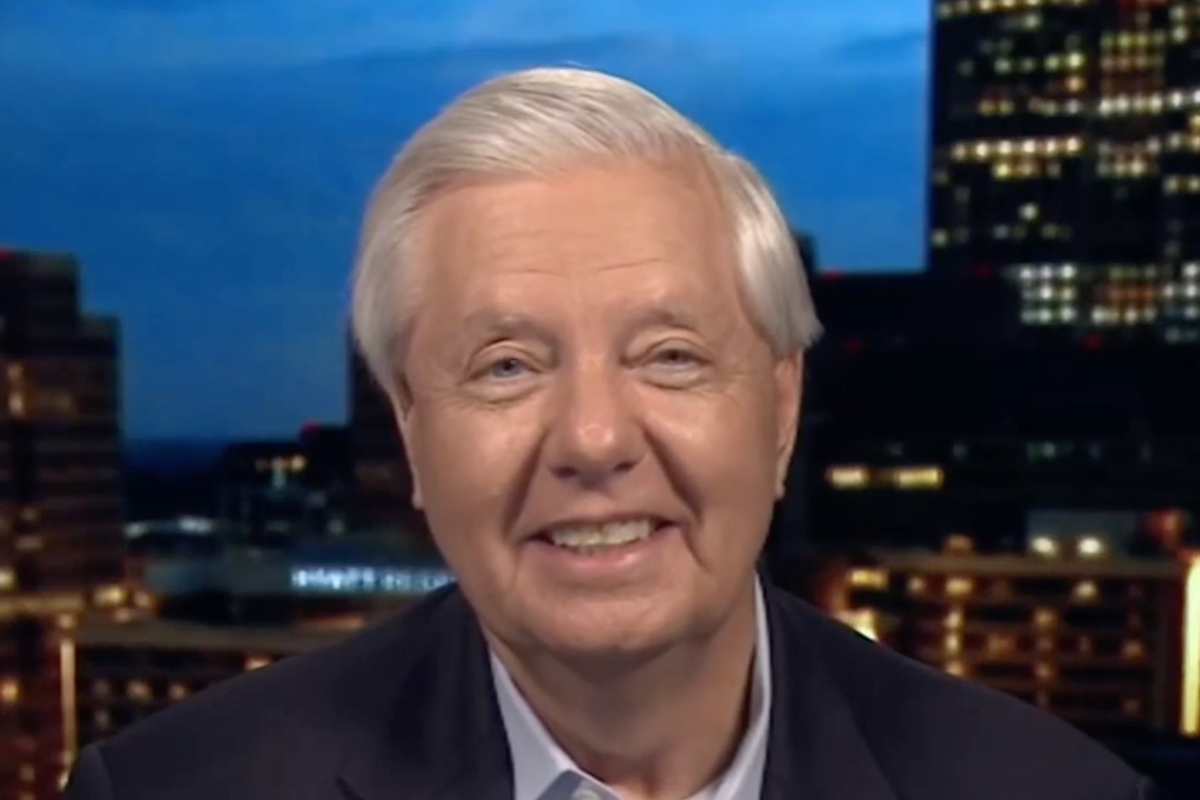
When Senator Lindsey Graham stepped in front of the microphones and suggested that the Nobel Peace Prize should be stripped of its century-old legacy and renamed the "Trump Prize," he wasn’t just making a bid for a headline. He was participating in a modern ritual of political devotion so absolute that it requires the sacrifice of language itself.
The reaction was swift, a predictable wave of internet fury and late-night talk show mockery. The word "pathetic" trended within minutes. Critics lined up to throw their verbal stones, painting the South Carolina senator as a man who had entirely lost his moorings. Yet, to dismiss the moment as mere political sycophancy is to miss the deeper, more unsettling story of what happens when the symbols of global human achievement are dragged into the meat grinder of American partisan theater.
The Geography of Achievement
To understand why a comment about a prize feels like a gut punch to the collective psyche, you have to look at what that prize represents. Imagine a small room in Oslo. It is quiet there. The air smells faintly of old paper and winter rain. For over a hundred years, a small committee has gathered in that room to decide who, among billions of human beings, has done the most to pull humanity back from the brink of its own self-destructive impulses.
The Nobel Peace Prize belongs to Malala Yousafzai, who looked into the barrel of a gun and demanded that girls be allowed to read. It belongs to Martin Luther King Jr., who marched toward state-sanctioned violence with nothing but the moral weight of justice at his back. It belongs to Denis Mukwege and Nadia Murad, who walked through the wreckage of human cruelty to heal the victims of wartime sexual violence.
These are not just names on a plaque. They are pillars of a fragile global consensus that says, even in a world ruled by force, there is a supreme value in the pursuit of peace, human dignity, and reconciliation.
Now, contrast that quiet room in Oslo with the neon glare of a modern American campaign rally. The contrast is jarring. When Senator Graham suggested swapping Alfred Nobel’s legacy for Donald Trump’s name, he wasn't just suggesting a change in branding. He was attempting to domesticate a global ideal, to pull it out of the international sky and pin it to the lapel of a single American politician.
The Geometry of the Pivot
People who have watched Lindsey Graham over the decades often speak of a man who exists in a state of perpetual adaptation. There was the Graham who stood as the fiercely independent wingman to the late Senator John McCain, a self-styled maverick who viewed international diplomacy through a traditional, hawkish lens. Then came the pivot—a shift so dramatic it left political observers suffering from whiplash.
Watching this evolution up close is like watching a masterclass in survival. In politics, proximity to power is the ultimate currency. If the center of gravity shifts, you either shift with it or you get flung into the political wilderness.
But the "Trump Prize" comment wasn't just a shift; it was a total eclipse of the senator’s own past logic. Years ago, Graham spoke of character, of institutional integrity, of the necessity of a foreign policy rooted in stable alliances. To watch that same figure suggest that a prestigious international honor be renamed after a man who famously mocked international alliances is to witness the ultimate triumph of expediency over ideology.
The internet called it pathetic. The public called it embarrassing. But beneath the name-calling lies a more uncomfortable truth: it was functional. In the current ecosystem of American politics, a statement like that isn't meant to convince the world. It is meant for an audience of one. It is a signal fire lit on a hill, meant to say: I am still here. I am still loyal. Look how far I am willing to go.
What We Lose When We Lose the Scale
There is a psychological phenomenon known as concept creep, where the definitions of words gradually expand or warp until they lose their original meaning entirely. We see it happening all around us, but it is rarest and most dangerous when it happens to our highest ideals.
If a peace prize can be renamed to honor a political leader as a reward for a specific transaction or policy position, then the definition of peace itself changes. Peace is no longer the slow, agonizing work of dismantling systemic injustice or preventing global conflagration. It becomes a commodity. A trophy. A chip to be traded in a domestic political game.
Think about the message this sends to the people who actually do the work of peace in the darkest corners of the earth. Consider a hypothetical human rights worker in a volatile region, risking their life to document abuses, holding onto the belief that the international community cares about their struggle. When they see the highest symbol of that community's recognition treated like a trinket to be handed out for political loyalty, the world shrinks a little. The stakes become smaller. The isolation feels heavier.
The danger of Graham’s comment isn't that the Nobel committee will actually listen to him. They won't. The danger is that it degrades the value of the currency we use to measure human greatness. It suggests that nothing is sacred, nothing is beyond the reach of the partisan culture war, and nothing exists outside the immediate horizon of the next election cycle.
The Silence After the Noise
The news cycle moves with terrifying speed. By tomorrow, the outrage over the "Trump Prize" will have been swallowed by a new controversy, a fresh tweet, another breathless cable news segment. The clips of Lindsey Graham speaking will be archived, buried under a mountain of digital sediment.
But the residue of the moment remains. Every time a leader uses their platform to cheapen a global institution, the foundation of that institution chips away just a tiny bit. We are left living in a culture that knows the price of everything and the value of nothing, where a century of human striving can be dismissed with a casual line delivered to a scrum of reporters.
As the cameras turned off and the reporters walked away from the Capitol that day, the grand marble halls went quiet again. The politicians retreated to their offices to check their fundraising numbers and count their media impressions. And across the ocean, in a quiet room in Oslo, the portraits of past laureates hung on the wall, staring out into the silence, waiting to see if the world they fought to build would remember why their prizes mattered in the first place.