The notification arrives at 3:14 AM in Hyderabad. It is not an alarm. It is the sharp, digital chirp of an email that carries the weight of a three-year migration plan, a master’s degree from an expensive American university, and the collective hopes of an extended family.
For Rohan—a hypothetical composite of the thousands of software engineers navigating this exact ritual tonight—the glow of the smartphone screen illuminates a room cluttered with textbooks and a half-packed suitcase. The email is from his immigration attorney. It contains a mix of financial relief and bureaucratic dread. A federal judge has clamped down on the skyrocketing fees the U.S. government wanted to charge for high-skilled worker visas. Rohan will save thousands of dollars. His employer will breathe easier.
He should be celebrating. He isn't.
Because Rohan knows what every seasoned engineer in Bengaluru, Pune, and Delhi knows: in the theater of American immigration, when the price of admission goes down, the bouncers at the door get infinitely more aggressive.
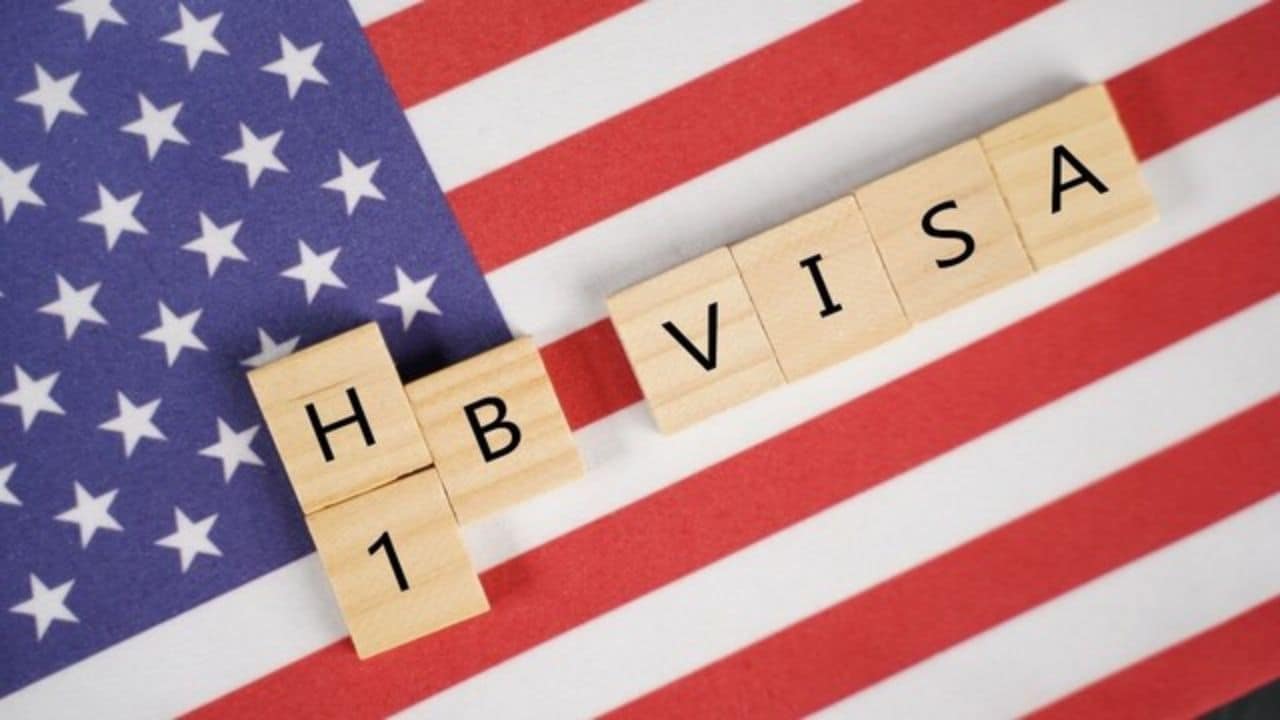
The conversation around the H-1B visa program is usually conducted in the cold language of macroeconomic policy, legislative filings, and corporate overhead. Former Indian Commerce Secretary Ajay Dua recently analyzed a crucial legal shift, noting that while Indian tech talent might dodge a massive financial bullet due to recent court rulings against exorbitant fee hikes, the administrative walls are actually growing taller.
But to understand what is truly happening, you have to look past the balance sheets of Silicon Valley tech giants. You have to look at the human cost of waiting.
The Mirage of the Discounted Entry
For years, United States Citizenship and Immigration Services (USCIS) has operated less like a government agency and more like an exclusive club trying to price out certain demographics. The proposed fee increases were staggering. They weren't just nominal adjustments for inflation; they were financial barricades designed to make small to mid-sized companies think twice before hiring a foreign engineer.
When a federal court stepped in to halt those predatory fee structures, a collective sigh of relief echoed across the global tech sector. On paper, it is a massive victory for Indian professionals, who historically secure upwards of 70 percent of these coveted visas each year.
Money stays in bank accounts. Corporate legal budgets remain intact.
Yet, this financial reprieve is a illusion of progress. Think of it as a toll booth on a bridge to a promised land. The gatekeepers just announced a discount on the toll, but simultaneously decided to inspect every single spark plug, trunk lining, and glove compartment of every vehicle trying to cross. The traffic isn't moving faster. It is grinding to a halt.
The reality of the modern H-1B application process is defined by three letters that strike terror into the heart of any applicant: RFE.
A Request for Evidence is the bureaucratic equivalent of a psychological war of attrition. It is no longer enough to present a diploma from a top-tier institution and a job offer from a Fortune 500 company. The scrutiny has mutated. Analysts are now forced to prove that their "specialty occupation" genuinely requires a degree. Software development—the bedrock of the digital economy—is frequently questioned by adjudicators who demand exhaustive documentation to prove that the code being written is sufficiently complex to warrant a foreign worker.
The Invisible Weight of the Folder
Consider the sheer physical and emotional mass of this scrutiny. A decade ago, an H-1B application was a modest packet of papers. Today, it is a dense, multi-volume anthology of a human being’s professional worth.
- Detailed project itineraries spanning three to five years into an unpredictable future.
- Granular breakdowns of daily percentages of time spent on specific programming languages.
- Expert opinion letters from university professors validating that, yes, a computer science degree is actually necessary to build enterprise cloud architecture.
This is where the emotional toll hits hardest. The system transforms human potential into a risk assessment matrix.
When you live under this level of microscopic observation, your life enters a state of perpetual suspension. You do not buy a house. You do not invest in long-term relationships. You lease your car instead of purchasing it. Every major life decision is tethered to an expiration date stamped on a form printed on cheap government paper.
The uncertainty behaves like a slow-leaking pipe behind the drywall of a home. You don't see the disaster immediately, but the structural integrity is eroding every single day. Engineers talk about the "visa anxiety" that shadows them through every promotion cycle. A step up the corporate ladder sounds like a triumph, but in the upside-down world of immigration, a new job title means an entirely new amended visa application. It means opening up your life to the microscope all over again.
The Ripple Effect Across the Oceans
The impact of this hyper-scrutiny stretches far beyond the individual worker sitting in a cubicle in Austin or Mountain View. It alters the fundamental dynamics of global business.
When American companies face an unpredictable, highly scrutinized visa process, their behavior changes. They stop looking at immigration as a talent acquisition strategy and start viewing it as a compliance nightmare. The big tech firms can afford the army of lawyers required to fight an arbitrary RFE. The mid-sized startup with a groundbreaking AI algorithm cannot. They simply cannot risk waiting six months for an engineer who might ultimately be rejected on a technicality.
Consequently, the talent pool begins to shifting direction.
Canada, Australia, and Germany aren't lowering their fees; they are streamlining their systems. They are offering certainty. In the global economy, certainty is a far more valuable currency than a slight discount on an application fee. While America argues over line-item expenses and paperwork formatting, other nations are actively recruiting the minds that will build the next decade of technological infrastructure.
We have arrived at a bizarre paradox where the United States remains the most desirable destination for global tech talent, yet possesses one of the most hostile onboarding processes in the developed world.
The Human Core Behind the Data
Step away from the legal briefs for a moment and look at the dinner tables.
The Indian tech worker is often caricatured in political rhetoric as a faceless economic unit, either stealing an American job or filling a desperate void, depending on who is holding the microphone. But the reality is found in the quiet conversations between spouses in suburban supermarkets, wondering if they should buy the good furniture or wait until the next visa renewal goes through. It is found in the parents who watch their children grow up speaking with American accents, knowing that a single administrative denial could force a sudden, jarring relocation to a country those children have only ever visited on summer holidays.
The recent fee ruling prevents immediate financial bleeding, but it does nothing to cure the systemic fever. The scrutiny is not a flaw in the system; it has become the system itself. It is a policy of deterrence through administrative exhaustion.
The line is still long. The paperwork is still a mountain. The anxiety remains absolute.
Rohan closes his laptop as the first hints of dawn break over Hyderabad. The saved money is a relief, a few extra hundred dollars that won't be paid to a government agency across the world. But as he looks at the horizon, he knows the real test isn't whether his company can afford the ticket. It’s whether he can survive the trial of standing in a line that never seems to end.