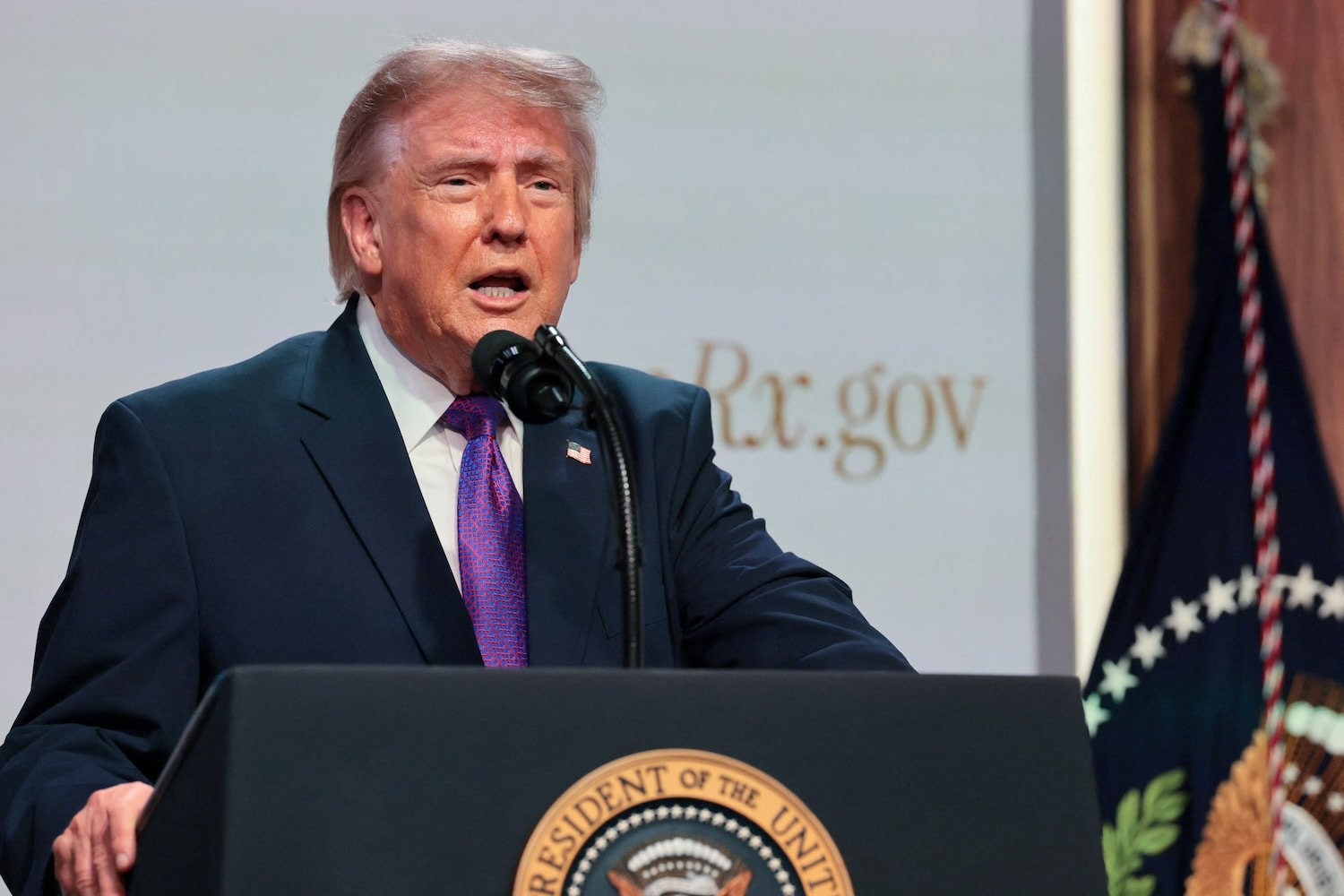
The official medical briefing has become a predictable piece of political theater. A white-coated physician stands before a room of reporters, brandishes a checklist of pristine vital signs, and declares the President of the United States to be in "excellent health" and "fully fit to serve." The public nods, the media prints the headline, and everyone buys into a comforting illusion.
It is complete nonsense.
The lazy consensus driving these briefings treats presidential fitness as a simple math problem. If the subject's cholesterol is under 200, if their resting heart rate looks like an athlete's, and if they can pass a basic cognitive screening designed to detect severe dementia, we are told the executive branch is in safe hands. This framework is not just outdated; it is fundamentally flawed. A standard executive physical measures physical longevity and the absence of acute pathology. It does not measure executive function, stress tolerance, or the specific cognitive architecture required to manage a global superpower under sleep deprivation.
By relying on standard clinical metrics to judge presidential capability, we are asking the wrong question entirely. We are checking the engine oil while ignoring the fact that the driver is steering into a ditch.
The Illusion of the Clean Bill of Health
Clinical medicine is designed to identify and treat disease. It is a defensive discipline. When a physician states a leader is fit, they mean the patient is not currently dying of a detectable ailment.
This standard creates a massive blind spot. The presidency is an endurance sport played entirely in a high-cortisol environment. A person can have the cardiovascular profile of a thirty-year-old and still suffer from executive dysfunction under extreme pressure. Conversely, an individual with managed chronic physical ailments might possess flawless judgment, emotional regulation, and strategic clarity.
Look at history. Medical consensus failed to flag the severe, debilitating back pain and cocktail of heavy medications that plagued John F. Kennedy during critical geopolitical standoffs. It failed to publicly address Woodrow Wilson’s escalating cerebrovascular disease before his total collapse. The public was told what the establishment always tells the public: everything is fine.
The standard physical exam cannot quantify the metrics that actually matter for leadership:
- Allostatic Load: The cumulative wear and tear on the body and brain from chronic stress.
- Working Memory Capacity Under Sleep Deprivation: The ability to retain and manipulate complex information when running on three hours of sleep.
- Cognitive Flexibility: The capacity to switch between completely different tactical frameworks without falling victim to decision fatigue.
When we celebrate a leader’s low blood pressure, we are confusing a lack of illness with the presence of capability. They are not the same thing.
Deconstructing the "People Also Ask" Delusion
When the public looks into presidential health, the search queries reflect a deep misunderstanding of human biology and institutional risk. The questions themselves are built on false premises.
Can a president be removed from office just for being unhealthy?
The short answer is no, and the long answer exposes the weakness of our current system. The 25th Amendment allows for the temporary or permanent transfer of power if the president is "unable to discharge the powers and duties of his office." But the mechanism is political, not medical. It requires the Vice President and a majority of the cabinet to make that call.
Medical data is rarely the trigger. Instead, the medical report is used as a political shield to prevent the 25th Amendment from ever being discussed. A physician’s note becomes a bureaucratic veto over a constitutional crisis, regardless of the reality behind closed doors.
Why do presidential physicians always say the president is in excellent health?
Because the presidential physician faces an irreconcilable conflict of interest. I have watched organizations blow millions on executive talent because they trusted a medical assessment written by someone on the payroll.
The White House doctor is a military officer or a political appointee whose patient is also their Commander-in-Chief. To issue a public report stating the president is experiencing cognitive decline or severe physical degradation would create an immediate national security vulnerability and a domestic political crisis. The incentive structure is entirely warped toward optimism. The briefing is a public relations exercise masquerading as science.
The Cognitive Reality vs. The Clinical Checklist
To understand why the current medical assessment is a farce, look at how the brain actually degrades under the stress of governance.
Neurologists use specific, standardized tools like the Montreal Cognitive Assessment (MoCA) or the Mini-Mental State Examination (MMSE) to check for impairment. These tests ask patients to draw a clock, identify an elephant, or repeat a short list of words. Passing these tests means you do not have moderate-to-severe dementia. It does not mean you have the cognitive processing speed required to handle a multi-theater cyber crisis at 3:00 AM.
Imagine a scenario where an executive undergoes a standard neurological screening and scores perfectly. On paper, they are flawless.
Now, introduce 18-hour workdays, a diet eaten on the run, constant public scrutiny, and the knowledge that a single misstep could trigger an economic collapse. The brain responds by flooding the system with cortisol and adrenaline. Over time, elevated cortisol damages the hippocampus, shrinking the very area responsible for memory formation and emotional regulation. The prefrontal cortex—the seat of long-term planning and impulse control—begins to go offline.
A standard physical will show slightly elevated blood pressure, maybe a tick upward in fasting glucose. The physician prescribes a beta-blocker or tells the patient to cut back on sodium, writes "fully fit to serve," and walks away. Meanwhile, the patient's capacity for nuanced risk assessment has been degraded by half.
A Better Framework for Measuring Leadership Fitness
If the current system is broken, how do we fix it? We stop looking at the body as a collection of isolated organs and start looking at the executive as a high-performance system.
If a multinational corporation wants to protect its shareholders before a massive merger, it doesn't just ask if the CEO is regular. It looks at performance metrics under pressure. We need an entirely new architecture for evaluating national leaders, independent of political appointments and public relations teams.
| Assessment Type | Traditional Framework (The Illusion) | Systemic Framework (The Reality) |
|---|---|---|
| Cognitive Testing | Basic screening (identifying shapes, repeating words). | High-stress simulation testing measuring decision latency and cognitive fatigue. |
| Cardiovascular | Resting heart rate, blood pressure, lipid panel. | Continuous HRV (Heart Rate Variability) tracking to monitor autonomic nervous system strain. |
| Neurological | Absence of gross tremor or clinical stroke symptoms. | Comprehensive neurofunctional mapping and sleep architecture analysis. |
| Reporting | A single political appointee giving a press conference. | An independent, non-partisan panel of civilian medical experts publishing raw data trends. |
The downside to this contrarian approach is obvious: it introduces massive privacy concerns and could be weaponized by political opponents. Raw medical data can be misinterpreted by a hostile public. If a leader shows a temporary dip in cognitive flexibility due to a bout of influenza, an opposition party will scream for abdication.
But the alternative is what we have now: a system of deliberate blindness where the public is kept completely in the dark until a crisis forces the truth into the open.
Stop Demanding Health, Start Demanding Resilience
The obsession with a president's "excellent health" is a security blanket for a population terrified of institutional instability. We want to believe the person in the Oval Office is superhuman, impervious to the decay that affects every other human being on the planet.
This expectation creates the very environment where cover-ups thrive. When the standard is perfection, honesty becomes a political liability.
We must stop asking if our leaders have the vitals of a college athlete. They don't, and they won't. The presidency is an aging machine that accelerates the decline of anyone who sits in the chair. The question we must force our medical establishments to answer is not whether a leader is free from disease, but how their decision-making apparatus holds up when the system is redlining.
Until the medical briefings move past the simplistic metrics of the standard checkup, every declaration of fitness is just a script written to keep the market stable and the voters quiet. Stop reading the vitals. Look at the decisions. They are the only medical report that matters.