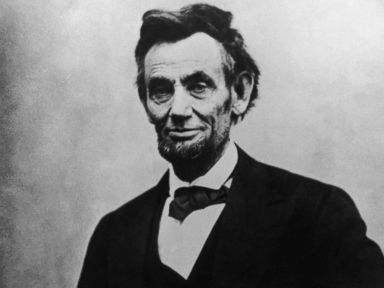
We love to put our leaders on pedestals. We carve their faces into mountains, print their expressions on paper money, and build marble monuments to keep them immortal. But history isn't static. It breathes. On July 4, 2026, as the United States hits its 250th anniversary, the national conversation isn't just about fireworks and parades. It's about accountability. Nobody understands this tension better than the literal flesh and blood of the men who shaped the nation.
Living with a famous presidential last name isn't a walk in the park. It means inheriting a complicated ledger of triumphs and deep moral failures. When you share DNA with a commander-in-chief, history isn't something confined to a dusty textbook. It's Sunday dinner conversation. It's a shadow you can't ever fully escape.
The Heavy Burden of Famous Last Names
People often assume that being related to a former president is all about prestige. They think of exclusive galas, historical societies, and doors opening automatically. That's only a tiny slice of the reality. The real experience is far more complex.
Descendants frequently find themselves serving as unofficial spokespeople for administrations that ended decades, or even centuries, before they were born. If a president made a disastrous economic choice or signed an oppressive law, their great-grandchildren are the ones answering for it today. They face the constant pressure of living up to an impossible standard while simultaneously wrestling with the sins of the past.
Organizations like the Society of Presidential Descendants work to channel this unique position into public education. Led by figures like Tweed Roosevelt, a descendant of Theodore Roosevelt, these groups try to shift the focus from blind worship to serious scholarship. They don't want people to just memorize dates. They want citizens to understand the messy, human reality of leadership.
The biggest mistake people make when looking at presidential history is treating these leaders like saints or villains. They weren't either. They were humans with immense power, operating within the limitations of their eras.
The Dual Legacy of Thomas Jefferson
Nowhere is this historical friction more visible than in the lineage of Thomas Jefferson. He wrote the words that defined the American ideal. He told the world that all men are created equal. Yet, he held hundreds of human beings in lifelong bondage.
For Shannon LaNier, this isn't an abstract philosophical debate. LaNier is the sixth great-grandson of Jefferson. He's also a direct descendant of Sally Hemings, the enslaved woman Jefferson owned and kept in a decades-long relationship. LaNier carries two distinct American stories within his own bloodstream. One is a story of grand democratic promises. The other is a story of systemic oppression.
Recently, LaNier recreated a famous portrait of Jefferson for Smithsonian Magazine, posing in a modern suit but echoing his ancestor's stance. It wasn't an act of reverence. It was a confrontation with history. LaNier has been open about his view that Jefferson should have done far more to free enslaved people. He has actively called for the removal of certain statues that glorify slaveholders without context.
"I wish he had done more to free enslaved people."
— Shannon LaNier
This perspective highlights a massive shift in how we approach the American experiment in 2026. For a long time, historic estates like Monticello presented a sanitized version of the past. They focused on the architecture, the inventions, and the political philosophy. Today, thanks to the persistence of descendants and modern historians, the full narrative is coming to light. The lives of the enslaved people who actually built and maintained those estates are finally being recognized. It's a necessary correction, even if it makes some traditionalists uncomfortable.
Looking Beyond the Mount Rushmore Myths
Every presidency has its hidden dark corners. Consider Herbert Hoover. Most people remember him solely for his failure to stop the Great Depression. They picture the "Hoovervilles" and the economic despair. But his descendants often point to his massive humanitarian efforts before and after his presidency, where he coordinated food relief that saved millions of Europeans from starvation during and after World War I.
Then there's William McKinley. He steered the country into the twentieth century and expanded American influence globally. But his administration also marked the rise of American imperialism, particularly during the Spanish-American War and the subsequent Philippine-American War. His descendants have to balance his domestic economic successes with the brutal realities of foreign conquest.
When relatives of McKinley and Hoover reflect on their kin, they aren't trying to erase the bad parts. They are trying to add depth. They want you to see the whole picture.
The lesson here is simple. If you only look at the highlights, you miss the actual mechanics of history. A presidency is a collection of choices, compromises, and unintended consequences.
How Families Protect and Challenge the Narrative
Family loyalty is a powerful force. It's natural to want to defend your ancestors. But presidential descendants have a broader civic duty that complicates that instinct. They have to decide whether to protect the family myth or chase the historical truth.
Some families choose strict curation. They guard private letters, control access to archives, and push back against biographers who write unflattering accounts. They view themselves as the keepers of the flame.
Others take a radically different approach. They actively fund independent research, open up family documents to the public, and participate in panels that critique their ancestors' choices. They realize that true patriotism doesn't require lying about the past. It requires facing it honestly.
This tension shows up clearly at presidential libraries and museums across the country. During this 250th anniversary year, institutions like the Ronald Reagan Presidential Library are hosting special exhibitions. The National Archives has even loaned out rare, foundational documents to various presidential sites. The goal isn't just to celebrate. The goal is to encourage deep reflection on how these different administrations moved the needle toward, or away from, the nation's founding ideals.
Reclaiming History for the Next Generation
So, what do you actually do with this information? You don't just sit back and read about it. The Semiquincentennial isn't just a milestone for historians or political families. It's a call to action for everyone living in the country today.
If you want to understand the current political landscape, you have to look at the foundations. You can't fix modern systemic issues without knowing how they were built in the first place.
Start by changing how you consume history. Stop looking for perfect heroes. Read biographies that don't shy away from flaws. Visit historical sites and ask the tour guides about the workers, the laborers, and the marginalized groups who were left out of the official brochures.
You can also engage directly with local historical initiatives. Many states have set up specific commissions for the 250th anniversary, focusing on community stories rather than top-down national myths. Look up what your state's commission is doing. Volunteer for local archiving projects. Help digitize old records in your town.
History isn't just made by the people in the Oval Office. It's made by the people who hold them accountable. By examining these presidential legacies through a critical, honest lens, we can finally start working toward the nation that the founders promised, but never quite managed to build themselves.