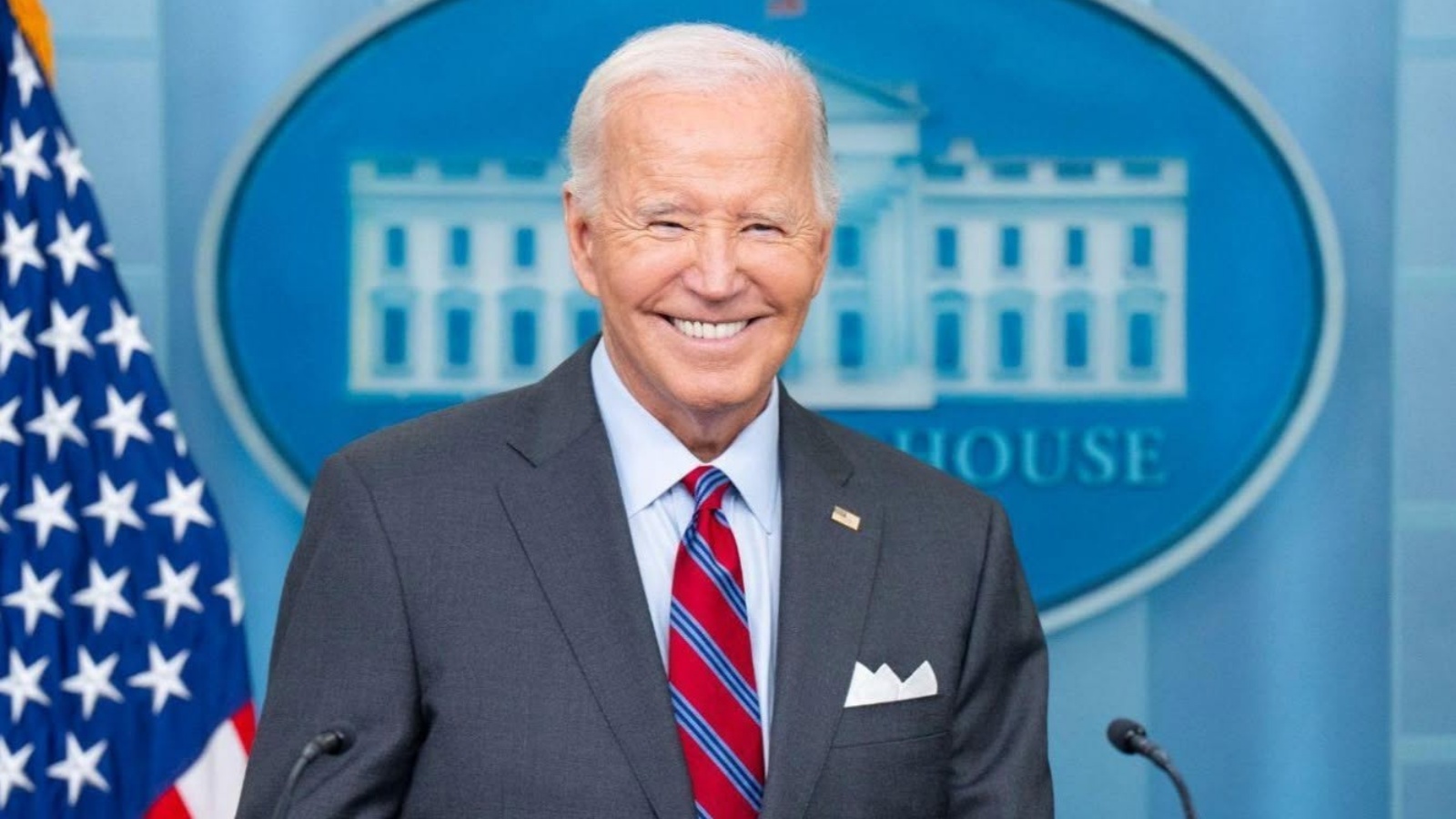
The corporate media loves a schoolyard fight. When a sitting president steps up to a microphone and brands his chief political rival a "loser," a "corrupt fraud," or "incompetent," the news cycle lights up like a pinball machine. Pundits rush to analyze the optics. Campaign managers trade high-fives over the soundbite. The base gets a temporary hit of dopamine.
It is a completely hollow victory.
Relying on personal degradation as a core electoral strategy is not a sign of strength. It is the definitive proof of a political establishment that has run completely out of ideas. When political campaigns devolve into trading playground insults, it signals a deeper, structural failure within the entire system. The public is treated to a theatrical performance designed to mask a harsh reality: neither side wants to talk about the systemic issues they have both failed to fix.
The Lazy Consensus of the Soundbite Campaign
The standard political playbook dictates that to defeat an opponent, you must completely diminish their character. You call them a loser because the word carries a specific social stigma. You accuse them of incompetence because it positions you as the steady hand at the wheel.
This approach completely misinterprets why voters choose populist figures in the first place.
I have spent nearly two decades analyzing voter behavior data, working behind the scenes on legislative messaging, and watching millions of dollars get poured into attack ads that do absolutely nothing to move the needle. Here is the reality the high-priced consultants will never admit to you: calling a populist leader a "loser" does not alienate their followers. It solidifies them.
To the millions of citizens who feel abandoned by the modern economy, an attack from the sitting establishment is a badge of honor. When the elite call a candidate incompetent, the voter hears that the candidate is a threat to the very system they want to see disrupted. The establishment operates under the flawed premise that voters are looking for a resume. In reality, voters are looking for a wrecking ball.
The Mirage of the Character Debate
Let us dismantle the premise that political corruption and incompetence are distinct anomalies unique to one specific individual or party.
The mainstream narrative treats corruption like an infectious disease introduced by a single bad actor. If we just isolate the patient, the body politic will miraculously heal. This is a comforting fairy tale for people who want to believe the system worked perfectly until about a decade ago.
It did not.
True institutional corruption is rarely a matter of backroom bribes or overt lawbreaking. It is entirely legal. It is the systemic influence of corporate lobbying, the revolving door between regulatory agencies and the industries they oversee, and the endless accumulation of unpayable national debt.
Consider the economic reality of the past quarter-century. Under administrations of every possible ideological stripe, the wealth gap has widened, manufacturing centers have been hollowed out, and the cost of basic necessities like housing and healthcare has skyrocketed.
- Administration A promises economic renewal through deregulation. The result? Financial instability and corporate consolidation.
- Administration B promises equity through targeted subsidies. The result? Skyrocketing tuition costs and bureaucratic bloat.
When a politician stands on a stage and blames the entire state of the nation on the incompetence of their predecessor, they are engaging in a massive act of misdirection. They want you focused on the personality in the oval office so you do not look at the structural decay of the institutions surrounding it.
The High Cost of the Moral High Ground
There is a distinct downside to challenging this playground narrative. When you refuse to engage in the hyper-partisan mudslinging, you are instantly accused of false equivalence or intellectual cowardice. The partisan machinery demands total compliance. You must either believe your opponent is an existential threat to civilization or a savior sent to rescue it.
But let us run a thought experiment. Imagine a political campaign that completely abandons personal insults. Instead of calling an opponent a loser, a candidate stands up and says:
"My opponent did not fail because they are uniquely evil or incompetent. They failed because the structural mechanics of our current system make success impossible. The bureaucracy is unmanageable, the incentives are warped by money, and the framework we are operating under was built for a world that no longer exists."
What happens to that campaign? It gets starved of airtime. Cable news networks, which rely entirely on conflict-driven ratings to survive, ignore the policy breakdown and focus on the competitor who called someone a names. The system rewards the insult because the insult generates the metric that matters most to modern media: attention.
Dismantling the Premise of Political Incompetence
People frequently ask how incompetent leaders manage to gain so much power in the first place. The premise of the question is fundamentally flawed.
The leaders who rise to the top of modern political parties are not incompetent. They are highly competent at the exact task required to get there: building a brand, mobilizing a grievance, and raising hundreds of millions of dollars from donors who expect a return on their investment.
The disconnect happens because we confuse electioneering with governing.
Governing requires deep structural knowledge, administrative patience, and a willingness to make trade-offs that will anger your own supporters. Electioneering requires the exact opposite. It requires absolute certainty, simple enemies, and a relentless focus on the flaws of your opponent.
When an incumbent president spends precious campaign capital labeling their opponent a failure, they are admitting that their own record is not strong enough to win on its own merits. It is a defensive maneuver dressed up as an offensive strike. If your policies had genuinely transformed the lives of the working class, you would not need to convince the public that your opponent is a loser. The voters would already know it by looking at their own bank accounts.
Stop Demanding Better Politicians
The standard advice from political commentators is always the same: we need to elect better people. We need leaders with more character, more integrity, and a greater commitment to norms.
This advice is completely useless.
The political arena is an ecosystem. If you plant a healthy seed in toxic soil, you will still get a poisoned crop. The individuals who enter the system are shaped by the incentives of the system itself. If the path to power requires polarization, fund-raising from special interests, and the reduction of complex policy into ten-second insults, then the system will exclusively produce leaders who excel at those specific things.
We do not have a personnel problem. We have a structural problem.
The next time you see a headline where one politician calls another corrupt or incompetent, ignore the names attached to the quotes. Look instead at the issues they are avoiding while they trade barbs. The noise is not the story. The noise is the distraction.
The theater of political insults persists because it works on a superficial level. It keeps the electorate divided, emotional, and hyper-focused on individual personalities. It prevents the formation of any broad-based coalition that might demand actual structural reform to the way our economy and government operate. Until we stop treating these playground taunts as serious political discourse, we will continue to get exactly the leadership we deserve.