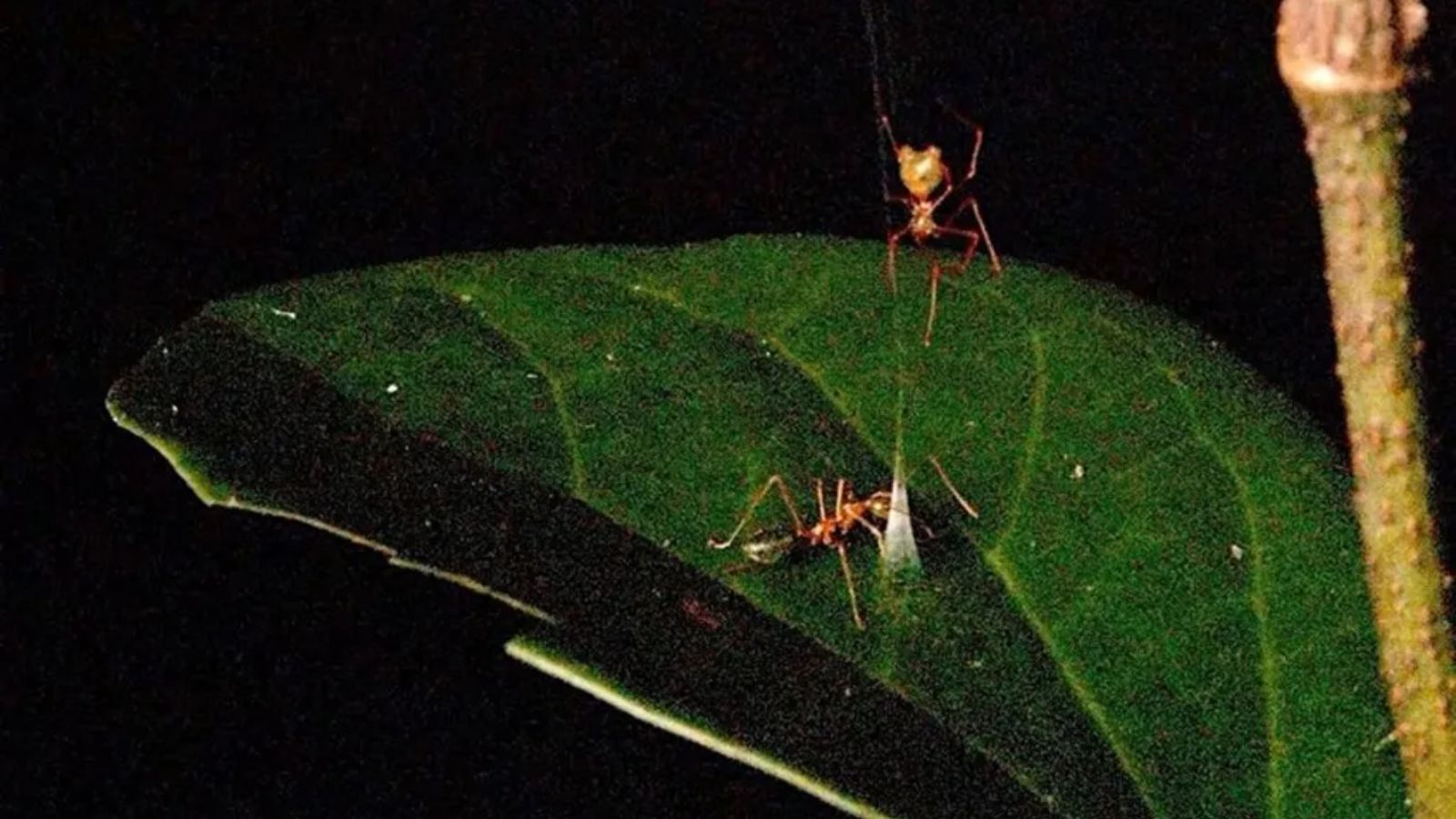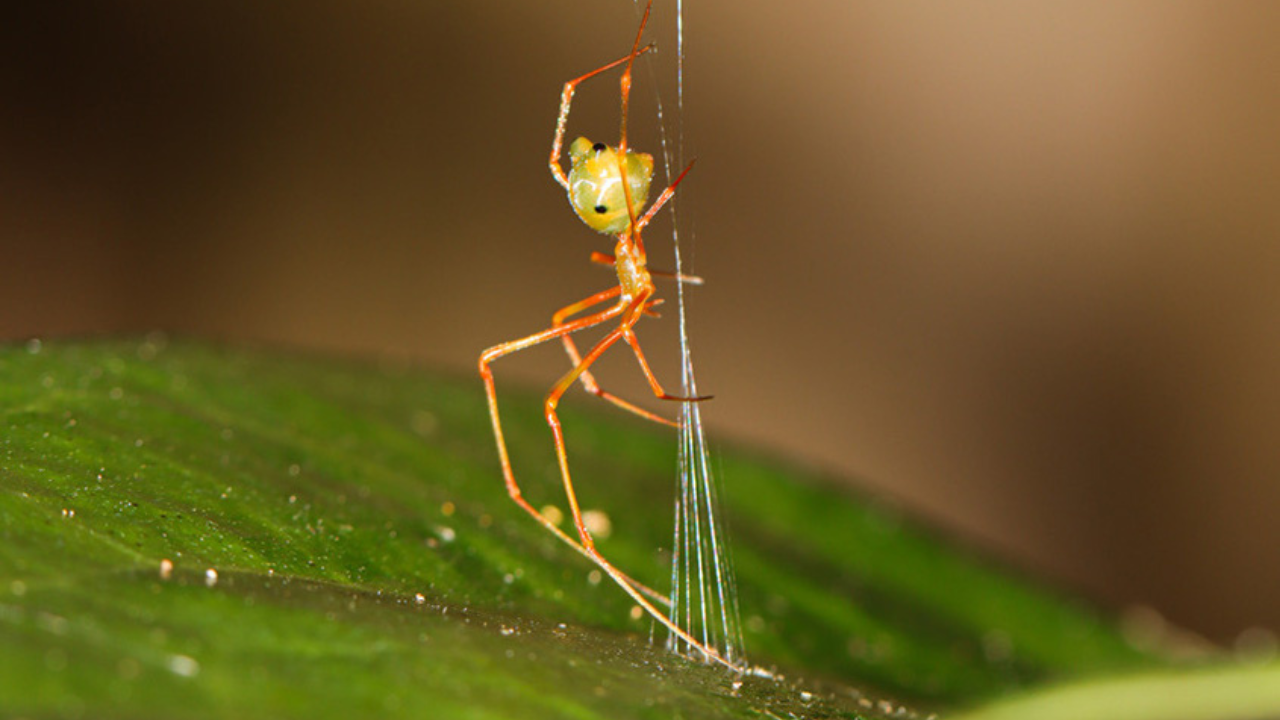
Biologists have uncovered a mechanical marvel in the undergrowth that upends our understanding of animal-driven ballistics. A tiny arachnid, colloquially dubbed the ballista spider, has been documented launching heavy prey into the air using a high-speed silk catapult mechanism. This miniature predator generates acceleration forces exceeding 140 times the force of gravity to capture ants that outweigh it. While early reports treated this as a mere curiosity, closer inspection reveals a complex biological system that challenges current human engineering limits in micro-scale energy storage and release.
Understanding this phenomenon requires moving past the initial shock of the numbers and looking directly at the mechanics of the trap. The spider does not rely on muscle power alone to achieve these speeds. Instead, it utilizes a sophisticated structural system to store potential energy over time and release it in a fraction of a millisecond.
The Limits of Muscle and the Mechanics of Silk
Muscles have physical limitations. They can contract only so fast, and they can produce only so much power per unit of mass. When an organism needs to move faster than biological tissue allows, it must use a latch-mediated spring actuation system. This is the same principle found in mantis shrimp strikes and flea jumps.
The ballista spider uses its web as an external spring.
To set the trap, the spider anchors a line of highly elastic silk to a solid surface, such as a twig or stone. It then backs up, pulling the line taut under immense tension. The spider holds this tension manually, acting as both the winch and the latch. When an ant approaches, the spider releases the line. The stored elastic energy converts instantly into kinetic energy, slinging the prey upward and rendering it defenseless.
The pure scale of this acceleration is difficult to conceptualize. For a human, experiencing 140g would cause immediate blackout and fatal internal injuries. At the microscopic scale, however, inertia behaves differently. The spider and its prey are small enough that surface forces and air resistance dominate their environment, yet the force generated is enough to completely bypass the ant's natural defenses and grip on the substrate.
Deconstructing the Biological Catapult
Standard spider webs rely on stickiness to retain prey. If an insect hits a typical orb web, the glue droplets hold it long enough for the spider to rush out and deliver a bite. The ballista spider operates on an entirely different tactical thesis.
- Energy Accumulation: The spider spends minutes slowly drawing the line tight, investing metabolic energy into the silk structure.
- The Latch Mechanism: Specialized structures on the spider's appendages hold the line in place without slipping, requiring minimal continuous energy expenditure.
- Instantaneous Release: The structural failure or intentional release of the hold occurs in microseconds, transferring the energy into the target before the nervous system of the prey can react.
This system solves a fundamental problem for small predators. Ants are heavily armored, highly aggressive, and frequently travel in groups. A direct physical confrontation risks injury to the spider. By launching the ant into the air, the spider disrupts its footing, isolates it from its colony, and uses the impact force to stun the insect before moving in for the kill.
Material Science Questions Human Engineering Cannot Yet Answer
The true value of this discovery lies in the material properties of the silk itself. Human engineers have long struggled to create micro-catapults that do not suffer from material fatigue. If you stretch a synthetic rubber band or a steel spring repeatedly at high tension, it degrades. It loses its elasticity, develops micro-fractures, and eventually breaks.
The ballista spider's silk undergoes extreme deformation regularly without structural degradation.
Tensile Strength and Elastic Recovery
| Material | Energy Storage Capacity | Degradation Rate |
|---|---|---|
| Synthetic Micro-Springs | Moderate | High after repeated cycles |
| Biological Silk (Ballista Spider) | Exceptionally High | Extremely Low |
This biological material maintains its structural integrity across varying humidity levels and temperatures. It absorbs energy rapidly but releases it without significant internal damping, meaning very little energy is lost as heat during the snap. For researchers working on soft robotics and micro-electromechanical systems (MEMS), this is the holy grail of kinetic design.
The Evolutionary Arms Race in the Leaf Litter
We cannot view this mechanism in isolation. It evolved in response to a specific environmental pressure: the rise of dominant, group-hunting social insects. Ants control the ground floor of most terrestrial ecosystems. They are strong, coordinated, and dangerous to solitary predators.
To hunt them successfully, the ballista spider had to exit the traditional evolutionary matrix of venom and speed. It became a mechanical engineer.
The strategy relies entirely on the element of surprise and physics. If the catapult fails, or if the ant detects the tension before the release, the spider is highly vulnerable. This explains the extreme precision of the trigger mechanism. The spider doesn't just feel vibrations; it gauges the weight and distance of the approaching insect before triggering the release, ensuring maximum kinetic transfer on impact.
Implications for Micro-Robotics and Soft Actuators
Looking at the broader technological landscape, human efforts to create microscopic devices capable of high-force outputs are clunky. We rely on heavy batteries, rigid materials, and complex gear trains that scale down poorly. The ballista spider provides a blueprint for a minimalist, high-efficiency alternative.
Imagine a search-and-rescue micro-drone that doesn't use rotors to jump over obstacles, but instead utilizes a bio-inspired silk tendon to propel itself across gaps. By studying the molecular structure of this spider's silk and the specific geometry of its web attachments, materials scientists can begin synthesizing polymers that mimic this high-efficiency energy transfer.
The discovery proves that nature solved the problem of extreme micro-acceleration millions of years ago. It did so not by building stronger muscles, but by turning its own waste products into high-performance tactical weaponry. The challenge now is translating these biological rules into synthetic realities without losing the efficiency that makes the ballista spider so lethal.